
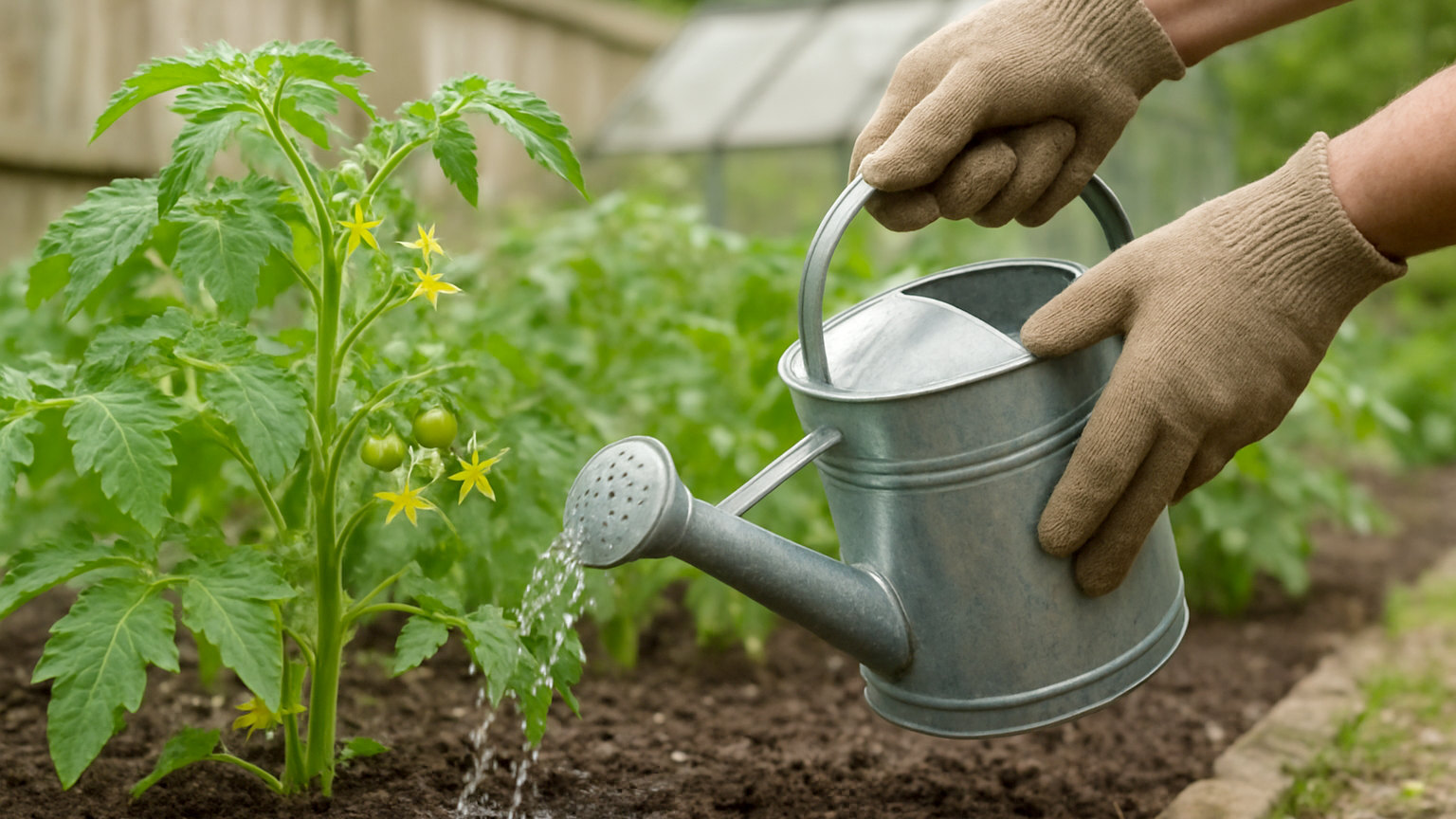
Vegetables do not need constant watering. Each crop has a stage at which water makes the greatest difference to the yield, and concentrating effort there is more effective than watering everything every day.
The critical stages
Potatoes: when the tubers are forming, roughly when the plants flower. Watering thoroughly at that point substantially increases the yield. Early watering matters far less.
Peas and beans: from flowering onwards, while the pods are setting and filling. Water shortage at flowering causes flowers to drop and pods to fail to set.
Tomatoes, cucumbers, peppers and courgettes: consistently from flowering through fruiting. These are the crops where irregular watering causes the most visible problems.
Leafy crops such as lettuce, spinach and chard: throughout, since the leaves are the crop and any check causes bolting or bitterness.
Onions and garlic: during bulb formation in early summer, then stop as they approach maturity, since late watering encourages rot in store.
Sweetcorn: at tasselling and cob filling.
Root crops such as carrots and parsnips: steady moderate moisture. Heavy watering produces leaf at the expense of root, and irregular watering splits them.
Problems caused by irregular watering
Blossom end rot in tomatoes, peppers and courgettes: a sunken black patch at the base of the fruit. It is a calcium problem caused by inconsistent watering rather than a shortage of calcium in the soil, since the plant cannot move calcium when water supply fluctuates. Consistency is the fix, particularly in containers and growing bags.
Splitting in tomatoes, carrots and cabbages: heavy watering after a dry spell makes the interior grow faster than the skin.
Bolting in lettuce, spinach, rocket and brassicas: running to seed prematurely, frequently triggered by drought stress.
Bitter cucumbers and woody roots also follow inconsistent supply.
The general lesson is that steady moisture matters more than quantity.
How to water crops
Thoroughly and less often. A good soak twice a week reaches the roots; a daily sprinkle wets the surface and encourages shallow rooting.
Aim at the soil around the base rather than over the foliage, since wet leaves spread blight, mildew and other diseases.
Early morning is best.
A soaker hose along a row, run for an hour, delivers water exactly where it is needed and keeps foliage dry.
Reducing the need
Mulch generously once the soil is moist and warm, which conserves a great deal of water and suppresses weeds.
Improve the soil with organic matter every year, which increases both water retention on sand and drainage on clay.
Water plants in well at transplanting and keep them going for the first fortnight, after which they root out and need less.
Keep beds weed free, since weeds compete directly for water.
A sunken watering trench or a pot sunk beside thirsty plants such as courgettes and squash delivers water straight to the root zone.
Seedlings and transplants
These need frequent light watering rather than infrequent soaks, since the roots are shallow and the surface dries fast.
Once established, switch to less frequent thorough watering to encourage deep rooting.
Containers and growing bags
Far more demanding than open ground, needing daily attention in summer.
Growing bags are shallow and dry out very quickly. Standing them in trays, or using bottomless pots sunk into the top of the bag, increases the reservoir considerably and gives a deeper root run.
Feeding and watering together
The two are connected. A plant that dries out repeatedly cannot take up nutrients even when they are present, and shows the same symptoms as one that is starved.
Always apply liquid feed onto damp compost or soil, never dry, since fertiliser on a dry rootball scorches it.
Where water is short
Prioritise crops at their critical stage, containers, and anything recently planted.
Established root crops, brassicas and perennial crops can generally cope with a dry spell without lasting harm.
Watering in a greenhouse or polytunnel
Under cover there is no rainfall at all, so everything depends on you, and the higher temperatures increase demand considerably.
Water in the morning, damp down paths on hot days to raise humidity, and ventilate well, since warm humid still air encourages fungal problems.
Capillary matting on staging, or a drip system on a timer, removes most of the daily work and keeps supply consistent.


