
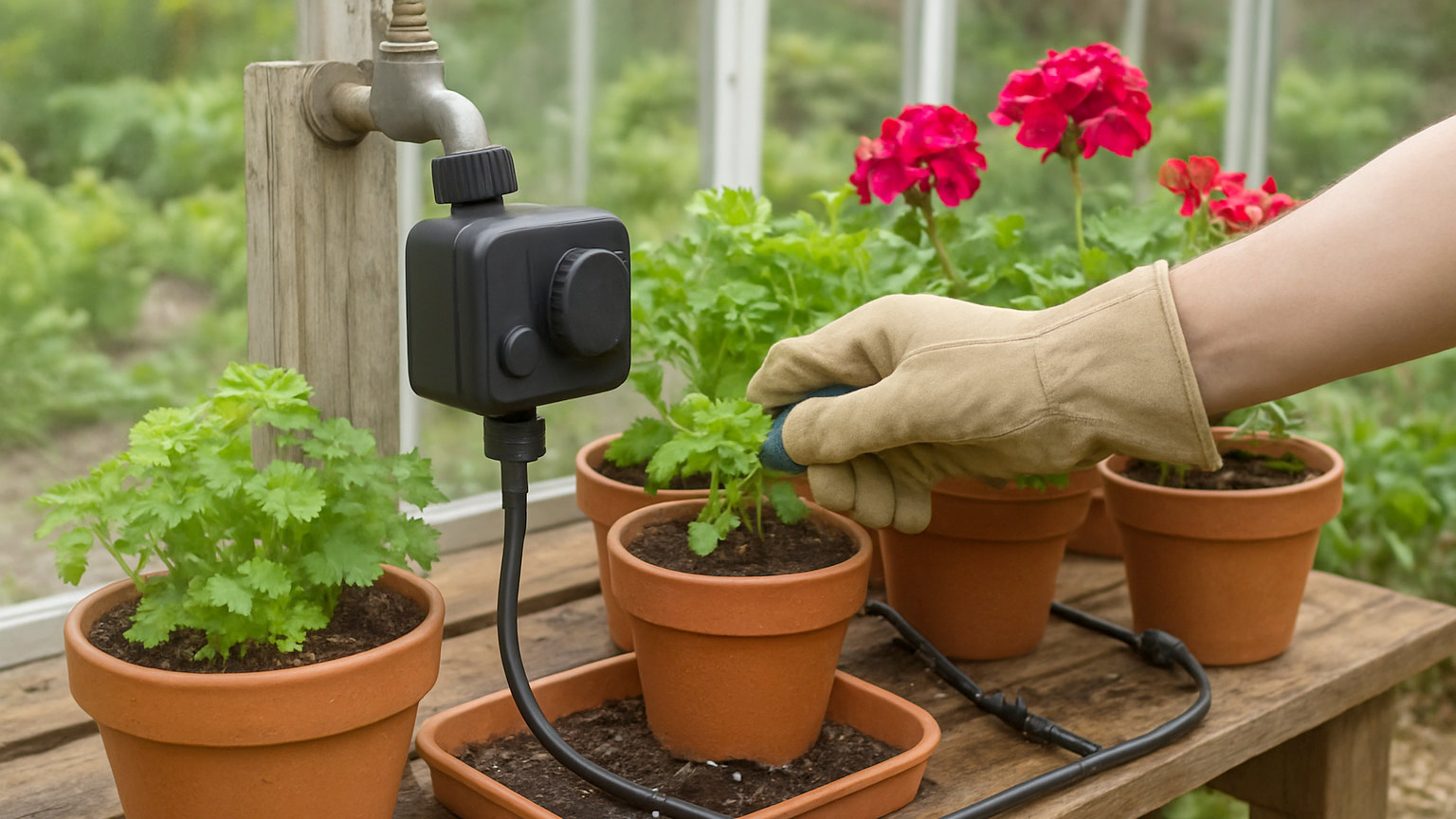
An indoor drip kit is a pump or gravity reservoir, a timer, and thin tubing running to individual drippers in each pot. For a large collection, or an absence of a month or more, it is the only method that reliably works.
The two types
- Gravity systems use a raised reservoir and a valve, with no electricity. Simple and quiet, limited by how high you can put the tank and by how the flow changes as the level drops.
- Pump systems use a small submersible pump on a timer, drawing from a bucket. More consistent and more capable, and dependent on power – a power cut ends the arrangement.
Setting one up
- Lay out the tubing and place a dripper in each pot, pushed into the compost so it does not blow out.
- Put the reservoir somewhere it will not be knocked, on a waterproof surface.
- Set the timer for short, frequent cycles rather than one long one – a couple of minutes twice a day suits most pots better than ten minutes once.
- Run it manually and check that every dripper is actually delivering. Blocked drippers are the commonest fault.
- Then run the whole system for at least a week while you are still there.
Why testing matters more here
Passive systems fail by stopping. Active systems can fail by continuing – a dripper that falls out of its pot, a tube that detaches, or a timer set wrongly will pump the entire reservoir onto the floor and keep going.
Put every pot on a tray, and put the whole arrangement somewhere a leak would not be a disaster. A bathroom or a kitchen floor is a better location than a carpeted bedroom above a neighbour.
Sizing the reservoir
Work it out rather than guessing: measure how much the system delivers in one cycle, multiply by cycles per day and by days away, and add a substantial margin. A twenty-litre container is not unusual for a fortnight with a dozen pots.
Cover the reservoir to reduce evaporation and to keep dust and insects out.
Who they suit
Worth the money for a large collection, for frequent travel, for demanding plants, or for a month or more away. Overkill for a dozen tough plants and a fortnight, where a soak and a shuffle does the same job for nothing.
They also earn their place year-round for anyone who struggles to keep up with a manual routine, which is a different problem from holidays and a legitimate reason to buy one.
What they cannot do
A timer delivers the same amount whatever the weather, the season or the plant's actual state. That is the central limitation: it is a schedule, and this site spends a great deal of time explaining why schedules are the wrong basis for watering. For a fortnight that does not matter much. As a permanent arrangement it needs adjusting between seasons like everything else.


