
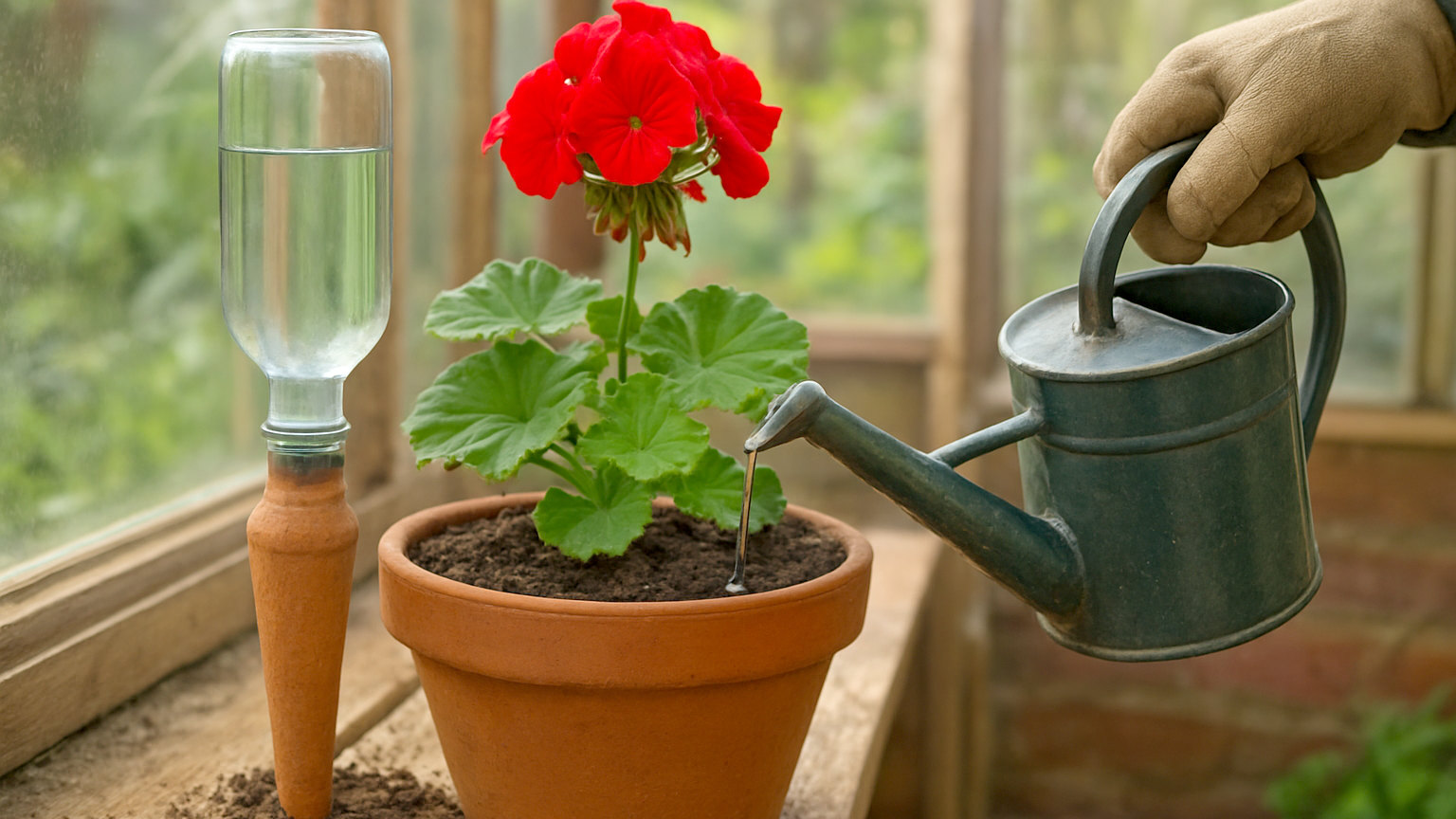
An inverted bottle pushed into the compost, with or without a terracotta spike, is the method everyone tries first. It is cheap and it looks convincing. Its weakness is that the delivery rate is almost impossible to predict, and the failure is only discovered on your return.
How they actually work
Water leaves the bottle only as air is admitted to replace it, so the rate is governed by how easily air can bubble back through the compost and the neck. That depends on the compost texture, how tightly it is packed around the neck, how wet it already is, temperature, and the size of the opening.
Change any of those and the rate changes. This is why one bottle empties in six hours and an apparently identical one in a fortnight.
The types
- A plain plastic bottle with a few small holes in the cap, inverted into the compost. Free, and the least predictable.
- Terracotta spikes that a bottle screws into. The unglazed clay releases water as the surrounding compost dries, which is genuinely self-regulating and much the best of these options.
- Glass watering globes. Decorative, small capacity, prone to clogging, and they release most of their water in the first day or two.
- Drip bags and slow-release kits with an adjustable valve, which give some control over the rate.
Testing, which is the whole point
Set the system up at least a week before you leave and watch how far the level falls each day. Multiply by the number of days you will be away. If the bottle empties in three days, it is not a fortnight solution regardless of what the packaging says.
Testing also reveals the two failure modes: a bottle that dumps its contents immediately, waterlogging the pot, and a spike that clogs with compost and delivers nothing while appearing full.
Improving the odds
- Water the plant thoroughly first, then insert the bottle. Into dry compost, water rushes out.
- Use a spike rather than a bare bottle neck.
- Wrap the spike opening in a small piece of fabric to stop compost blocking it.
- Use the largest bottle that will stand up in the pot without toppling it.
- Push the spike in at an angle, so the bottle is supported by the pot rim.
- Use several small bottles rather than one large one in a big pot, so a single failure is not total.
When they suit
Best for a single large pot that is awkward to move, and for plants that want steady moisture. Least suitable for succulents and cacti, which want the opposite, and for small pots where the bottle is disproportionate and unstable.
For several plants at once, capillary matting is more reliable and considerably less fuss.


