Moss killer works. Apply it, the moss blackens, you rake it out, and within a year it is back. That is not a failure of the product; it is because moss is a symptom. It colonises ground where grass is struggling, and unless you change what is making the grass struggle, it will return every time.
The four causes
Almost all moss comes down to one or more of four conditions.
- Shade - grass needs light, and moss does not mind the lack of it
- Compaction - airless soil that roots cannot penetrate
- Poor drainage - moss thrives in damp; grass does not
- Cutting too short - scalped grass is weakened and cannot compete
Low fertility and acidic soil contribute as well, though they are less often the main cause than people assume. Look at where the moss is worst, and it usually tells you which condition is responsible.
Shade
Moss under a tree or along a north-facing fence is a light problem. Raising the canopy of a tree by removing lower branches lets in considerably more light, and thinning a dense crown helps too, subject to checking for a tree preservation order first.
Where you cannot change the light, accept it. Overseed with a shade-tolerant mixture containing fine-leaved fescues, mow higher to give more leaf area, and expect a thinner sward. In deep shade, grass will never succeed, and a bed of shade-tolerant planting or a mulched area is a better answer than an annual battle.
Compaction and drainage
These usually travel together and are the most common cause on a family lawn. Test by pushing a screwdriver into damp soil: if it will not go in fifteen centimetres, the soil is compacted.
Hollow tine aeration in autumn, removing plugs of soil rather than just spiking, is the effective treatment. Follow it with a sandy top dressing brushed into the holes, and repeat annually on a problem lawn. Improvement is gradual rather than immediate.
Where water genuinely stands after rain, the underlying drainage may need attention, and on a small area a French drain or a rubble-filled soakaway can transform matters.
Mowing height
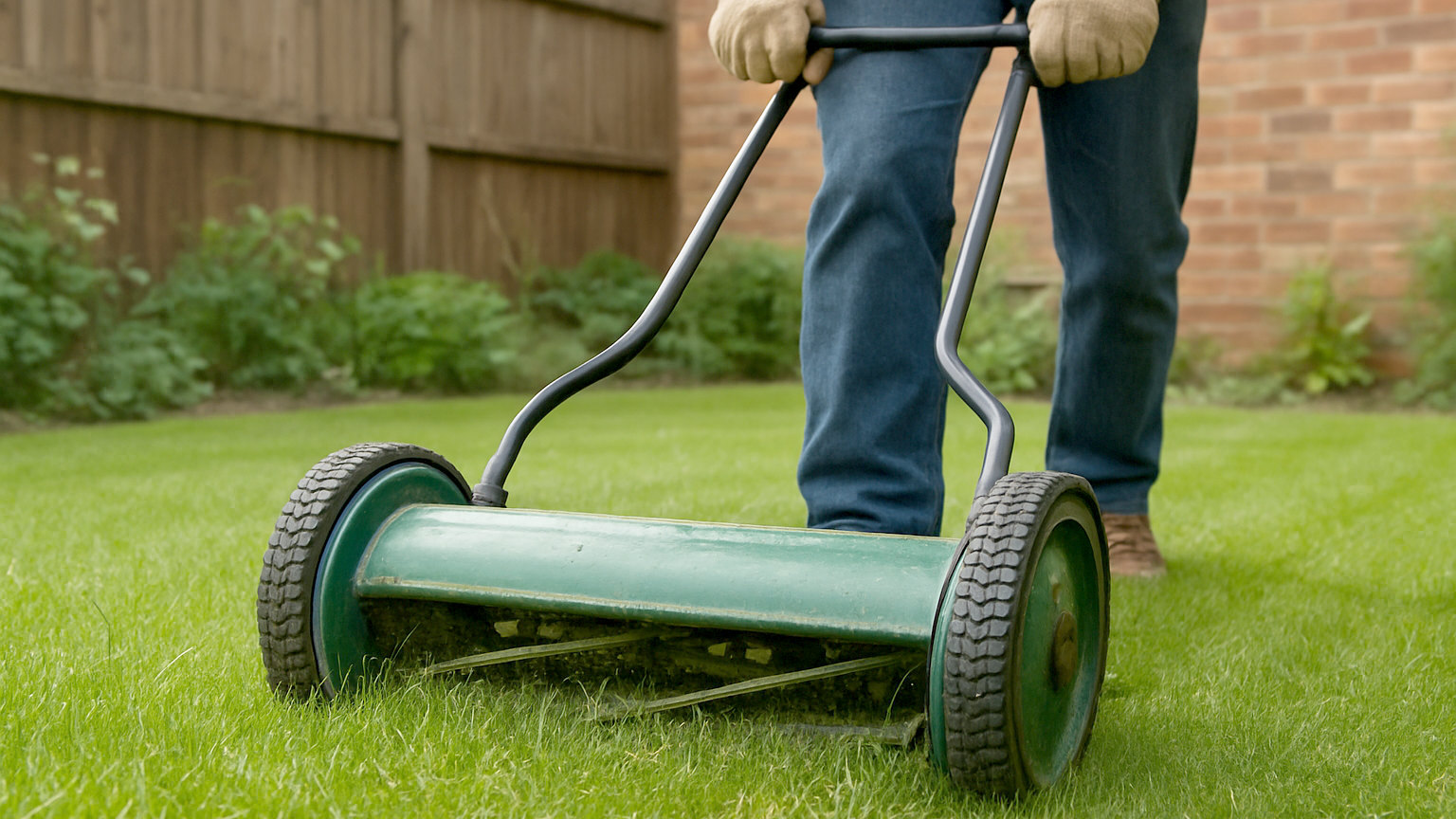
Cutting too short is the most common self-inflicted cause. Grass cut at fifteen millimetres has very little leaf to photosynthesise with and shallow roots to match, and it cannot compete with anything.
Raise the cut to between twenty-five and forty millimetres for a family lawn, and higher again in summer and in shade. Never remove more than a third of the leaf in one cut. Longer grass shades the soil surface, which is precisely what moss dislikes.
Treating the moss itself
Once you have addressed the cause, killing the existing moss is worth doing. Products based on iron sulphate, sold as lawn sand or moss killer, blacken moss within a week or two.
Apply in autumn or spring on a still day when the lawn is damp but rain is not imminent, following the label rate exactly. Iron sulphate stains paving, so keep it off paths and clean any that lands there promptly.
Wait two to three weeks for the moss to blacken and die, then scarify to remove it. Scarifying live moss simply distributes the fragments and spreads it further.
Rebuilding the grass
Removing moss leaves gaps, and gaps are where moss returns. Overseed immediately after scarifying with a mixture suited to your conditions, top dress, and keep the area watered until the seed establishes.
Feed appropriately through the year: a nitrogen-rich feed in spring and summer to promote growth, and an autumn feed high in potassium to toughen the grass for winter. A vigorous, dense lawn excludes moss on its own.
Lime and soil acidity
Moss is often blamed on acidic soil and liming is offered as the cure. In practice acidity is rarely the main driver in a UK garden, and applying lime without testing can push the pH too far the other way, which encourages a different set of weeds.
Test with a cheap kit before considering it. Most lawns sit between pH 5.5 and 7, which grass is perfectly happy with, and the shade, compaction and mowing causes are far more likely to be responsible.
Or reconsider the target
A weed-free, moss-free lawn takes considerable input, and it is worth asking whether that is what you want. Moss is soft, green all year, needs no mowing and tolerates shade, and in a damp shaded garden a deliberate moss lawn is a legitimate and much easier option.
Similarly, tolerating some moss and clover in a family lawn while keeping the grass healthy is a reasonable position, and better for pollinators than a sterile sward.