
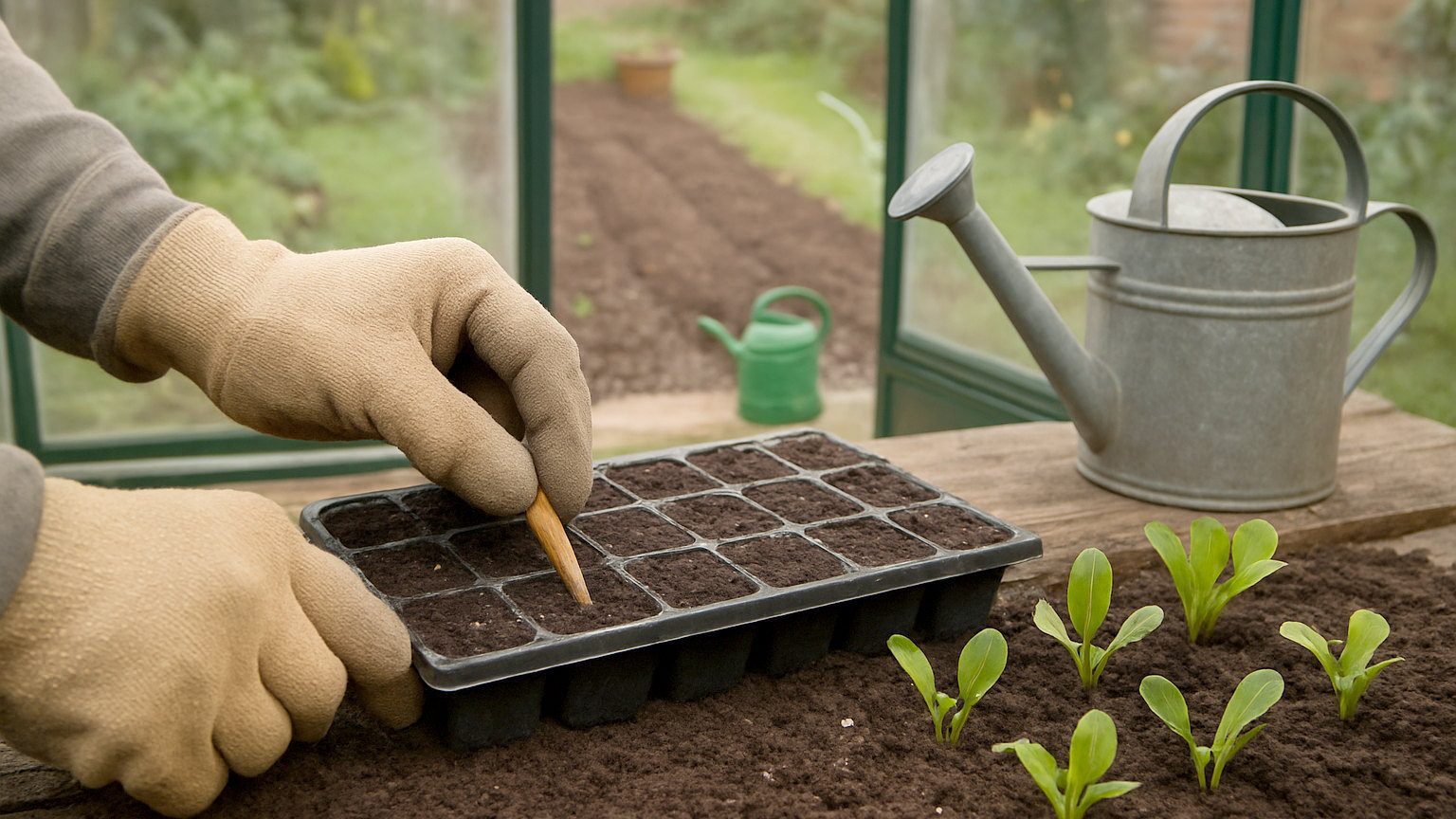
Most vegetable sowing in the UK happens between March and June, but the month on the seed packet is only half the answer. What actually decides whether a seed germinates is soil temperature, and that arrives at very different times in Cornwall and in Aberdeenshire. Treat the dates below as a guide and the soil in front of you as the instruction.
Why the packet date is not enough
Seed packets are printed for the whole country, so they give a window rather than a date, and the window is usually generous at the early end. A packet saying March to May does not mean March is best. It means March is possible somewhere in Britain in a good year.
Cold, wet soil does two things to a seed. It slows germination, which leaves the seed sitting in damp ground long enough to rot, and it checks the seedlings that do emerge so they never quite catch up. A courgette sown into cold soil in early May will be overtaken by one sown a fortnight later into warm soil, every time.
February and March: under cover only
These are indoor months for almost everything. Tomatoes, chillies and aubergines need a long season and want starting on a windowsill or in a heated propagator now. Onions from seed, leeks and early brassicas can also be started under cover.
Outdoors, broad beans and early peas can go in if the ground is workable, and garlic can still be planted. Everything else is better waiting. If you are impatient, warming a patch of soil with a sheet of clear polythene for a fortnight genuinely helps.
April and May: the main sowing months
This is when most direct sowing outside becomes worthwhile. Carrots, beetroot, radish, parsnips, spring onions, lettuce and chard can all go straight into prepared ground. Peas and beans follow as the soil warms.
Hold the tender crops back until the frosts have finished where you are. Runner beans, French beans, courgettes, squash, sweetcorn and outdoor tomatoes are all killed outright by a late frost, and in much of the country that risk does not pass until the end of May. Sowing these in pots in mid-April and planting out after the last frost gives you the head start without the gamble.
June and July: succession and catch crops
June is not too late, whatever the seed catalogues imply. French beans, courgettes and beetroot sown now will crop perfectly well, and salad sown in summer often does better than spring salad because the soil is warm and germination is quick.
This is also the point to start sowing little and often. A short row of lettuce, rocket or radish every two or three weeks gives a steady supply instead of a glut followed by nothing, and it is the single habit that most improves what a small plot produces.
August and September: sowing for next year
Late summer sowings are the ones most people miss. Spring cabbage, oriental leaves, winter lettuce, land cress, spinach and overwintering onions all go in now. Green manures sown on empty ground protect the soil over winter and feed it when dug in.
Garlic goes in from October onwards and needs a cold spell to form decent bulbs, so there is no advantage in waiting until spring.
The mistake nearly everyone makes
Sowing too early, and sowing too much at once. Both come from the same impatience in February when the catalogues arrive. A row sown at the right moment will overtake one sown three weeks early, and half a row sown every fortnight will feed you far better than a whole packet sown on one Saturday.
Spacing is the other common error. The thinning distances on the packet are not a suggestion. Carrots left unthinned produce a tangle of thin roots, and unthinned beetroot produces nothing worth pulling.
If a sowing fails, sow again. A failed row in April is not a lost year. Reseeding two weeks later costs a packet of seed and usually catches up by August, because the later sowing grows faster in warmer ground. Gardeners who get good crops are not the ones who never lose a sowing, they are the ones who sow again without much fuss.
Working out your own dates
Find your average last frost date, which local gardening groups and allotment sites will tell you, and count back from it. Anything tender goes in the ground after that date. Anything hardy can go three or four weeks before it. Keep a note each year of what you sowed and when, and after two seasons you will have a calendar that is more accurate for your garden than any packet.


