
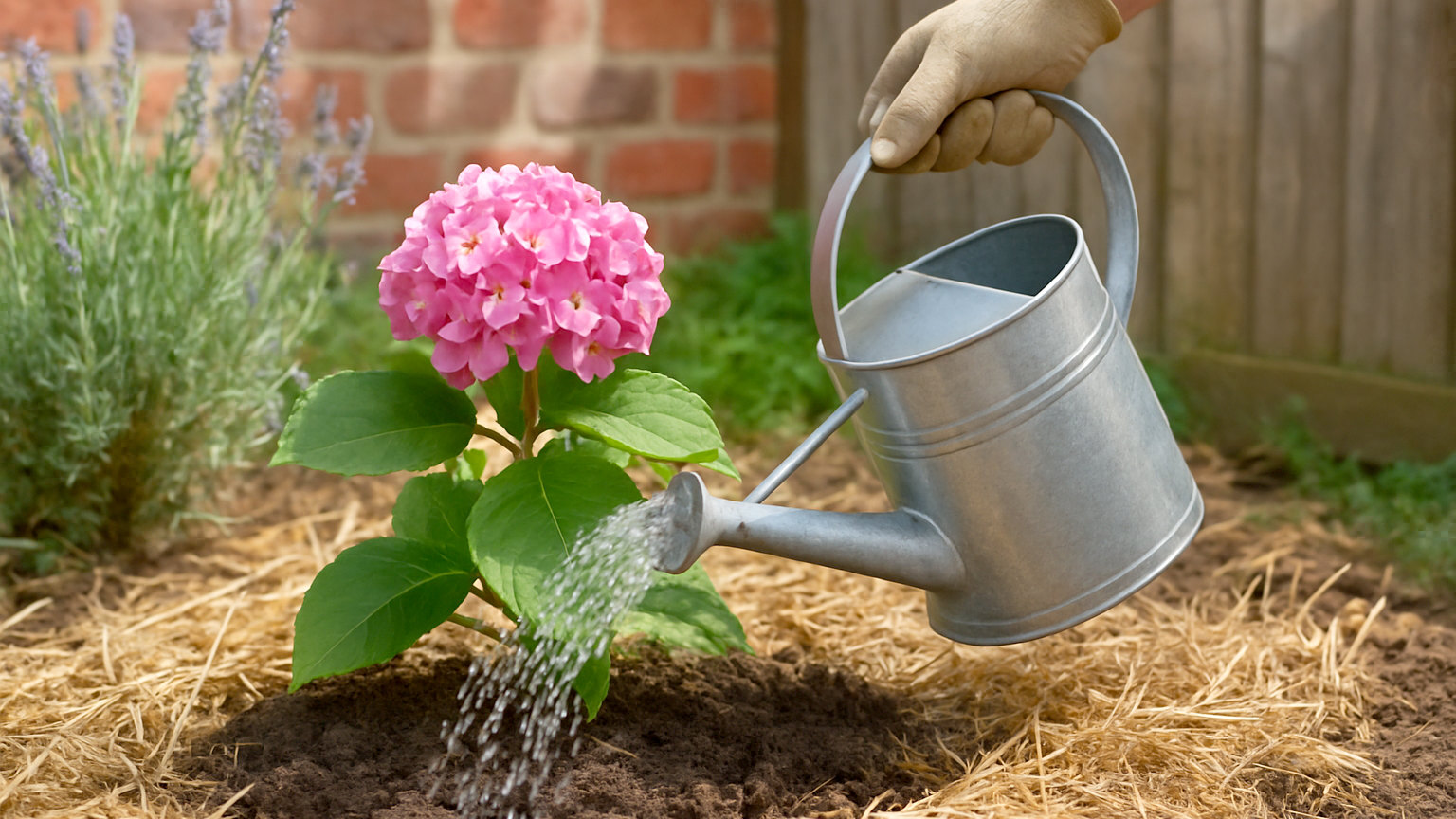
Extreme heat is a different problem from ordinary dry weather. Plants shut down to protect themselves, some of what looks like distress is normal, and a limited amount of water needs directing carefully.
Midday wilting is often normal
Many plants wilt in the middle of a hot day even when the soil is moist. Water is being lost through the leaves faster than the roots can supply it, and drooping reduces the surface exposed to the sun.
Check whether the plant has recovered by early evening. If it has, the soil is probably fine and no watering is needed.
Hydrangeas, courgettes, squash and plants with large soft leaves do this routinely and dramatically.
A plant still wilted in the evening or first thing in the morning genuinely needs water.
Feel the soil before acting. Wilting in wet soil means drowning roots, and more water makes it worse.
When to water
Early morning is best, giving the plant a reservoir before the heat and letting foliage dry.
Evening is acceptable in extreme heat and leaves surfaces damp overnight, which suits slugs.
Avoid the middle of the day, when much is lost to evaporation before it reaches the roots.
Do not water foliage in bright sun. Water sitting on leaves in strong light can cause scorch marks on some plants, and wet foliage encourages disease in any case.
What to prioritise
In order:
Containers and hanging baskets, which may need water twice a day and will die without it.
Newly planted trees, shrubs and perennials, which have no established root system.
Food crops at critical stages: fruiting tomatoes, beans in flower, potatoes forming tubers, leafy crops.
Anything under cover, where there is no rain at all and temperatures are higher still.
What to leave alone
Established lawns. Brown grass is dormant, not dead, and greens up within a fortnight of rain. Watering a lawn in a heatwave uses an enormous quantity of water for a cosmetic result.
Established borders of appropriate planting.
Mature trees and shrubs, which are deep rooted.
Water properly
A thorough soak twice a week does far more than a daily sprinkle, which wets the surface and encourages shallow rooting.
Aim at the soil around the base, and use a basin or a sunken pipe to get water down to the roots rather than letting it run across baked ground.
Very dry soil repels water initially. Apply a little, wait, then apply more, rather than tipping it on and watching it run off.
Shade and shelter
Move containers into shade, group them together, and take hanging baskets down onto the ground.
Shade vulnerable plants with fleece, netting or an old sheet during the hottest part of the day. Newly planted specimens and leafy crops benefit most.
Shade and ventilate greenhouses thoroughly, and damp down the floor to raise humidity and lower the temperature.
What not to do
Do not feed. Fertiliser applied to a plant that cannot take up water scorches the roots.
Do not mow. Grass that has stopped growing is stressed further by cutting.
Do not prune, plant or transplant. All of these ask a plant to recover from an injury in the worst possible conditions.
Do not mulch dry ground, which seals the dryness in and prevents light rain reaching the roots. Mulch only after rain or a thorough soak.
Afterwards
Assess damage once temperatures drop rather than during the heat.
Scorched leaves can be removed, and much of what looks dead recovers. Wait several weeks before deciding a plant has failed.
Autumn is the time to make good: mulch, improve soil, and replace anything genuinely lost with something better suited to the position.
People and pets
Garden work in extreme heat carries real risk. Work early or late, stay in the shade, drink plenty and stop if you feel unwell.
Leave shallow water out for birds and hedgehogs, refreshed daily, and keep dogs off hot paving, which burns paws badly.
A shallow dish with a stone or some marbles in it lets bees and other insects drink without drowning.
Top up ponds with rainwater rather than tap water where you can, since levels drop quickly in extreme heat and tap water introduces chlorine and nutrients.


