
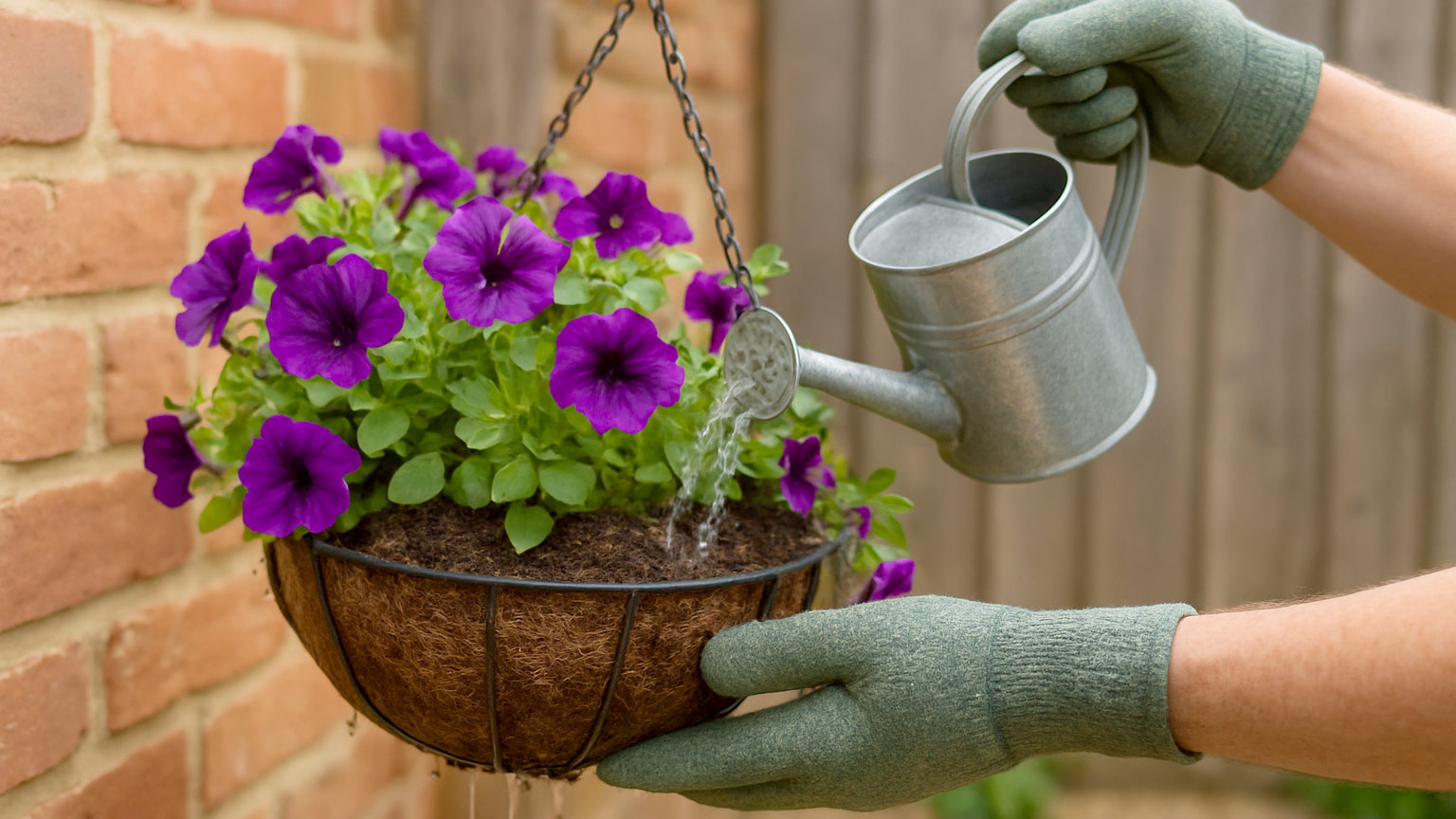
Containers are the most demanding part of a garden to water. There is no soil reserve to draw on, the volume is small, and a hanging basket in full sun can go from moist to bone dry within a day.
How often
Daily through summer for most containers, and twice daily for hanging baskets in a heatwave or against a hot wall.
Less in spring and autumn, and considerably less in winter, when overwatering does more harm than drought.
There is no schedule that works. Check rather than assume.
How to check properly
Push a finger into the compost to the second knuckle. The surface dries first and tells you very little.
Lifting a pot tells you a great deal once you know what it weighs when watered.
A moisture meter works and is not necessary for most people.
Wilting is a late signal rather than a useful one. A plant that wilts repeatedly drops buds and flowers less afterwards.
How to water
Thoroughly, until water runs from the drainage holes. This ensures the whole rootball is wetted rather than just the top.
A light splash on the surface runs off, or wets a shallow layer while the rootball beneath stays dry.
Water in the early morning if you can, which loses least to evaporation and lets foliage dry.
Aim at the compost rather than over the foliage.
Rewetting dried-out compost
This is where most people go wrong.
Peat-free compost that has dried out completely repels water. It shrinks away from the sides of the pot, and water poured on runs straight down the gap and out of the bottom, leaving the rootball dry.
The pot feels watered and the plant continues to wilt.
To fix it, stand the container in a bucket or tray of water for half an hour to an hour, until the compost has absorbed water from below and the surface darkens.
For a hanging basket, lift it down and immerse it. For a large pot that cannot be moved, water repeatedly in small amounts over an hour so it soaks in gradually, and firm the compost back against the sides of the pot.
Reducing how much watering is needed
Use the largest containers practical. A small pot dries out several times faster than a large one, and this is the single biggest factor.
Use soil-based compost such as John Innes for anything permanent, which holds water far better than multipurpose and does not repel it when dry.
Mix water-retaining granules into the compost at planting, at the rate on the packet and no more.
Mulch the compost surface with gravel, bark or slate, which reduces evaporation noticeably.
Group containers together, which raises humidity and shades the pots themselves.
Move pots out of full afternoon sun and away from hot walls where you can.
Choose glazed or plastic pots over unglazed terracotta, which is porous and loses water through its sides.
Drainage still matters
Ensure drainage holes are clear and stand pots on feet so water escapes.
Remove saucers except during a heatwave, when they can hold a small reserve. A pot standing permanently in water rots the roots, which produces wilting that looks exactly like drought.
Winter
Water sparingly and only when the compost is genuinely drying.
Pots under an overhang or against a wall may receive no rain at all and still need occasional watering, which is easily forgotten.
Waterlogging over winter kills more container plants than cold does. Remove saucers, raise pots on feet and check the holes are clear.
Automating it
A drip system with an emitter per pot, on a timer, is the reliable answer for anyone with more than a few containers or who is away regularly.
Check it delivers enough by digging into a pot after a cycle, and watch a full run monthly to catch blocked emitters and dislodged tubing.
Signs of trouble
Wilting despite moist compost usually means waterlogging or vine weevil rather than drought, and more water makes it worse.
A white crust on the compost or the outside of the pot is salt build-up from fertiliser and hard water, and is corrected by flushing the pot through with plenty of plain water.
Leaves browning at the tips and margins can indicate either drought or overwatering, so check the compost before deciding which.


