
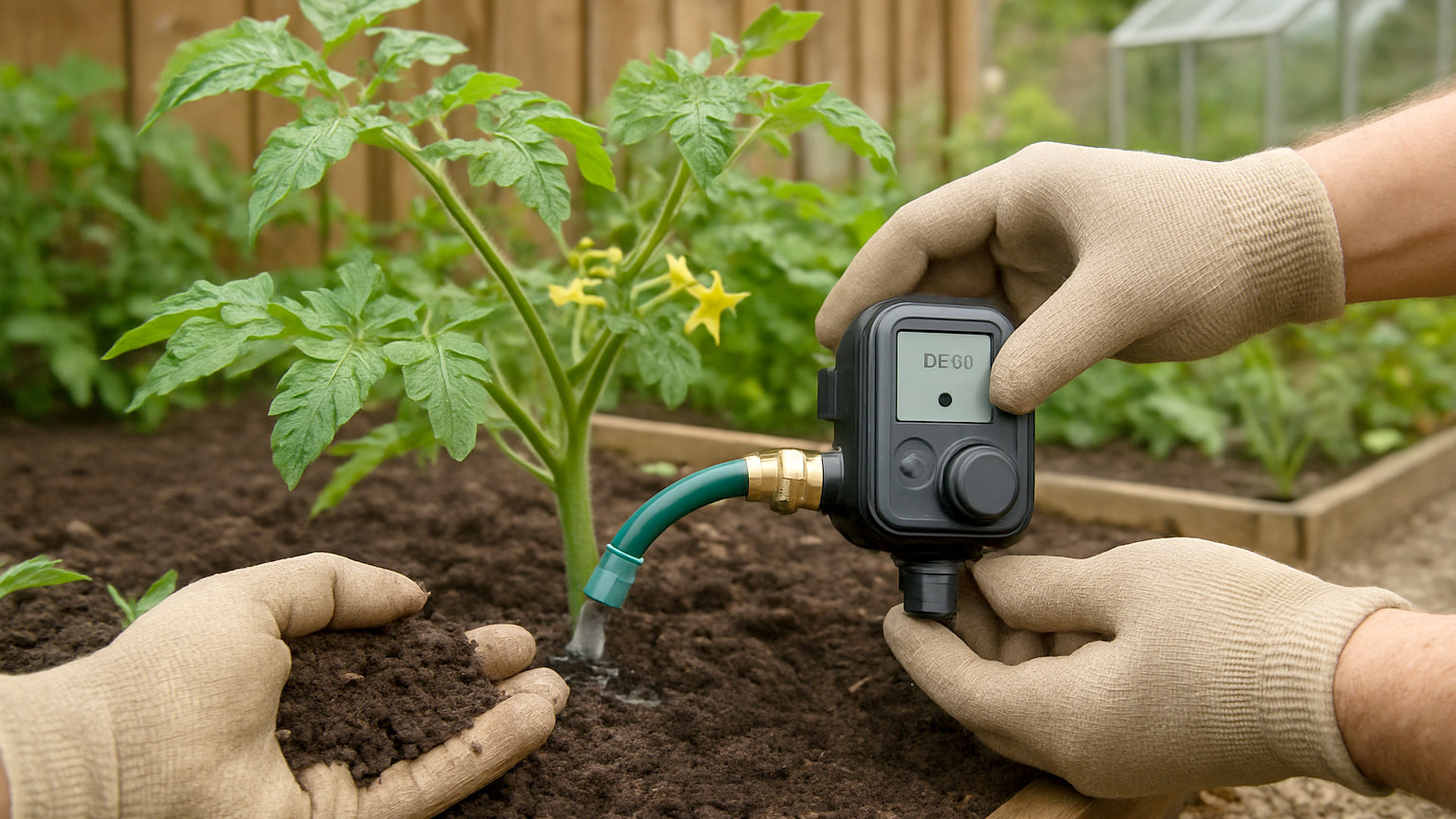
A timer turns an irrigation system into something that works whether you are there or not. It also waters in the rain, waters a soaking wet border, and keeps watering after a plant has died, unless you set it up thoughtfully.
Types
Simple mechanical timers screw onto a tap and run for a set period once turned on, like a kitchen timer. Cheap, no batteries, and they do not repeat.
Battery electronic timers are the common domestic choice, allowing start times, durations and days to be programmed. They cost little and work well.
Multi-zone controllers operate several separate circuits, which lets containers, vegetables and borders run on different schedules. Worth having wherever plants have different needs.
Smart controllers connect to a phone or a network, adjust for weather forecasts, and can be operated remotely. Useful if you travel, and more than most gardens need.
Setting it up
Fit a pressure reducer and a filter at the tap, and a backflow preventer, which is a water regulations requirement for a permanent outdoor connection.
Mount the timer where you can reach the controls and read the display.
Use fresh batteries and replace them at the start of every season. A dead battery mid-holiday is the commonest failure.
Some timers fail closed and some fail open. Knowing which yours does is worth establishing before you go away.
How long to run it
Do not guess. Run the system, then dig down beside a plant and see how far the water has actually penetrated.
Adjust until the soil is moist to ten or fifteen centimetres for borders, and until water runs from the base of containers.
Drip systems deliver slowly and need far longer runs than people assume, frequently an hour or more.
Check again a few weeks later, since emitters partly block and delivery drops.
How often
Fewer, longer soaks are better than short daily runs.
Borders: two or three times a week in dry weather, or not at all once established.
Containers: daily in summer, twice daily in a heatwave.
Vegetables: two or three thorough soaks a week, more at critical stages.
Set the start time for early morning, which loses least to evaporation and lets foliage dry.
Rain sensors
A rain sensor interrupts the programme when it has rained, which prevents the absurdity of a system watering during a downpour.
They are inexpensive and worth fitting to any permanent installation.
Soil moisture sensors go further, watering only when the soil is genuinely dry. They are the more useful device and need occasional checking and calibration.
Smart controllers using weather forecast data achieve something similar without any hardware in the garden.
Check it is working
This is the part that gets neglected.
Watch a full cycle at least monthly. Look for dry patches, blocked emitters, disconnected tubing and leaks.
Check the plants themselves rather than trusting the system. A pot that has blown over, a dripper that has fallen out of a container, or a chewed tube will not announce itself.
Test everything a week before going away, not the night before.
Seasonal adjustment
A schedule set in June is wrong by September.
Reduce run times and frequency as autumn arrives, and turn the system off entirely over winter.
Drain the lines, remove the timer and store it indoors, and store any exposed fittings frost free.
Do not let it replace judgement
Automatic watering encourages plants to depend on it, and a system failure then causes real damage.
Established borders of appropriate planting should not need routine irrigation. Reserve automation for containers, new plantings and food crops, and let the rest of the garden manage on rainfall.
Water regulations
Any permanent connection between a garden system and the mains needs a backflow preventer, so garden water cannot be drawn back into the drinking supply.
This is a requirement rather than a recommendation, and the fittings are inexpensive and simple to fit.
Zones
Plants with different needs should be on different circuits. Containers want a short daily run; a border wants a long soak twice a week; a vegetable bed sits somewhere between.
Trying to serve all three from one programme means something is always over or under watered, which is the commonest fault in a home system.


