
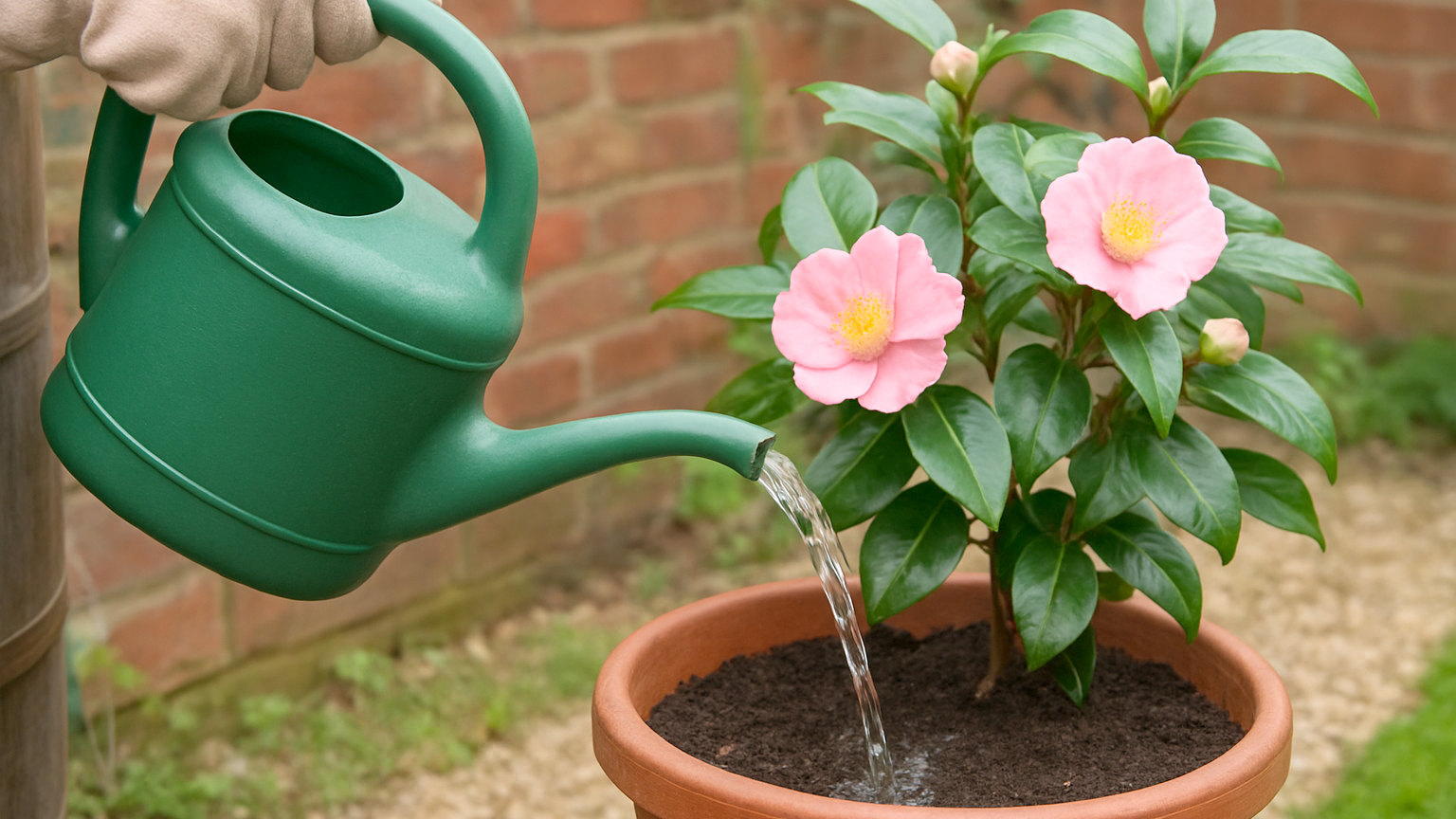
For most plants in open ground, tap water is entirely adequate and worrying about it is unnecessary. There are specific situations where the difference genuinely matters.
Hard water and pH
Hard water contains dissolved calcium and magnesium compounds, picked up from chalk and limestone. Much of southern and eastern England has hard or very hard water.
It is alkaline, and watering with it repeatedly raises the pH of the growing medium.
In a container this is cumulative and eventually significant, since the compost is a closed system with nothing to buffer it.
In open ground the effect is far smaller, since the soil volume is large and rainfall dilutes it.
Which plants are affected
Ericaceous plants, meaning those needing acid conditions, are the ones that suffer.
Camellias, rhododendrons, azaleas, pieris, blueberries, cranberries, heathers and skimmia all need a pH below about six.
As the pH rises, iron and manganese become chemically locked up and unavailable even though they are present in the compost.
The symptom is yellowing between the veins of the youngest leaves, with the veins staying green, progressing to almost white foliage.
Use rainwater for these plants, particularly in containers.
Occasional tap water during a drought will not kill them. Rainwater should be the default.
Correcting it
Sequestered iron gives a short-term correction and treats the symptom rather than the cause.
The real answer is to repot into fresh ericaceous compost, switch to rainwater, and feed with an ericaceous fertiliser.
Where the whole garden soil is alkaline, grow acid-lovers in containers rather than attempting to acidify a bed, which is expensive, temporary and rarely successful.
Chlorine
Tap water is treated with chlorine or chloramine at levels safe for drinking.
For garden plants it makes no practical difference. The quantity is small and it dissipates quickly.
The one place it matters is a pond, where chlorine harms fish and the beneficial bacteria in a filter. Fill a pond with rainwater where possible, let tap water stand in a butt for a day or two before adding it, or use a dechlorinator.
Tap water also contains nutrients that encourage algal blooms in ponds, which is a further argument for rainwater.
Softened water
Do not water plants with water from a domestic softener.
Softeners work by exchanging calcium for sodium, and sodium damages soil structure and is toxic to many plants at the concentrations involved.
Most installations leave the kitchen cold tap on the unsoftened supply, and that is the one to use. Check which taps are which before assuming.
The same applies to any outside tap fed from the softened supply.
Temperature
Very cold water straight from the mains checks growth in seedlings and tender plants, particularly under glass in spring.
Keeping a filled watering can in the greenhouse so the water reaches ambient temperature is worth doing for seedlings and young plants.
Rainwater
Slightly acidic, free of chlorine and softener sodium, at ambient temperature, and free.
Better for ericaceous plants, ponds, seedlings and anything in a container long term.
Fit butts to every downpipe, keep them lidded to exclude light and debris, and clean them out annually.
Water from a butt is not drinking water. Avoid creating fine sprays from stored water, and wash your hands after handling it.
When to stop worrying
For a lawn, a vegetable bed, established borders and most container bedding, tap water is fine.
Reserve rainwater for the situations where it makes a real difference: ericaceous plants, ponds, seedlings and anything in a container for the long term.
Watering with something is always better than not watering at all because the water is imperfect.
Hard water on paving and glass
Hard water leaves white deposits on greenhouse glass, terracotta pots and paving, which is cosmetic rather than harmful.
A white crust on the surface of container compost is usually a combination of hard water and fertiliser salts, and is corrected by flushing the pot through with plenty of plain water.
Testing
Your water company publishes the hardness figure for your postcode, which tells you immediately whether any of this is worth thinking about in your area.
In a soft water area, tap water is perfectly acceptable for almost everything, including ericaceous plants in containers.


