
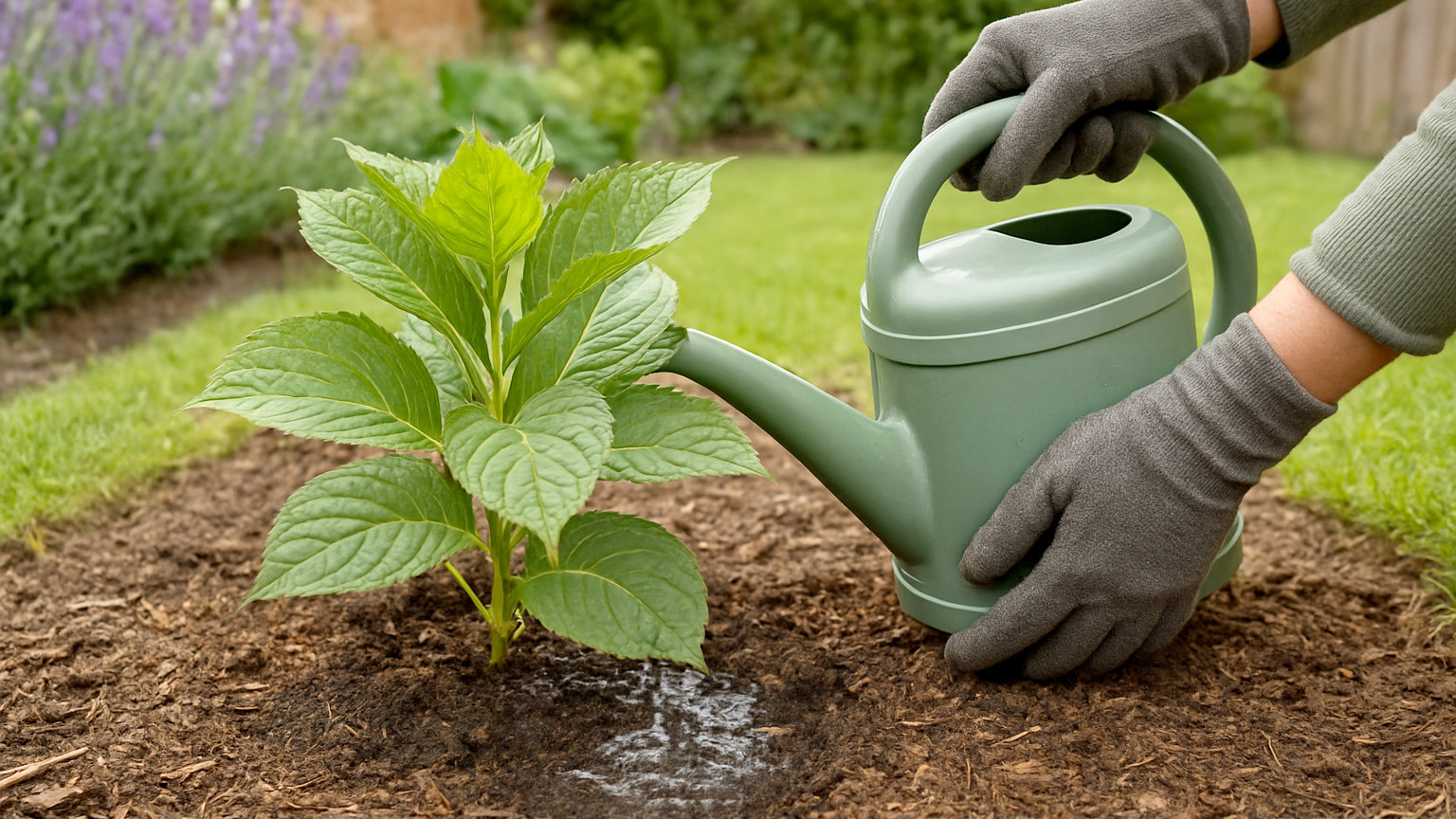
Most gardens are watered too often and too lightly, which produces plants with shallow roots that need watering even more. Understanding what genuinely needs water, and what a proper watering means, saves both effort and a great deal of water.
Soak rather than sprinkle
One thorough soak a week does more than a light watering every evening. Water needs to reach the depth roots occupy, which for an established shrub is well below the top few centimetres.
Light frequent watering wets only the surface. Roots follow the moisture upward, concentrating in the layer that dries out first, and the plant becomes permanently dependent on you.
A proper soak for a shrub is ten to twenty litres, one or two full cans, delivered slowly enough to sink in. For a young tree, twenty to forty litres. Check by pushing a trowel into the soil afterwards: if it is dry at ten centimetres, the water has not got where it needs to go.
What actually needs watering
In order of priority when water is short.
- Containers and hanging baskets - no reserve at all, may need water daily or twice daily in summer
- Anything planted this year or last - roots are still confined to the original rootball
- Vegetables and fruit at critical stages - flowering and fruit swelling, when a check costs you the crop
- Greenhouse plants - entirely dependent on you
- Newly sown seed and new turf - must not dry out at all
What can be left
Established trees and shrubs, more than about two years planted, have root systems reaching moisture well below the surface and will look after themselves through most British dry spells. They may look tired and will recover.
Established lawns can be left entirely. Grass browns off in drought and goes dormant rather than dying, and it greens up within a fortnight of rain returning. Watering a lawn uses enormous quantities of water for a purely cosmetic result, and raising the mowing height does far more good.
Drought-tolerant Mediterranean plants such as lavender, rosemary and thyme prefer to be left dry, and watering them regularly does harm rather than good.
When to water
Early morning is best. The plant has the whole day to use the water, foliage dries quickly, and less is lost to evaporation than at midday.
Evening is the second choice and is often more practical. The drawback is that damp foliage overnight encourages mildew and gives slugs comfortable conditions.
Avoid the middle of a hot day, when a significant proportion evaporates before it reaches the roots.
Where to put it
At the base of the plant, on the soil, not over the leaves. Watering foliage wastes most of it and spreads fungal disease. A watering can with the rose removed, or a hose held at the base, delivers water where it is needed.
For vegetables, water along the row rather than broadcasting across the bed, which mostly feeds the weeds. A length of pipe or a cut bottle sunk beside a thirsty plant such as a courgette or a tomato delivers water straight to the roots.
Reducing the need
Mulching is the single most effective thing. Five to seven centimetres of compost or bark over damp soil dramatically cuts evaporation and keeps roots cooler. Apply it after rain or watering, never onto dry ground.
Improving soil with organic matter increases how much water it holds, and that improvement compounds over years. Removing weeds reduces competition, and grouping containers together shades their sides.
Choosing plants suited to your conditions removes the problem altogether, and a dry sunny border planted with drought-tolerant species needs no watering at all once established.
Signs you have it wrong
Both overwatering and underwatering produce wilting and yellowing leaves, which catches people out and leads to more water being applied to a plant already drowning. The way to tell them apart is to feel the soil rather than look at the plant. Dry and dusty means water; wet and sour-smelling means stop and improve the drainage.
In a hosepipe ban
Prioritise new plantings, containers and food crops, and let the lawn and established plants take care of themselves.
Water butts on every downpipe are worth fitting, and grey water from washing up or a bath is acceptable on ornamentals provided it is free of bleach and strong detergent. Use it the same day rather than storing it.


