
Water companies impose restrictions during drought, and gardens are usually the first thing affected. Knowing what is actually restricted, and what is not, makes the difference between a lost season and a slightly drier one.
What a Temporary Use Ban covers
The formal term for what is usually called a hosepipe ban. It is imposed by an individual water company for its own supply area.
Typically restricted uses include watering a garden with a hosepipe, cleaning a private vehicle, filling or maintaining a domestic pool or pond, cleaning walls, paths and windows with a hose, and using a hosepipe to clean outdoor surfaces.
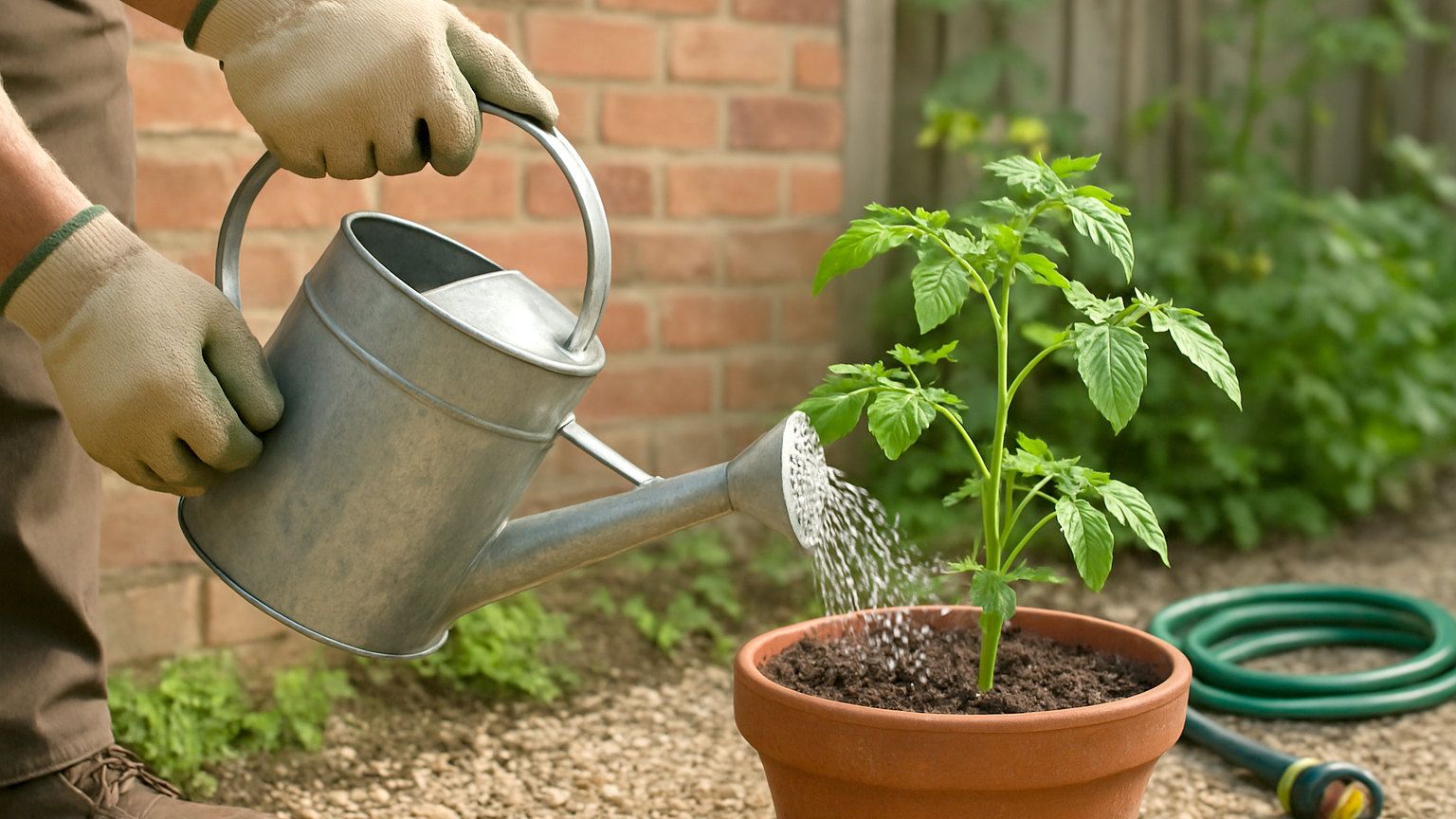
What is generally not restricted is watering with a watering can or a bucket, or using water from a private supply such as a water butt, a borehole or a well.
That distinction is the important one for gardeners, and it is why water butts are worth fitting before you need them.
Check your own supplier
The details vary between companies and between individual bans, and the exemptions are not identical.
Restrictions apply by supply area rather than nationally, so neighbouring counties may be under different rules.
Check the water company's own website for the current position and the exact terms, since general guidance may not match the specific ban in force.
Common exemptions
These vary and frequently include the following.
Blue Badge holders and customers on a supplier's priority services register are often exempt.
Newly laid turf and newly planted areas are sometimes exempt for a limited period after planting, though this is not universal.
Commercial growers and businesses whose trade depends on water use are usually treated separately.
National plant collections and some botanic collections may have specific provision.
Drip and trickle irrigation systems fitted with a pressure-reducing valve and a timer are exempt under some bans and not others.
Do not assume any exemption applies to you. Check the published terms of the specific ban in force, since they differ between companies and between years.
Penalties
Breaching a Temporary Use Ban is a criminal offence and can result in a fine on conviction.
In practice enforcement tends to be light and complaint-driven, and that is not a reason to ignore a ban when supplies are genuinely short.
Keeping a garden going
Prioritise ruthlessly. Water containers, newly planted trees and shrubs, and food crops at their critical stages.
Do not water established lawns. Brown grass is dormant rather than dead and recovers within a fortnight of rain.
Established borders of appropriate planting will cope with several weeks of drought.
Raise the mowing height and stop mowing entirely once growth stops.
Mulch thoroughly, since a mulch on moist soil conserves a great deal of water.
Remove weeds, which compete directly.
Water thoroughly and less often, in the early morning, aiming at the base of plants rather than over the foliage.
Water butts
Water from a butt is your own and is not covered by a Temporary Use Ban, including through a hose or pump connected to it.
Fit butts to every downpipe you can, including the shed and the greenhouse. A single roof produces a surprising quantity from modest rainfall.
Link several butts together to increase storage, and fit them well before a drought rather than during one, when they sell out.
Greywater
Water from washing up, baths and showers can be used on ornamental plants during a shortage.
Use it the same day rather than storing it, avoid anything containing bleach, disinfectant or water softener, and do not use it on edible crops, particularly anything eaten raw.
Avoid using it repeatedly on the same area, since salts and detergent residues accumulate in the soil.
Planning ahead
Restrictions are becoming more frequent. Improving soil with organic matter, mulching annually, choosing drought-tolerant planting and installing water storage all reduce dependence on a tap.
None of that can be done during a drought, which is the argument for doing it in an ordinary year.
Drought Orders
More severe restrictions can be applied for by water companies where a drought is prolonged, and these can extend to non-household use.
Temporary Use Bans affecting domestic gardens are the common measure and are usually lifted once reservoir and groundwater levels recover.


