
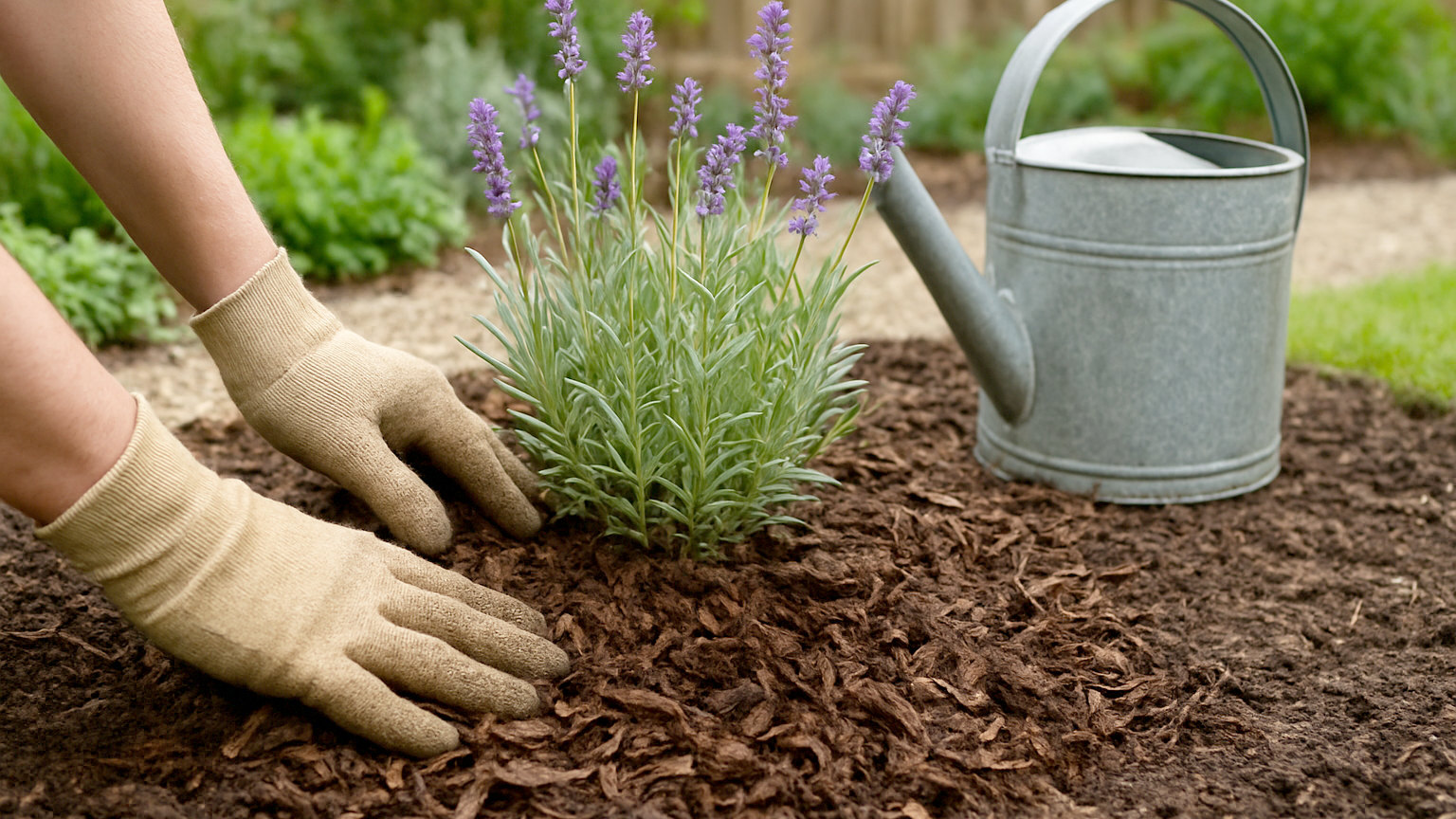
Most of the water used in a garden is not necessary. The measures that genuinely reduce it are mostly one-off jobs done in spring, rather than anything done with a hose in August.
Water thoroughly and less often
This is the single most effective change and it costs nothing.
A thorough soak reaches the depth where roots are and encourages them to grow downwards, where soil stays moist longest.
Light frequent watering wets only the top few centimetres and draws roots upwards into the layer that dries first, producing a plant that needs watering more often. The habit creates the dependency.
Aim to wet the soil to ten or fifteen centimetres, then leave it. Check afterwards with a trowel rather than assuming.
Improve the soil
Organic matter increases water-holding capacity on sandy soil and improves drainage and structure on clay, which is exactly what is needed in both cases.
Apply five to seven centimetres of compost or well-rotted manure to the surface each spring and let the worms take it down.
Done for several years this makes a substantial difference to how long ground stays moist.
Mulch
A mulch reduces evaporation from the surface considerably, suppresses the weeds that compete for water, and moderates soil temperature.
Apply it onto moist soil, never dry. A mulch does not add water; it holds in what is already there, and applied to dry ground it seals the dryness in.
Mulch in spring after rain, at five to seven centimetres, keeping it clear of stems.
Plant for the conditions
A plant suited to its position needs almost no help. One fighting its position needs help forever.
Choose drought-tolerant planting for hot dry positions rather than trying to keep moisture-lovers going there.
Silver and grey foliage, small or narrow leaves, hairy or waxy surfaces, aromatic foliage and deep taproots all indicate a plant adapted to dry conditions.
Get plants established
Newly planted trees and shrubs need watering through their first two growing seasons, and after that a well-chosen plant should manage on rainfall.
Water generously during that establishment period and then stop, rather than continuing indefinitely and producing a permanently dependent plant.
Autumn planting helps considerably, since the plant roots through winter and faces its first summer with a working root system.
Containers
These are where most garden water goes.
Use the largest containers practical, since a small pot dries out several times faster than a large one.
Use soil-based compost, which holds water far better than multipurpose and does not repel it when dry.
Mulch the compost surface with gravel or bark.
Group pots together, which raises humidity and shades them.
Move them out of full afternoon sun and away from hot walls.
Reduce the number of containers, or plant into the ground where you can.
Timing and technique
Water in the early morning, which loses least to evaporation.
Water at the base of plants rather than over foliage, which wastes water and spreads disease.
A shallow basin of soil around a new tree or shrub holds water where it is needed. A pipe or a sunken pot beside a thirsty plant delivers it straight to the roots.
Stop watering things that do not need it
Established lawns. Brown grass is dormant, not dead, and recovers within a fortnight of rain.
Established borders of appropriate planting, which cope with weeks of drought.
Mature trees and shrubs, which are deep rooted.
Keep the water for containers, new plantings and food crops at their critical stages.
Collect what falls
Fit water butts to every downpipe including the shed and greenhouse, and link several together.
A modest roof yields hundreds of litres from a wet week, and the water is free, better for plants and unaffected by hosepipe restrictions.
Where the effort pays
Ranked by how much water they save: improving the soil, mulching annually, choosing appropriate plants, watering thoroughly rather than often, and reducing the number of containers.
All five are done once or annually rather than daily, which is the point. Watering less is mostly a matter of planning in spring rather than restraint in August.
Grouping plants by need
Putting thirsty plants together near the tap, and drought-tolerant ones in the furthest and driest positions, means water goes where it is needed and nothing is watered unnecessarily.
This is obvious and rarely done, since plants are usually placed by appearance alone.


