
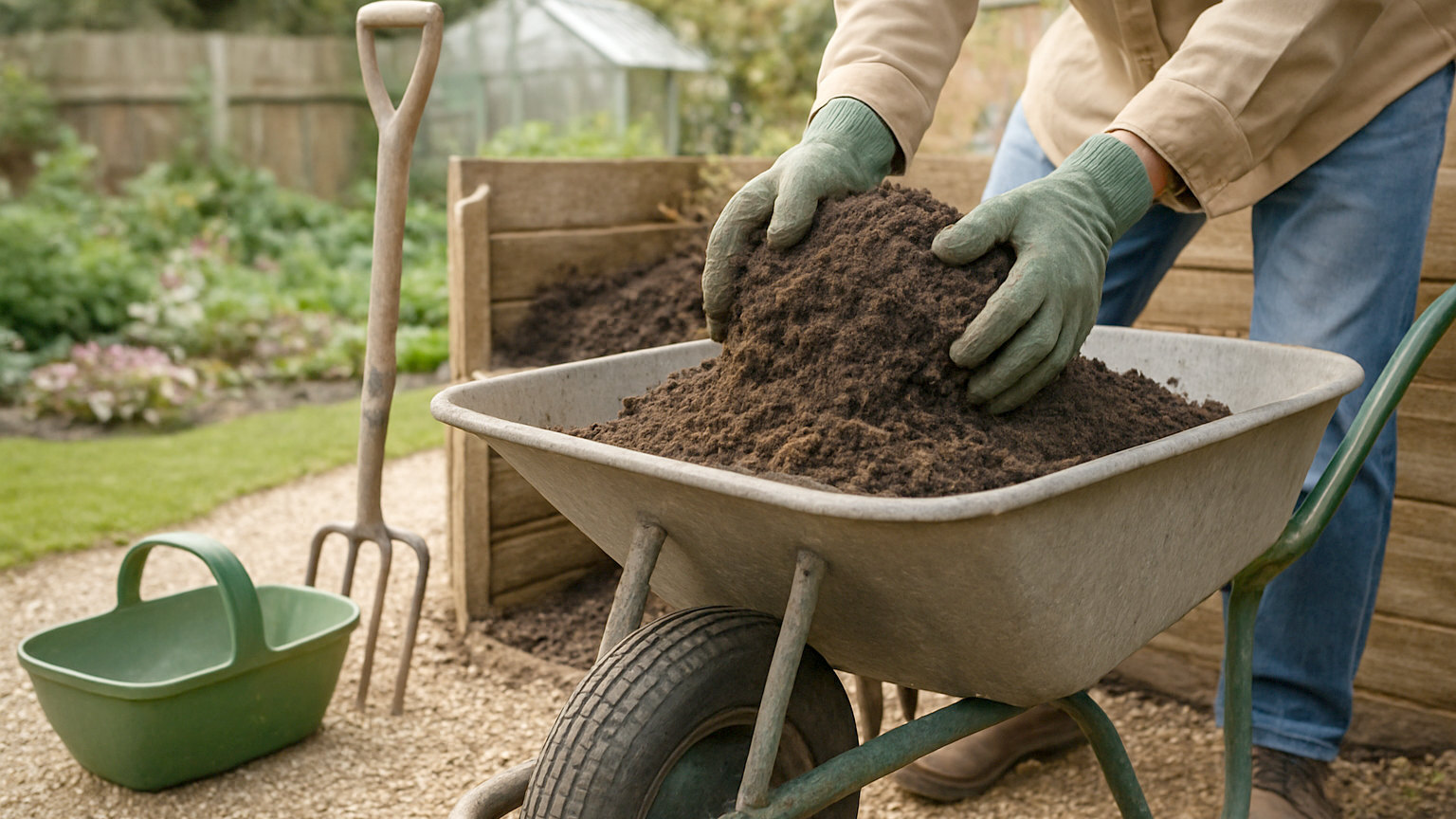
Moving material is where most of the physical work in a garden happens, and where most of the injuries come from. Compost, soil and paving are all considerably heavier than they look.
Choosing a wheelbarrow
Capacity is usually around ninety litres for a standard garden barrow, which is ample for domestic use. Builder's barrows are larger and heavier.
Galvanised steel pans are strong and durable, and dent rather than crack. Plastic pans are lighter, do not rust and eventually go brittle in sunlight.
Check the frame and the wheel mounting, which is where cheap barrows fail.
Handles should be comfortable and at a height that lets you push without stooping.
Tyres
Pneumatic tyres ride far better over rough ground and absorb shock, which matters when moving heavy loads across a lawn or a bumpy path. They puncture and need occasional inflating.
Solid or puncture-proof tyres never go flat and give a harsher ride and more effort over soft ground.
For most gardens a pneumatic tyre is worth the occasional puncture, and keeping it properly inflated makes a substantial difference to how easily the barrow pushes.
Two-wheeled barrows are more stable and less manoeuvrable, and suit anyone who finds balancing a single wheel difficult.
Loading properly
Load over the wheel, not at the back. Weight placed forward is carried by the wheel; weight at the back is carried by your arms and back.
Keep the load low and centred.
Take smaller loads more often. A barrow full of wet soil can weigh well over a hundred kilograms and is genuinely dangerous to move.
Do not overfill above the sides with loose material, which spills at the first bump.
Pushing safely
Bend your knees to lift the handles rather than your back.
Keep the load close, walk rather than rush, and look where you are going.
On a slope, go straight up or down rather than across, and never let a loaded barrow run away downhill.
Use boards over a lawn or a soft border, which spreads the weight, prevents ruts and stops the wheel sinking.
Empty by tipping forward rather than lifting.
Alternatives worth having
Garden trugs and tub trugs are flexible, light and handle small quantities of weeds, prunings and produce. Easier than a barrow for most small jobs.
Garden bags with handles collapse flat for storage and take a surprising volume of leaves and prunings.
A tarpaulin or old sheet is the best way to move a pile of leaves or clippings. Rake material onto it and drag it, which is quicker than repeated barrow loads.
A sack truck handles bagged compost, paving slabs on edge and pots far better than a barrow.
Plant caddies on castors let a large container be moved without lifting it at all.
Moving heavy individual items
Large pots, slabs and stone are where serious injuries happen.
Get help rather than managing alone. Two people and a plan is safer than one person and determination.
Use rollers, a sack truck, or a plank as a ramp.
Empty a large container before moving it, or use a plant caddy.
Slide rather than lift where you can.
Lifting technique
Keep the load close to your body, bend your knees rather than your spine, and do not twist while lifting. Move your feet instead.
Test the weight before committing, and put it down if it is too heavy.
Maintenance
Keep the tyre inflated, oil the wheel bearing occasionally, and check the fixings.
Store a barrow tipped up or under cover so it does not fill with water, which rusts the pan and rots the handles.
Protecting surfaces
Lay boards or a tarpaulin over a lawn or a paved area before tipping out soil, compost or gravel. Clearing up afterwards takes minutes rather than an afternoon, and the grass is not killed by a heap left overnight.
Order bulk deliveries as close to where they are needed as access allows, since the barrowing is where the work actually is.
Bulk bags
A bulk bag of compost, gravel or topsoil weighs around a tonne and must be delivered somewhere it can be craned or tipped safely, on firm level ground.
Check access, overhead clearance and where it will sit before ordering.


