
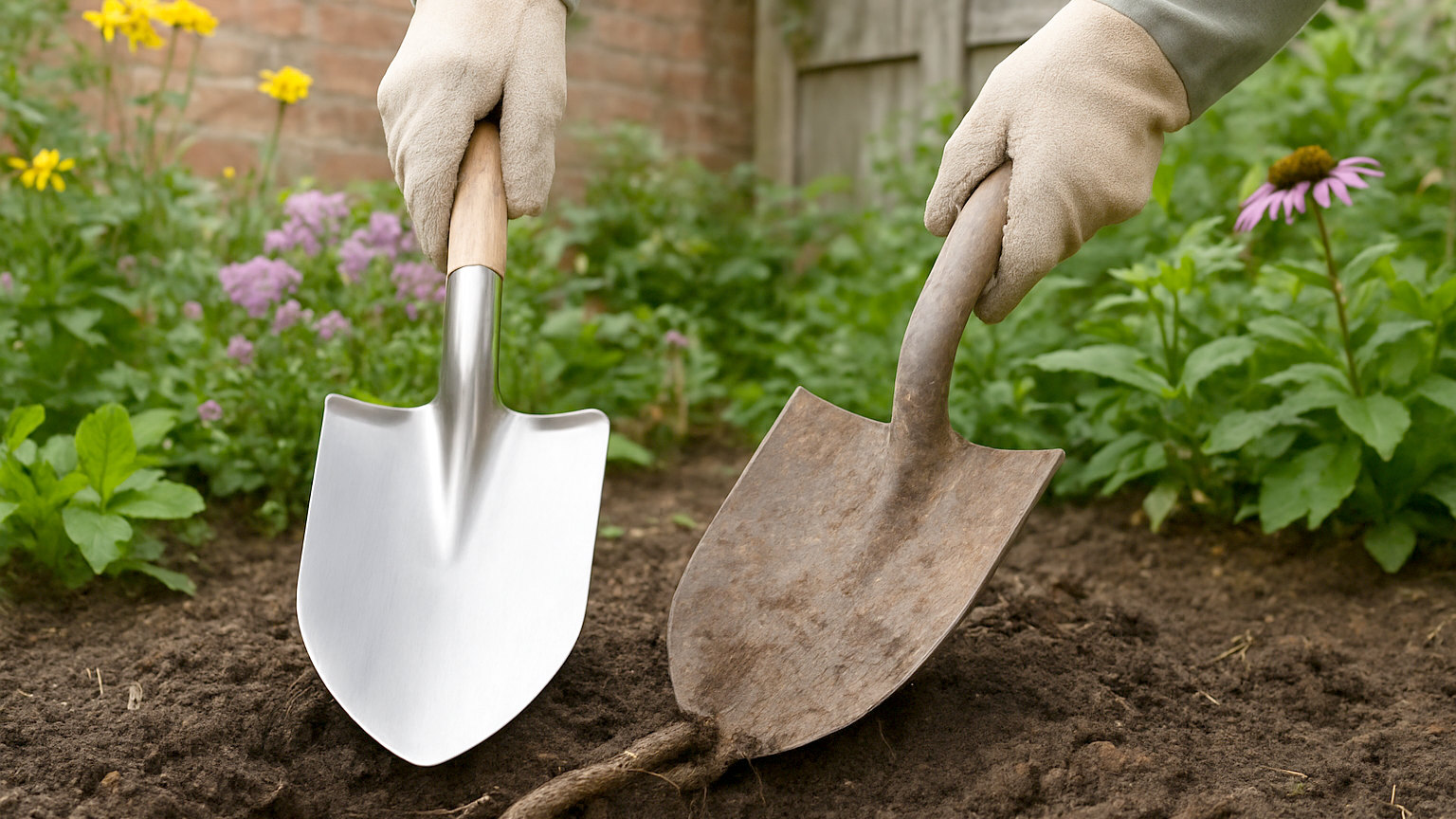
Tool prices vary by a factor of ten for what looks like the same object. The difference is real for some tools and largely irrelevant for others, and knowing which is which saves a great deal of money.
Where quality genuinely matters
Secateurs. The tool you pick up most often. A good pair with replaceable blades, springs and catches lasts decades and makes pruning pleasant. A cheap pair goes blunt, stiffens with sap and makes every job harder.
Spade and fork. These take enormous strain, and the joint between head and shaft is where cheap tools fail. A well-made spade lasts a working lifetime.
Pruning saw. A good one cuts effortlessly on the pull stroke. A poor one binds and requires force.
Hose. Reinforced hose resists kinking and lasts years. Cheap unreinforced tube splits within a season or two and is a permanent irritation.
Gloves. Comfortable gloves that fit get worn; uncomfortable ones stay in the shed while you work bare-handed.
Where cheap is fine
Watering cans, provided the rose is removable.
Buckets, trugs, garden bags and plastic pots.
String, labels, canes and general consumables.
Rakes, unless you use them heavily.
Kneelers, dibbers, sieves and similar simple items.
What to look for in construction
Forged tools are shaped from a single piece of heated steel and are far stronger than pressed ones, which are stamped from sheet.
Look at the joint between head and handle. A solid socket, or straps extending up the handle and riveted through, is strong. A thin welded tang is where a cheap tool breaks.
Check for replaceable parts. Secateurs with replaceable blades and springs can be maintained indefinitely; sealed ones are disposable.
Ash handles with straight grain running the full length are strong and replaceable. Short cross-grain sections snap.
Handle the tool. Balance and weight tell you a great deal that specifications do not.
Stainless steel
Worth the extra on heavy clay, where soil clings to carbon steel and doubles the effort of digging.
Less important on light soil, and carbon steel is stronger and holds an edge better.
Neither is worth paying for if the joint construction is poor.
Second hand
Frequently the best value available. Older forged tools were made to a standard that budget new tools do not approach.
Car boot sales, auctions, house clearances and reclamation yards all produce good spades, forks and hand tools cheaply.
Check the joint between head and handle, look for deep pitting or cracks in the metal, and check the handle for splits.
Surface rust cleans off with wire wool and oil. A cracked handle can be replaced. A broken socket cannot be repaired economically.
Warranties
Several manufacturers offer very long or lifetime guarantees on hand tools, which is a reasonable indicator of confidence.
Keep the receipt, and check whether the guarantee covers handles, which are usually treated as consumable.
Power tools
Buy into one battery system where you can, since batteries are the expensive part and sharing them across mower, trimmer and hedge cutter reduces the cost of each addition considerably.
For occasional heavy work, hiring is almost always better than buying. A rotavator, chipper, turf cutter or scarifier used once a year does not justify the purchase price or the storage space.
Buying gradually
Start with the core kit and add tools when a job actually demands one, rather than buying a full set at the outset.
Borrowing from a neighbour before buying tells you whether a tool suits you and whether the job comes up often enough to justify owning it.
That way you buy what you need, learn what you like, and avoid a shed full of items used once.
The false economy
Three cheap spades over ten years cost more than one good one and are unpleasant to use throughout.
Maintenance is worth more than money
A cheap tool that is cleaned, oiled and sharpened outperforms an expensive one that is left in the rain.
Whatever you spend, the routine matters more: scrape the soil off, wipe with an oily rag, sharpen the cutting edges, and store everything under cover.
That takes seconds after each use and makes far more difference over a decade than the price on the label ever will.


