
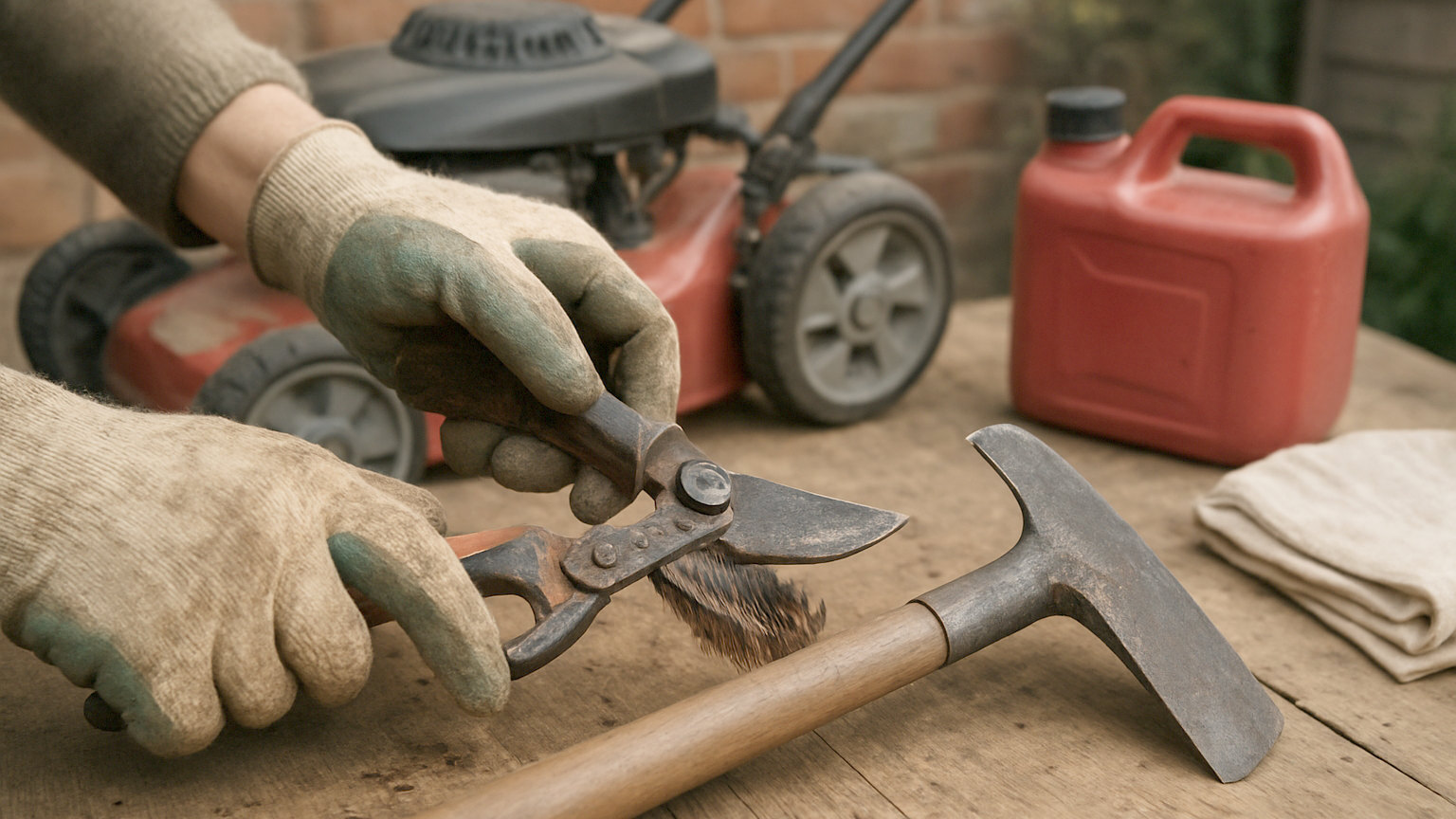
Winter is the only time of year when nothing much is growing, which makes it the right time to deal with everything that has been quietly deteriorating since March.
Hand tools
Clean every tool thoroughly, scraping off soil and sap.
Remove any rust with wire wool and oil.
Sharpen everything with a cutting edge: secateurs, loppers, shears, hoes, spades and edging irons. Follow the existing bevel with a file or a diamond sharpener.
Strip down secateurs, clean the blades and spring, and reassemble with the tension correctly set.
Sand wooden handles smooth and rub in linseed oil, letting it soak in and wiping off the excess.
Wipe all metal with an oily rag before storing.
Dry linseed-oiled rags spread out flat outdoors before disposal, since they can self-ignite as the oil cures.
Petrol machines
Clean the machine thoroughly, particularly the underside of a mower deck, with the spark plug lead disconnected.
Either drain the fuel completely, or fill the tank and add a fuel stabiliser. Modern petrol degrades within a few months and stale fuel is the commonest reason a machine will not start in spring.
Run the engine briefly after adding stabiliser so treated fuel reaches the carburettor.
Change the oil, replace or clean the air filter, and fit a new spark plug.
Sharpen or replace the blade, and check it is balanced.
Store somewhere dry, away from any ignition source, and store petrol in an approved container in a cool ventilated place away from the house.
Battery tools
Clean the tool and remove the battery.
Store lithium batteries at a partial charge, usually around half, rather than fully charged or completely flat, following the manufacturer's guidance.
Keep them indoors at room temperature rather than in a cold shed, since extreme cold shortens their life.
Store on a non-flammable surface, away from anything combustible, and never store a damaged or swollen battery.
Check and top up the charge every couple of months.
Corded electric tools
Inspect cables for nicks, cuts and damage, and replace rather than tape any that are damaged.
Coil cables loosely rather than tightly around a handle, which stresses the conductors.
Store indoors and dry.
Hoses and watering equipment
Drain hoses completely before frost. Water left inside freezes, expands and splits the hose.
Disconnect from the tap, drain by walking the length of the hose, and store on a reel out of sunlight.
Insulate outside taps with a purpose-made cover, or turn off and drain the supply if there is an internal isolating valve.
Drain irrigation systems and bring timers indoors, since frost splits them.
Empty and clean sprayers thoroughly, and store them indoors.
Drain water butts partially, or accept that a full butt may freeze and crack, and check the tap is not left where ice can split it.
Containers and pots
Empty and stack anything not in use, upside down or under cover, so it does not fill with water and crack when it freezes.
Raise planted containers on feet so they drain, and move vulnerable ones against a house wall.
Terracotta that is frost resistant rather than frost proof will crack when saturated compost freezes.
The shed itself
Clear it out, sweep it, and check the roof felt and any leaks.
Treat timber with preservative on a dry day if it needs it.
Check for rodent activity and remove anything that attracts them, particularly seed and bulbs, which should be kept in sealed metal or rigid plastic containers.
Make sure chemicals are stored frost free, sealed, labelled and locked away.
Seeds and bulbs
Store seed somewhere cool, dry and dark in an airtight container, and check the dates on the packets while you are there.
Order what you need for spring in January, before the popular varieties sell out.
Check stored bulbs and tubers monthly and remove anything rotting before it spreads to the rest.
A winter list
Clean and sharpen hand tools. Service the mower. Drain hoses and taps. Empty and store sprayers. Bring timers and batteries indoors. Stack empty pots. Check the shed. Sort the seed tin.
None of it is urgent, which is precisely why it gets left until the first warm Saturday in March when everyone else is at the repair shop.


