
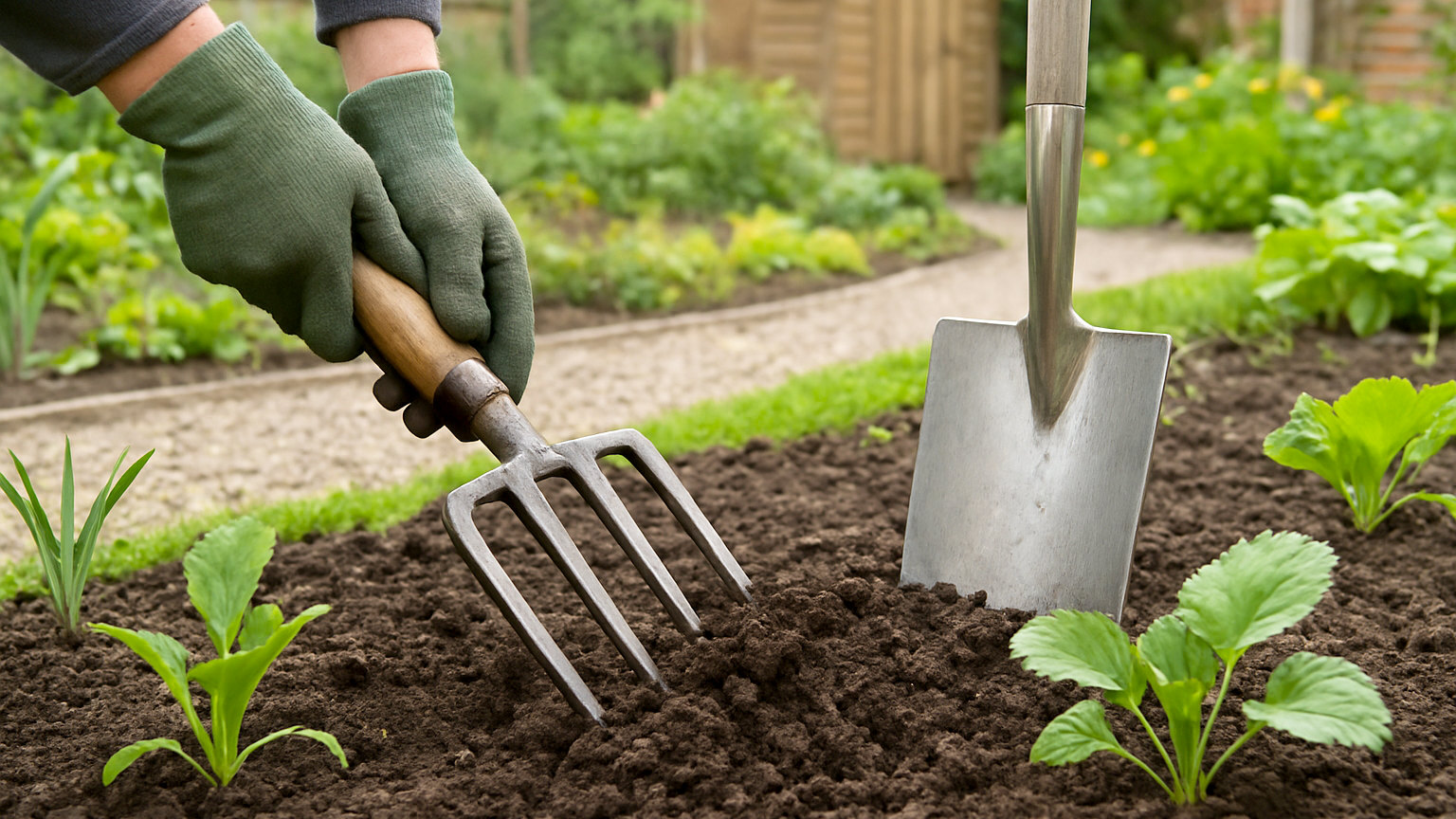
A spade and a fork are the two tools a garden cannot do without, and they do different jobs. Using one for the other's work damages plants, soil or the tool.
Spade or fork
A spade has a flat blade that cuts. Use it for digging, slicing through turf, cutting a clean edge, digging planting holes, moving loose material and dividing tough perennial clumps.
A fork has tines that penetrate and lift. Use it for breaking up compacted soil, turning compost, lifting root crops, working among plants where a spade would sever roots, and removing perennial weeds.
The distinction matters most with weeds and plants. A spade chops perennial weed roots into fragments and plants every one. A fork loosens the ground so the roots can be traced and pulled out whole.
Sizes
Digging spade and fork are the full-size versions, with a blade around twenty-eight centimetres and a shaft to suit.
Border spade and fork are noticeably smaller and lighter, suiting work among established plants, raised beds, and anyone who finds full-size tools heavy. Many gardeners end up using these for most work.
Transplanting spade has a long narrow blade for lifting plants with a rootball intact.
Handle before buying. Weight, balance and handle height vary and a tool that makes you stoop causes back pain within a season.
Handles
D, T and Y grips suit different hands, and the only way to choose is to hold each.
Ash handles absorb shock, are comfortable in cold weather and can be replaced when they break. Look for straight grain running the length of the handle.
Metal and fibreglass shafts are stronger and transmit more vibration, and are harder to replace when they fail.
Longer handles give more leverage and suit taller people.
Stainless or carbon steel
Stainless steel slices through soil more easily, since soil does not stick to it, and it does not rust. It costs considerably more.
Carbon steel is cheaper and stronger, and it rusts if left wet. It also holds an edge better.
Either works. Stainless is a genuine pleasure on heavy clay, where soil clings to carbon steel and doubles the effort.
Where tools fail
Almost always at the joint between head and shaft.
Look for a solid forged socket, or a strapped construction where metal straps extend up the handle, rather than a thin welded tang.
Never use a spade or fork as a lever to prise up something heavy, which is how shafts snap and tines bend.
Digging without hurting yourself
Back injuries from digging are common and mostly avoidable.
Keep the load close to your body and let your legs do the work rather than your back.
Bend your knees rather than your spine. Do not twist while lifting; move your feet instead.
Take small spadefuls. A full blade of wet clay is far heavier than it looks.
Use your foot to drive the spade in, keeping it vertical, which does the work with your leg rather than your arms.
Work for short periods and stop before you are tired. Most injuries happen at the end of a session.
Warm up first if you have not dug for months.
When not to dig
Never work soil that is wet, which destroys the structure for years, particularly on clay. If soil sticks to your boots, wait.
Never dig frozen ground.
Never rotavate ground containing perennial weeds, which chops the roots into hundreds of pieces and plants each one.
Digging less
No-dig methods, spreading compost on the surface and letting worms incorporate it, produce good results with far less work and preserve soil structure.
A fork is still needed for clearing perennial weeds and relieving compaction, and the spade sees much less use.
Care
Scrape soil off after every use and wipe the blade with an oily rag.
Keep the spade sharpened with a file, which makes cutting through roots and turf dramatically easier and is something most people never do.
Sand and oil wooden handles once a year to stop them drying out and cracking, and store everything under cover rather than leaning against a wall outside.
Other digging tools
A mattock or a pick is worth borrowing for breaking hard compacted ground or removing tree stumps.
A rotavator can be hired for cultivating a large clear area, and must never be used where perennial weeds are present.


