
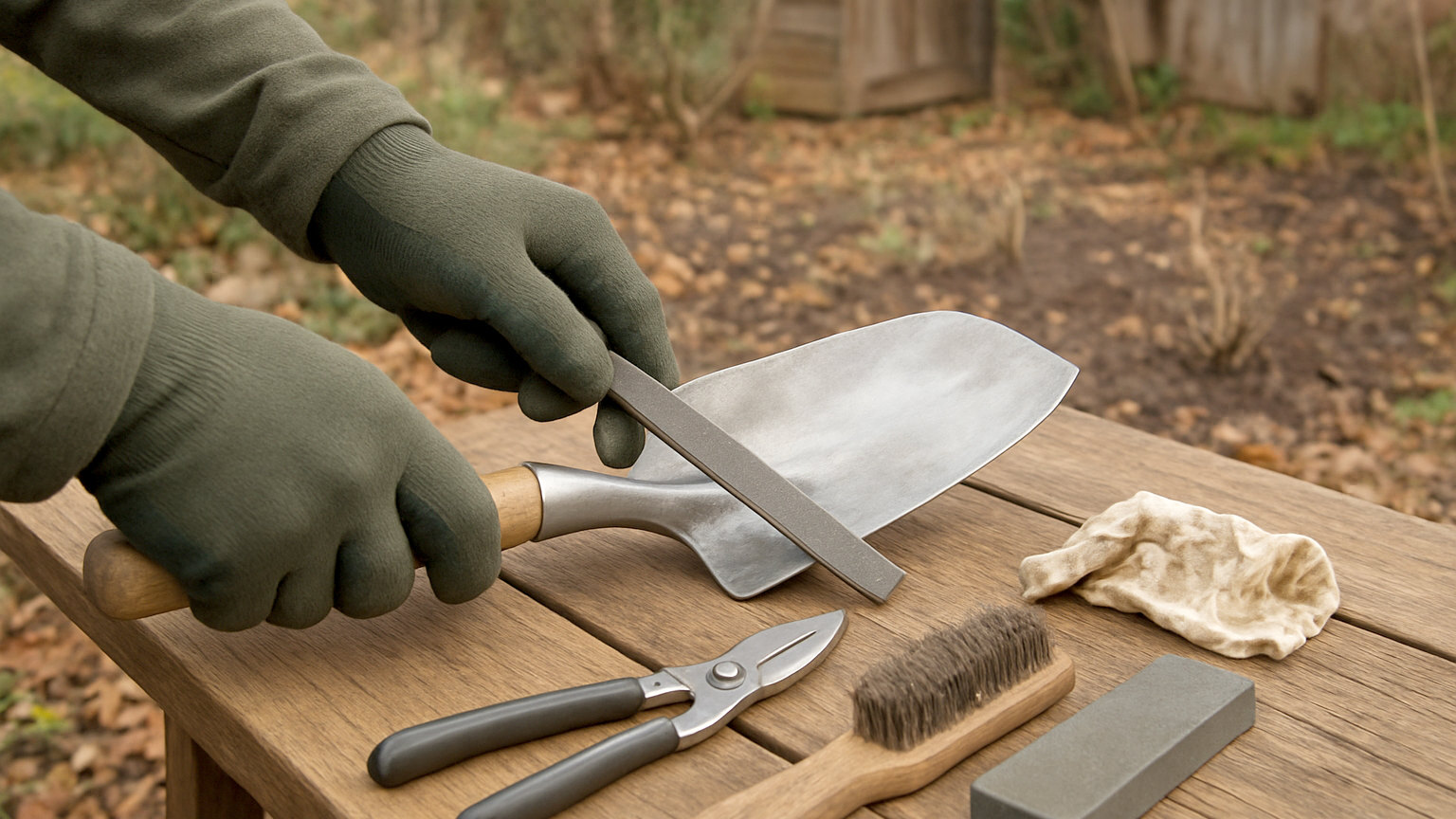
Sharp, clean tools do better work with less effort and are safer, because a blunt blade needs force and force is what slips. They also matter to the plant: a clean cut seals within a season while a crushed one stays open to disease.
Clean after every use
This takes under a minute and prevents almost every problem. Knock the soil off, wipe the metal with a rag, and dry it properly before putting it away.
Soil left on steel holds moisture against it and rust follows within days. Sap left on secateurs sets hard and gums up the mechanism.
A bucket of sharp sand with a little oil mixed in, kept by the shed door, cleans and lightly oils a spade or fork in a couple of plunges.
Sanitising between plants
Secateurs spread disease efficiently from one plant to the next. Canker, coral spot, blackspot and rose diseases all travel on blades.
Wipe the blades with household disinfectant, surgical spirit or a proprietary sanitiser between plants when pruning, and always after cutting anything diseased. It takes seconds and is the single most useful habit in this list.
Dispose of diseased prunings in the council green waste rather than a home compost heap, which rarely gets hot enough to deal with pathogens reliably.
Sharpening secateurs
Bypass secateurs have one cutting blade and one hooked counter-blade, and only the cutting blade is sharpened, on its bevelled outer face only.
Clean off sap with wire wool or a solvent first. Then run a diamond file or a sharpening stone along the bevel, following the existing angle, in strokes away from the blade edge in one direction only. Ten or twelve strokes is usually enough.
Do not sharpen the flat inner face, which must stay flat for the blades to pass cleanly. Turn the blade over and lightly remove any burr with a single flat pass.
Finish with a drop of oil at the pivot and open and close the tool a few times. Most decent secateurs come apart for cleaning, and replacement blades and springs are available for the better brands, which makes buying quality worth it.
Sharpening spades and hoes
People rarely sharpen these and it transforms them. A sharp spade slices through turf and roots instead of bouncing off.
Clamp the tool, and with a mill file work along the front edge at roughly the existing angle, filing in one direction only, away from you. Sharpen the front face of a spade and the leading edge of a hoe.
You are not aiming for a razor edge, just a clean defined bevel. Ten minutes at the start of the season is enough for the year.
Shears and loppers
Shears are sharpened on the outer bevel of each blade, in the same way as secateurs. Check the pivot bolt tension too: too loose and the blades will not meet, too tight and they bind. Adjust so the blades just brush past each other.
Loppers benefit from the same treatment, and their bolts loosen with use and are worth checking each spring.
Handles
Wooden handles dry out, splinter and crack. Sand them lightly once a year and rub in boiled linseed oil, which keeps them supple and comfortable.
Check for cracks around the socket where the handle meets the head, since that is where a handle fails, usually under load.
Before winter
At the end of the season, clean everything thoroughly, sharpen what needs it, and give all bare metal a wipe of oil. Any light machine oil, or a spray lubricant, works.
Store somewhere dry rather than an unheated shed with a leaking roof. Hanging tools on a wall rather than standing them on a damp floor doubles their life and stops the blades being damaged by knocking together.
Drain and coil hoses and bring them under cover, since water left in a hose splits it when it freezes.
Powered tools
Hedge trimmer and strimmer blades benefit from cleaning and a spray of resin remover after use, since sap sets hard and makes the next job harder. Check the cable of any mains tool along its length before use, and always run garden power tools through an RCD.
Buying once
Good tools sharpen better, hold an edge longer, and can usually be repaired rather than replaced. Stainless steel resists rust and is easier to clean; carbon steel takes and holds a keener edge but must be dried and oiled.


