
Rust is the commonest way garden tools are ruined, and it is entirely preventable with about thirty seconds of attention after each use.
How it starts
Iron and steel corrode in the presence of moisture and oxygen. Soil holds moisture against the metal and some soils are mildly acidic, which accelerates it.
A tool put away with soil on it, or left out overnight, begins rusting immediately.
Once pitting has developed, the surface is rough, soil sticks to it, cutting edges will not hold, and the damage cannot be fully undone.
The routine that prevents it
After every use:
Scrape the soil off with a stick, a paint scraper or a wire brush. Soil left on is what holds the moisture.
Dry the tool with a cloth if it is wet.
Wipe the metal with an oily rag. Any light machine oil, or a purpose-made tool oil, leaves a film that excludes moisture.
That is the whole of it, and doing it consistently means tools last decades.
The oiled sand bucket
A traditional method that makes the routine almost automatic.
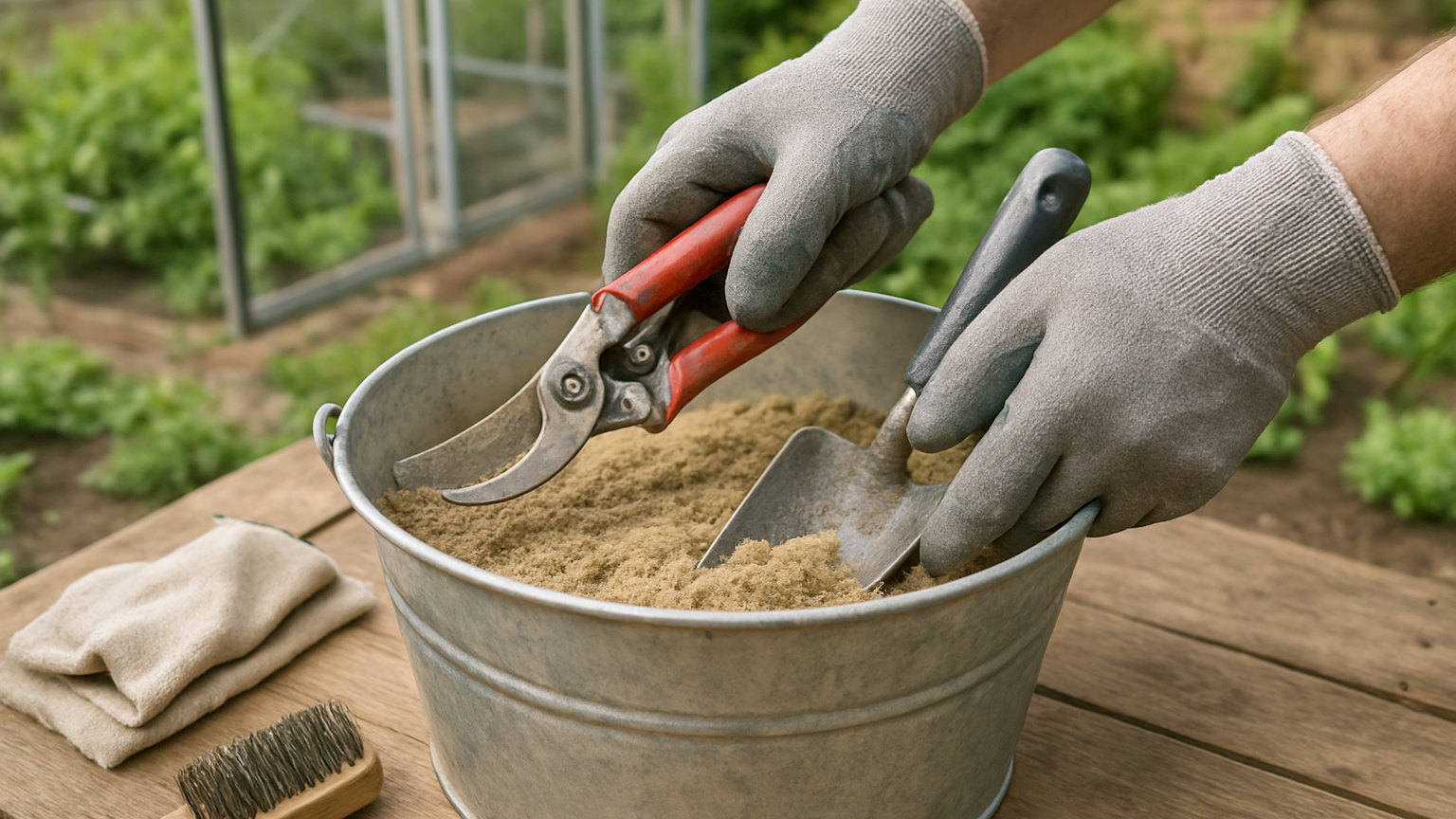
Fill a bucket with dry sharp sand and pour in a modest quantity of oil, mixing it through until the sand is lightly coated.
Plunge spade, fork, trowel and hand fork blades into it a few times after use. The sand scours off remaining soil and the oil coats the metal in a single action.
Keep the bucket somewhere dry, and top up the oil occasionally.
Use a light mineral oil rather than a vegetable one, which goes rancid and sticky.
Which oil
For metal, a light machine oil, three-in-one type oil, or a spray lubricant. Avoid heavy greases, which collect soil.
For cutting edges on tools used near food crops, a food-safe oil is worth considering.
For wooden handles, raw or boiled linseed oil, which soaks in and prevents cracking.
Linseed-oiled rags can self-ignite as the oil cures. Dry them spread out flat outdoors, or soak them in water before disposal, and never leave them screwed up in a bin.
Removing established rust
Light surface rust comes off with wire wool, a wire brush or a scouring pad, working with a little oil.
Heavier rust responds to a wire brush in a drill, used with eye protection, or to soaking in a proprietary rust remover following the instructions.
A vinegar soak overnight loosens rust and needs thorough rinsing, drying and immediate oiling afterwards, since bare clean steel rusts within hours.
Finish by sharpening the cutting edge and oiling the whole surface.
Deep pitting cannot be removed. Clean it back, oil it, and accept that the tool will never be quite as smooth again.
Secateurs and cutting tools
Sap is the problem here as much as soil. It sets hard, makes the blades stiff, and holds moisture.
Wipe blades after every use before the sap dries. Remove hardened deposits with wire wool or a proprietary sap remover.
Oil the pivot and the spring as well as the blade.
Storage
Store tools under cover, in a dry shed or garage.
Hang them on a rack or hooks rather than standing them on a floor, where damp wicks up into handles and heads sit in condensation.
An unheated shed can be damp, so consider a container of desiccant, or leave a small vent for airflow.
Never leave tools outside overnight, which is how most rust and most rotten handles begin.
Stainless steel
Resists rust rather than being immune to it, and cheaper stainless can still stain.
It still benefits from cleaning after use, and the joints, rivets and springs on stainless tools are frequently ordinary steel and will rust regardless of the blade.
Annual overhaul
In winter, go through everything: clean, derust, sharpen, oil the metal, sand and oil the handles, and replace anything worn.
An afternoon in January means everything works properly in March, when you actually want to use it.
What rusts fastest
Cutting edges, since they are thin and the metal is exposed by sharpening.
Springs, pivots and rivets, which are frequently ordinary steel even on stainless tools.
Anything left in contact with damp soil, sand or a concrete floor overnight, since all three hold moisture against the metal.


