
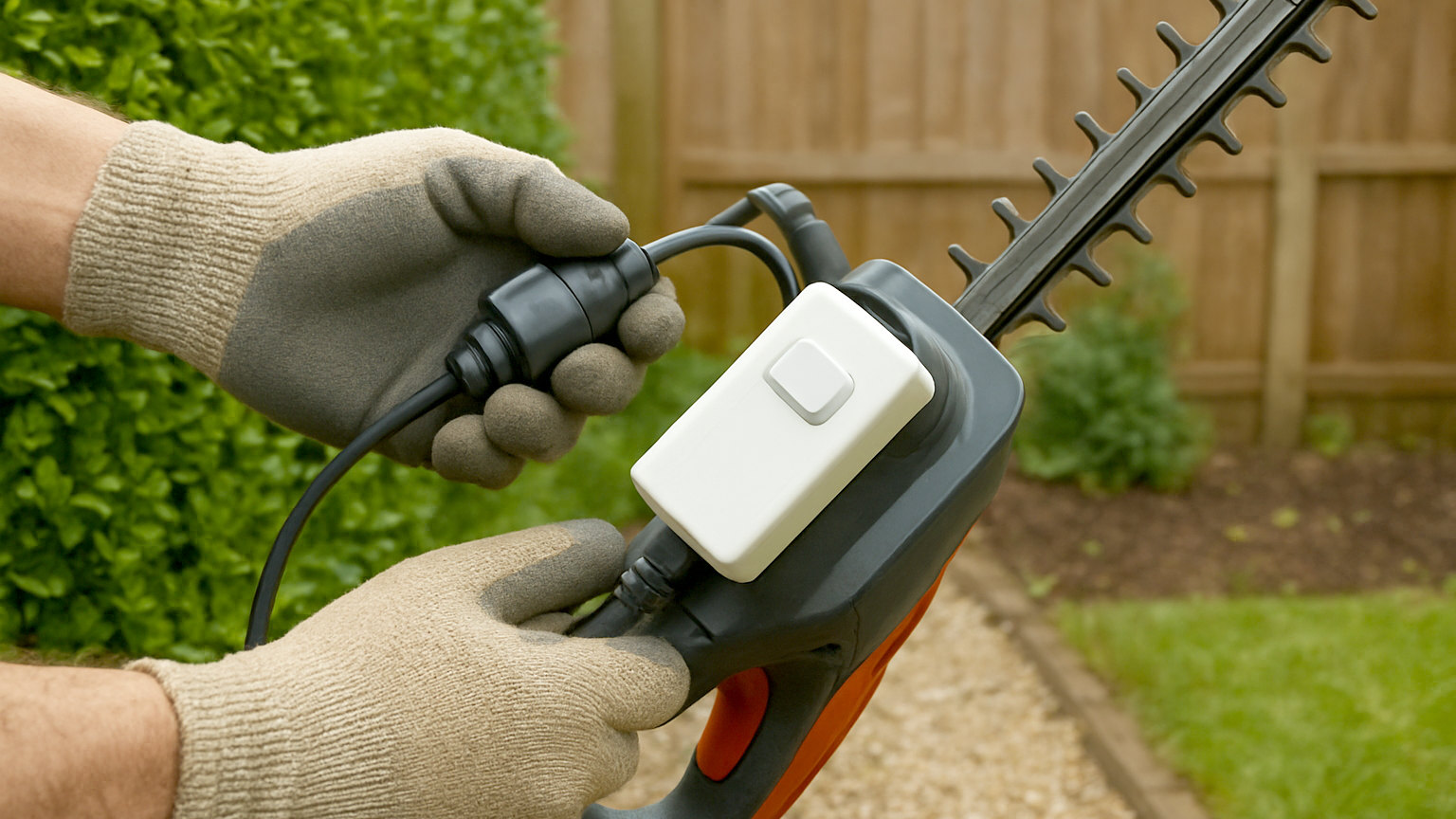
Electric garden tools cause a significant number of injuries every year, and the great majority involve cut cables, contact with blades, or thrown debris. Nearly all are preventable.
Always use an RCD
A residual current device cuts the power within milliseconds if current leaks to earth, which is what happens when a cable is cut or a fault develops.
Cutting through a mower or hedge trimmer cable is a common accident, and an RCD is the difference between a nuisance and an electrocution.
Many modern consumer units protect all circuits, and many do not. If you are not certain, use a plug-in RCD adaptor at the socket, which costs very little.
Test the RCD before each use by pressing the test button.
Use one every time, including for a five-minute job.
Cables
Inspect the full length before each use for nicks, cuts, exposed conductors and damage at the plug and the tool entry.
Replace a damaged cable rather than taping it. Tape does not restore insulation.
Keep the cable over your shoulder and behind you while working, and work away from the socket so it trails rather than lying in front of the blade.
Use a bright coloured cable if you can, since it is easier to keep track of.
Fully unwind an extension reel before use, since a coiled cable under load overheats.
Use an extension lead rated for outdoor use and for the current the tool draws.
Wet conditions
Never use mains-powered tools on wet grass, in the rain, or where the cable would cross standing water.
Do not use them with wet hands or wet footwear.
Store equipment dry, and do not use anything that has been left out in the rain until it has been checked.
Protective equipment
Eye protection whenever a tool throws debris, which means strimmers, hedge trimmers, mowers and shredders. Goggles or a visor rather than ordinary glasses.
Hearing protection with anything loud, since damage from repeated exposure is cumulative and permanent.
Stout boots, never sandals or bare feet.
Gloves and long sleeves and trousers.
A dust mask when shredding or handling dry compost and leaf mould.
Before starting
Clear the area of stones, wire, sticks and toys, which are thrown at speed by rotary blades and strimmer heads.
Check guards are fitted and undamaged, and never defeat a safety cut-out.
Keep children and pets well away, at least fifteen metres from a strimmer.
While working
Never put hands or feet near a blade that could turn.
Disconnect the power completely before clearing a blockage, changing a blade, adjusting a setting or inspecting the underside. Blades coast after the motor stops.
Work at a comfortable height and do not overreach.
Stop if you are tired, since concentration lapses are when accidents happen.
Petrol machines
Refuel only when the engine is cold, outdoors, never in a shed.
Never run a petrol engine in an enclosed space because of carbon monoxide, which is odourless and can be fatal. This includes starting a mower in a garage to test it.
Store fuel in an approved container in a cool ventilated place away from the house.
Chainsaws
Not a tool for the untrained. Chainsaws cause severe and frequently life-changing injuries, require specific protective clothing including cut-resistant trousers, boots and a helmet with visor, and demand proper training.
Any job that genuinely needs one is a job for a qualified, insured arborist.
The same applies to any work at height with a powered tool.
Working alone
Tell someone what you are doing and keep a phone in your pocket rather than indoors.
Do not use powered tools when nobody is around if you are working at height or with anything that could trap you.
Maintenance and inspection
Check tools before each use: cable, guards, blade condition, fixings.
Have anything with a doubtful fault repaired rather than working round it, and never modify or bypass a safety feature.
Store equipment dry, with the power disconnected and blades covered, out of reach of children.
Overhead lines
Never work near an overhead power line with a pole pruner, ladder or any long tool, and never assume a line is insulated, since electricity arcs across a gap.
Contact the network operator, who will usually advise or make the area safe without charge.


