
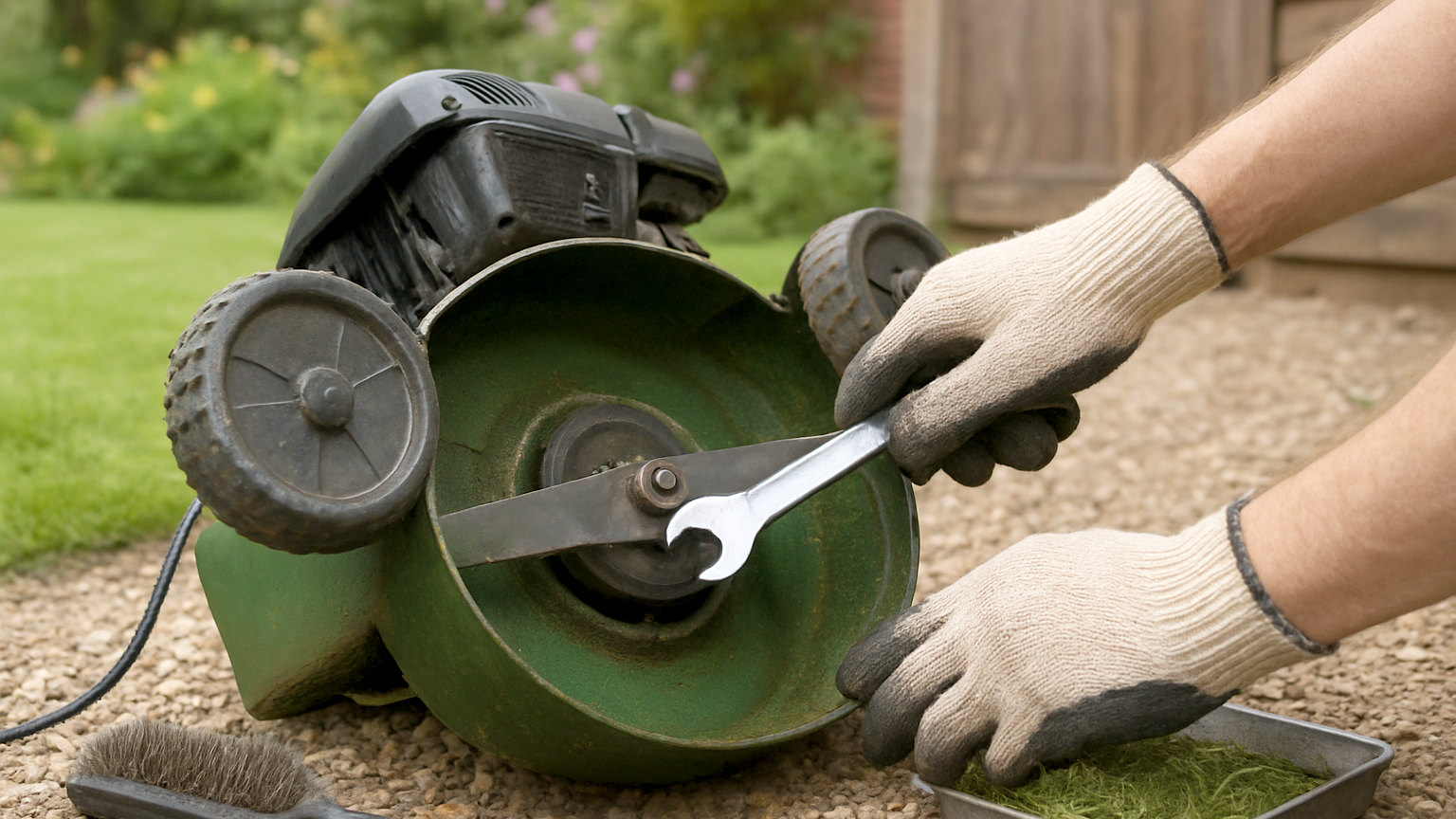
A mower is the most heavily used machine in most gardens and the least maintained. The single job that matters most is the blade, because a blunt one tears the grass rather than cutting it, leaving ragged tips that turn white-brown and let disease in.
The blade
Look at the lawn a day after mowing. If the tips are ragged and pale rather than cleanly cut, the blade is blunt.
Sharpen or replace at least once a season, and more often on a large lawn or where you hit stones. On a rotary mower the blade is a single bar held by a central bolt; on a cylinder mower the process is different and usually a job for a service engineer.
Disconnect the power before going anywhere near the blade. Remove the spark plug lead on a petrol mower, take the battery out of a cordless one, and unplug an electric mower at the wall. This is not a formality, and mower blade injuries are severe.
Tip the machine the correct way, which for most petrol mowers means with the spark plug uppermost so oil and fuel do not flood the engine or the air filter. Check the manual.
Sharpen with a file or a bench grinder, following the existing angle, and take the same amount off each end so the blade stays balanced. An unbalanced blade vibrates and wrecks the bearings. Replacement blades are inexpensive and often the easier option.
Cleaning the deck
Grass caked under the deck restricts airflow, which is what lifts the grass to be cut and moves clippings into the box. A clogged deck cuts badly and leaves clumps.
Scrape it out after each use, or at least each week, with a plastic scraper or a stick, again with the power disconnected. Avoid pressure washing an electric or battery mower, and be cautious with a petrol one, since water forced into bearings and electrics causes more trouble than it solves.
Spring service for a petrol mower
Before the first cut of the year, work through the basics.
- Change the engine oil if it is a four-stroke, and check the level every few uses thereafter
- Clean or replace the air filter, which is the commonest cause of poor running
- Replace the spark plug, or clean and reset the gap
- Check and sharpen the blade, and check the bolt is tight
- Drain any fuel left from last season and refill with fresh
Old petrol is the usual reason a mower will not start in April. It degrades within a few months and the residue gums up the carburettor.
Electric and battery mowers
Less to do, but not nothing. Check the cable of a mains mower along its whole length for nicks and cuts before the first use, and replace it if damaged rather than taping it.
Always use an RCD with any mains-powered garden tool. Cutting through your own cable is one of the commonest garden accidents.
For battery mowers, store the battery indoors at around half charge over winter rather than fully charged or flat, and away from frost. Batteries left flat for months often will not recover.
During the season
Check the blade bolt periodically, since vibration loosens it. Keep the grass box clear, as a clogged one stops collecting properly. Clear the lawn of stones, bones and dog toys before mowing, both for the blade and because a mower throws debris with considerable force.
Do not mow wet grass if you can avoid it. It clogs the deck, cuts raggedly and compacts the lawn under the wheels.
Cutting height
While you are working on the machine, check the height setting. Most people mow lower than they should, and twenty-five to forty millimetres suits a family lawn far better than the lowest notch. It is worth confirming what each setting actually delivers with a ruler rather than trusting the markings.
Putting it away for winter
Clean the machine thoroughly, including under the deck. Sharpen the blade now rather than in spring, so it is ready.
For a petrol mower, either run the tank dry or fill it and add a fuel stabiliser, since a half-empty tank encourages condensation and rust. Change the oil before storage rather than after, as used oil is acidic and sits in the engine all winter.
Wipe bare metal with oil, and store somewhere dry. A mower left in a damp shed all winter seizes, corrodes and disappoints in April.


