
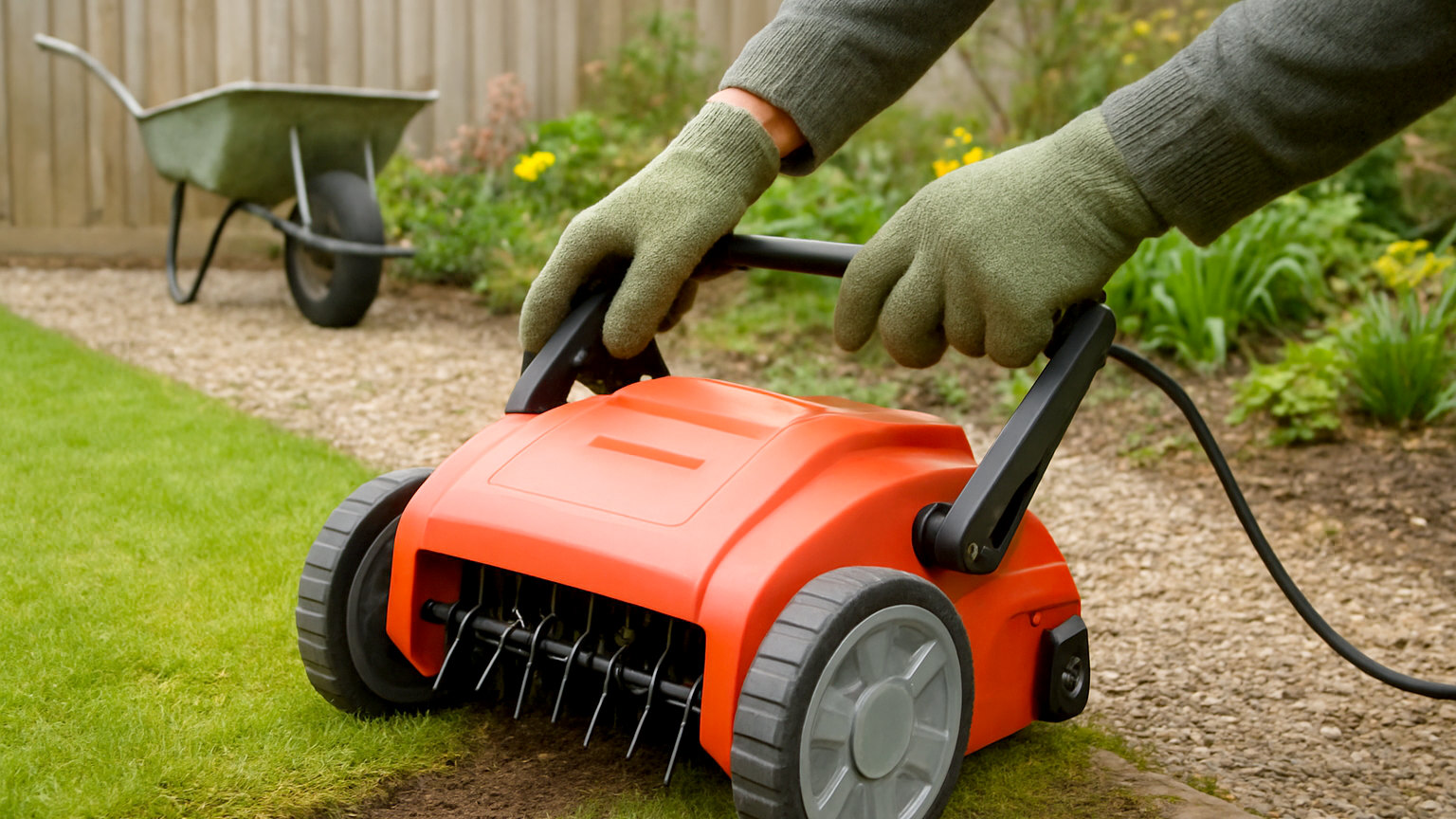
Some garden machines are used for one weekend a year, cost a great deal, need servicing and take up a quarter of the shed. Hiring them is almost always the better decision.
What is worth hiring
Rotavator for cultivating a large area of clear ground. Only where there are no perennial weeds, since a rotavator chops the roots into hundreds of pieces and plants every one.
Turf cutter for lifting a lawn, which is exhausting by hand and quick with a machine.
Scarifier for a large lawn, used once a year in early autumn.
Hollow-tine aerator for the same job and the same frequency.
Shredder or chipper after a large pruning session.
Post hole borer for fencing.
Stump grinder for removing a stump.
Pressure washer for patios, if you use one rarely.
Cement mixer, plate compactor and disc cutter for hard landscaping.
Powered scythe or flail mower for clearing rough grass.
What is worth owning
Anything used weekly or fortnightly through the season: mower, strimmer, hedge trimmer, and all hand tools.
The rule is roughly that if you would use it more than four or five times a year, buying starts to make sense.
The economics
Compare a day or weekend hire rate against the purchase price, then divide by the number of years you would realistically use it.
Include the costs of ownership that are easy to forget: servicing, fuel, storage space, and the fact that a machine used once a year usually will not start.
Hire shops maintain their equipment because it has to work, which means a hired machine is frequently in better condition than an owned one.
Practicalities
Book in advance, particularly for spring and autumn weekends when demand peaks.
Check what is included: fuel, oil, attachments, and whether it comes with the accessories you need.
Ask about transport. Many machines are too heavy or too large for a car, and a delivery charge may apply or a van may be needed.
Check the deposit and the damage terms, and whether insurance is offered.
Clarify how the hire period is counted, since a twenty-four hour hire collected on Saturday morning may need returning early Sunday.
Weekend rates are often the same as a single day, which is worth asking about.
Safety
Ask for a demonstration and take it, even if the machine looks obvious. Hire staff will show you the controls, the safety features and the common mistakes.
Ask what protective equipment is needed and whether they supply it. Eye protection, ear defenders and boots are usually the minimum.
Check the machine before leaving: guards in place, cables undamaged, no obvious faults.
Read any instructions supplied rather than assuming.
Do not hire a chainsaw unless you are trained. They cause severe injuries, require specific protective clothing and proper training, and any job needing one is a job for a qualified arborist.
Preparation saves money
Have everything ready before collection, since you are paying for the time.
Clear the area, move obstacles, arrange help if the machine is heavy, and check the weather. A rotavator hired for a day of rain is money wasted.
Borrowing and sharing
Neighbours frequently own machines used once a year, and asking costs nothing.
Some areas have tool libraries or community sharing schemes, which are worth looking for.
Allotment associations often own shared equipment.
Return anything borrowed clean, fuelled and in better condition than you received it, which is how you get to borrow it again.
Consider whether you need the machine at all
Scarifying a small lawn with a springbok rake is hard work and perfectly effective. Clearing ground by excluding light takes a season and no machinery at all.
A no-dig approach removes the case for a rotavator entirely, and hand tools handle most domestic work given time.
Paying someone instead
For some jobs, employing a contractor costs little more than hiring the machine and doing it yourself, and removes the risk and the effort.
This applies particularly to tree work, stump removal and anything requiring a chainsaw or work at height, where the risk is real and the equipment is specialised.
Use someone qualified and insured, and ask to see evidence of both rather than taking it on trust.


