
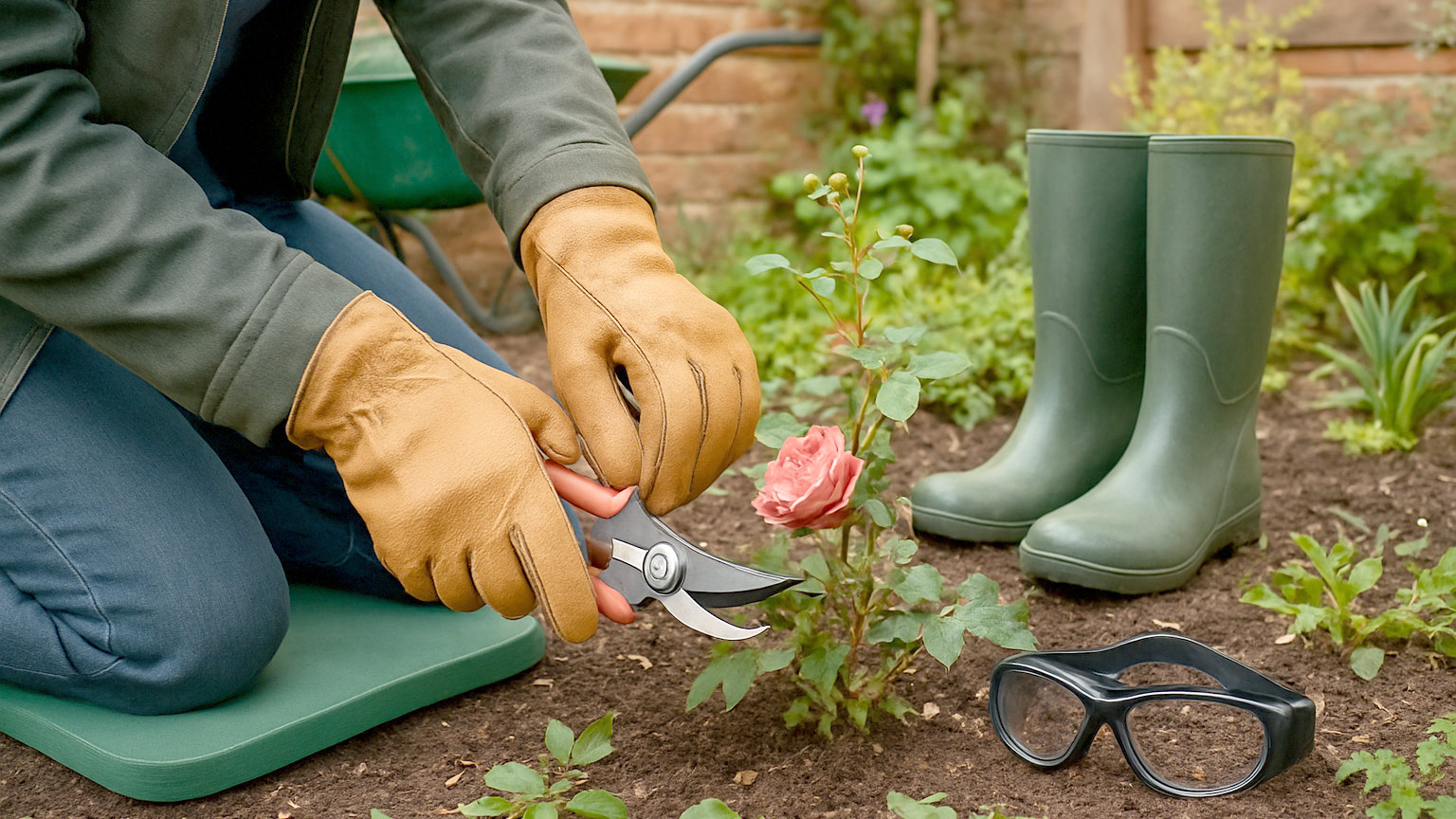
Protective kit only works if it is comfortable enough to wear. Expensive gloves that do not fit stay in the shed while you work bare-handed, which defeats the purpose entirely.
Gloves
Different jobs want different gloves, and most gardeners end up with two or three pairs.
Light coated gloves with a nitrile or latex palm and a breathable back give good dexterity for planting, weeding and general work. The best all-round choice and cheap enough to replace often.
Leather gloves handle rough work, splinters and general abrasion.
Gauntlets with long cuffs protect the forearms and are essential for roses, brambles, blackthorn and pyracantha. Ordinary gloves leave exactly the wrong area exposed.
Waterproof gloves for wet work, washing pots and winter jobs.
Fit matters more than material. Gloves that are too large reduce grip and dexterity; too small and they are uncomfortable within minutes.
Wash fabric gloves regularly, since soil and sap build up.
Footwear
Stout closed shoes or boots, never sandals or bare feet, particularly when digging or using any powered tool. Foot injuries from mowers and forks are among the most severe garden accidents.
Wellingtons for wet work, ideally with a steel or composite toecap if you are digging or moving heavy items.
Sturdy boots with ankle support for heavier work and uneven ground.
Clogs and slip-ons are convenient for pottering and inadequate for anything involving a spade or a blade.
Eye protection
The most important item and the most often skipped.
Wear goggles or a full visor when strimming, hedge cutting, shredding, using a mower, pruning above head height, or handling euphorbia.
Ordinary glasses are not adequate, since debris comes from the side.
Eye injuries in gardens are common and frequently permanent, and a strimmer throws grit at considerable speed in unpredictable directions.
Hearing protection
With petrol machines and any loud powered tool. Damage from repeated exposure is cumulative and irreversible.
Ear defenders or plugs both work. Defenders are easier to put on and take off repeatedly.
Other kit
A dust mask when shredding, handling dry compost, emptying old leaf mould or working with dusty fertiliser.
A kneeler or knee pads, which most gardeners regret not buying sooner.
Long sleeves and trousers for thorny work and when using a strimmer.
A hat and sun protection, since gardeners spend long periods outdoors and skin damage is cumulative.
Plants that irritate
Several common garden plants cause genuine harm and gloves are the answer.
Euphorbia exudes a milky sap causing severe skin irritation and serious eye damage. Wear gloves and eye protection, and never rub your eyes while handling it.
Rue, giant hogweed and some related plants cause phytophotodermatitis: the sap reacts with sunlight to produce painful blistering burns that can recur for months.
Fremontodendron is covered in fine irritant hairs that itch intensely and irritate the airways.
Primula obconica, chrysanthemums and tulip bulbs cause contact dermatitis in some people, and repeated handling can sensitise.
Wash exposed skin promptly after handling any of these.
Cuts, thorns and infection
Keep your tetanus vaccination current. Garden wounds contaminated with soil are the classic route.
Clean any puncture wound thoroughly. Blackthorn in particular causes painful infections, and rose thorns can too.
Seek medical advice if a wound becomes swollen, hot or increasingly painful.
Wear gloves when handling compost and potting mixes, and avoid breathing the dust, since bagged compost carries a small legionella risk. Open bags at arm's length in the open air.
Keeping it accessible
Store gloves, goggles and ear defenders by the shed door where you reach for them, rather than in a box at the back.
Kit that is visible and to hand gets used. Kit that requires a search does not, and that is the whole difference between owning protective equipment and being protected by it.
Replacing it
Gloves wear out and should be replaced rather than used with holes in the fingers. Scratched goggles obscure vision and are worth renewing.
None of it is expensive compared with an injury, and light coated gloves in particular are cheap enough to keep several pairs on the go.
Sun and weather
Gardeners spend long periods outdoors and skin damage accumulates over years. A hat, long sleeves and sun cream on exposed skin are worth the habit.
Drink plenty in hot weather, work in the shade where possible, and stop if you feel unwell.


