
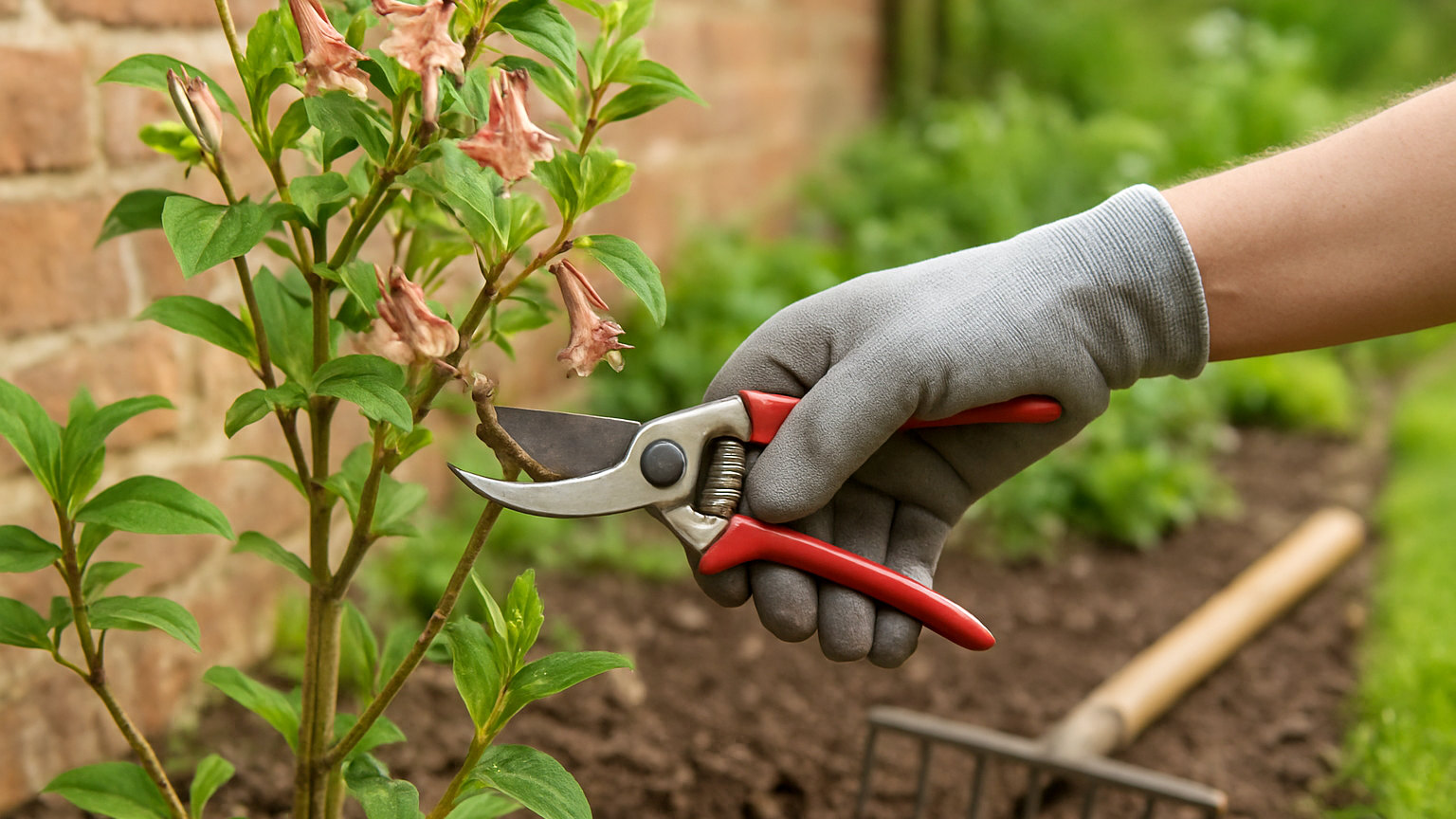
The single rule that covers most shrubs is this: prune just after it has finished flowering. Get that right and you will rarely lose a season of flowers. Almost every case of a healthy shrub that stubbornly refuses to flower comes down to it having been cut at the wrong point in the year.
Why timing matters more than technique
Shrubs divide into two groups. Some flower on wood they grew the previous year, and some flower on wood they will grow this spring. Cutting the first group in late winter removes every flower bud it had already made. Cutting the second group in autumn wastes the growth it needs to replace.
You can usually tell which is which by when it flowers. Anything flowering before roughly midsummer is generally doing it on last year's wood. Anything flowering from midsummer onwards is usually doing it on this year's growth.
Late winter, February to March
This is the window for shrubs that flower late on new wood. Buddleja, hardy fuchsia, caryopteris, lavatera and late-flowering clematis can all be cut back hard now and will grow away strongly. Buddleja in particular responds to being reduced to a low framework, and left unpruned it becomes leggy with flowers only at the top.
Dogwoods and willows grown for coloured winter stems are also cut now, taking the oldest stems down low, because the brightest colour is always on the youngest wood. Wait until you have enjoyed the winter colour first, then cut.
Late spring, May to June
The early flowerers are pruned as soon as they finish. Forsythia, flowering currant, kerria, philadelphus and weigela all fall here. Take out a proportion of the oldest stems at the base rather than shearing the whole thing over, which produces a dense shell of twiggy growth and fewer flowers.
Spring-flowering clematis of the montana type is also cut back now if it needs restraining, immediately after the flowers fade.
Summer, July and August
Rambling roses that flower once are pruned after flowering. Wisteria has its first cut in July or August, shortening the long whippy side shoots to about five leaves, with a second tidy in winter.
Lavender is cut after flowering, taking off the spent stems and a little of the current year's growth. Never cut back into the old bare wood, because lavender will not reshoot from it, and a plant cut too hard usually dies.
Do not cut hedges between March and August if you can avoid it. It is an offence in the UK to damage or destroy an active bird's nest, and hedges are full of them through those months. Check carefully before starting, and if you find a nest, leave that section until the birds have finished.
Autumn and early winter
Autumn is mostly a season for restraint. A hard cut now stimulates soft growth that the first frosts will kill. Confine yourself to shortening very long shoots on roses to stop wind rocking them loose over winter.
Fruit trees are the exception at the other end. Apples and pears are pruned when fully dormant, between November and February. Plums, cherries and other stone fruit are the reverse and must be pruned in summer, because winter pruning leaves them open to silver leaf disease.
The ones people get wrong
Hydrangeas cause more confusion than anything else. The common mophead and lacecap types flower on old wood, so leave the faded heads on over winter for frost protection and cut back to the first fat pair of buds in March. Paniculata and arborescens types flower on new wood and can be cut back hard in early spring.
Magnolias, witch hazel, Japanese maples and daphne are all better barely touched. They have naturally good shapes, they resent hard cutting, and daphne in particular often responds by dying.
What to do at any time of year
Three things can be done whenever you notice them, and they go by the name of the three Ds. Dead wood, damaged wood and diseased wood should come out as soon as you see them, along with any branches crossing and rubbing against each other. That is not really pruning so much as maintenance, and it carries no timing risk.
If you are unsure what a shrub is or when it flowers, the safe course is to wait a full year and watch it. A season of observation costs you nothing. A badly timed cut costs a year of flowers.


