
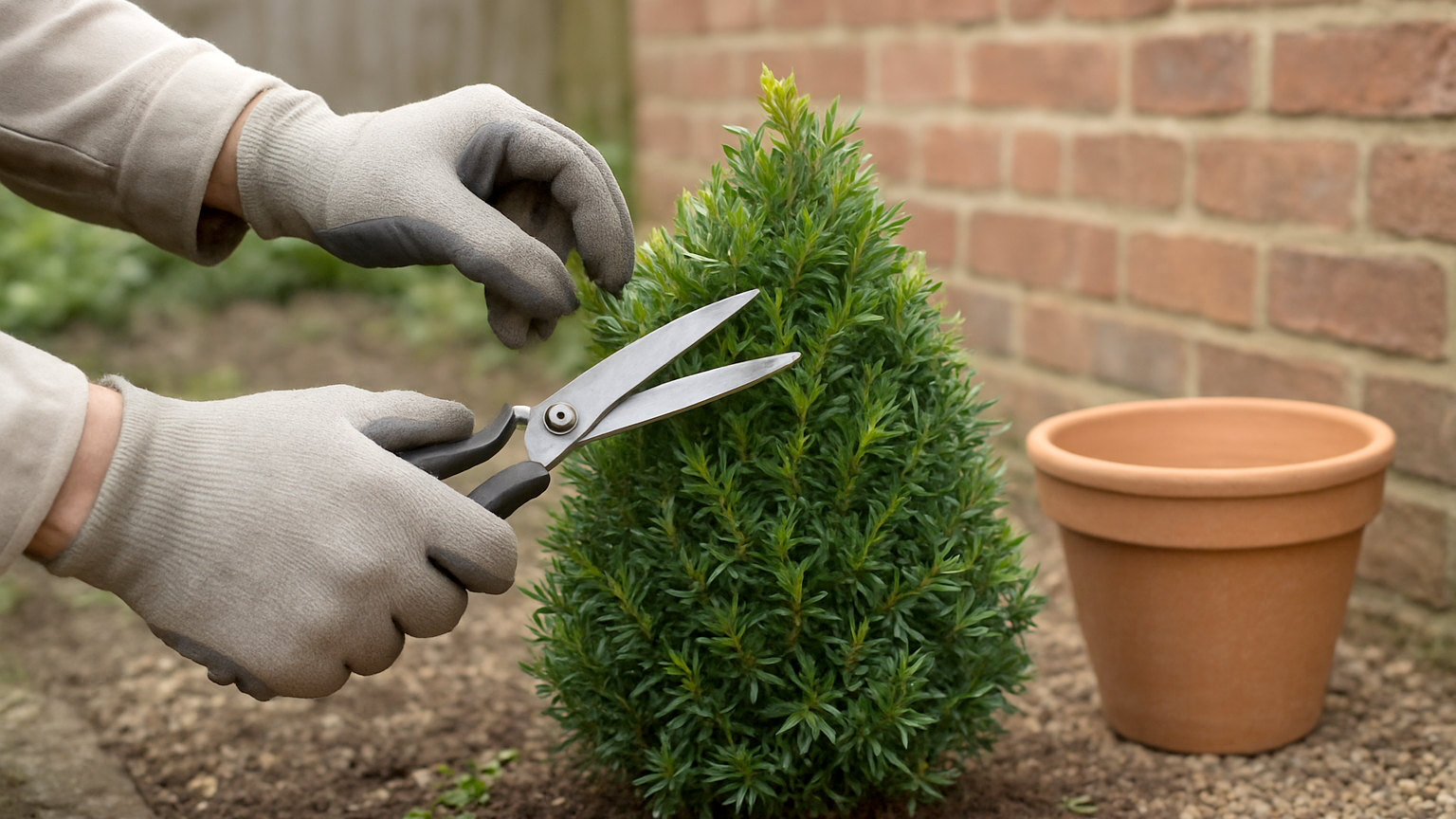
Topiary works because of apical dominance. Every cut removes a growing tip and releases the buds below it, so repeated clipping produces the dense surface that holds a shape.
Which plants
Yew is the best. Dense, dark, long-lived, tolerant of hard renovation, and needing only one or two cuts a year. It is slower than the alternatives and faster than its reputation suggests, adding twenty to thirty centimetres annually.
Holly clips well, is dense and evergreen, and is unpleasant to work with. Small-leaved varieties are best.
Privet is cheap and fast, and needs cutting two or three times a year to hold a shape.
Portuguese laurel has smaller leaves than cherry laurel and suits clipping into large simple shapes.
Bay makes excellent standards and cones, and is borderline hardy in a cold garden and best in a container that can be moved.
Hornbeam and beech clip into formal shapes and hold their russet leaves through winter, though they are deciduous.
Box and its problems
Box was the traditional choice for small-scale topiary and low hedging, and it is now a difficult recommendation.
Box blight causes leaf drop, black streaking on stems and bare patches, and spreads rapidly in humid conditions.
Box tree caterpillar defoliates plants entirely, often within weeks, and has spread widely across Britain.
Between them these have made box a risky choice for new planting in much of the country.
Where you have established box, improve airflow, avoid overhead watering, clip in dry weather, disinfect tools between plants, and clear fallen leaves. Check regularly for caterpillars and remove them by hand or use a biological control.
Alternatives to box
Japanese holly, Ilex crenata, is the closest substitute in appearance and clips to a very similar effect.
Lonicera nitida is fast, cheap and needs frequent clipping, and is less refined.
Euonymus, particularly the compact varieties, clips well and is tough.
Yew for anything above about thirty centimetres.
When and how often to clip
Yew: once or twice a year, traditionally in late summer around August.
Box and its alternatives: twice, in early summer and again in late summer.
Privet and Lonicera nitida: two or three times through the season.
Avoid clipping in frost, in hot bright sun which scorches the cut surfaces, and during the bird nesting season where a shape is large enough to hold a nest.
A late-summer cut leaves the shape crisp through winter, which is when topiary earns its place.
Getting the shape right
Use a template for anything geometric. A plywood profile, a frame of canes and string, or a taut line gives a result that hand-judging never will.
For cones and pyramids, a simple wooden template rotated around a central cane is the traditional method.
For spheres, cut a circular template from board and rotate it.
Cut a little at a time and step back constantly. You cannot put growth back.
Wire frames are available for complex shapes and the plant is clipped to the frame as it grows through.
Feeding and care
Clipped plants are producing growth repeatedly and are hungry.
Feed in spring with a general or specialist topiary fertiliser, and mulch generously.
Water in dry spells, particularly container-grown specimens, which dry out fast and need daily attention in summer.
Top dress containers each spring and repot every three or four years.
Establishing a shape
Start with a young plant and clip lightly and frequently from the outset rather than buying something large and imposing a shape on it.
Allow a plant to reach slightly above the finished height before starting to define the top, so there is material to work with.
Renovating a shapeless specimen
Yew, box, holly and privet all regenerate from old wood, so a topiary shape that has lost its form can be cut back hard and rebuilt.
Work over two or three years rather than all at once, cutting one side or one section each spring, and feed and water generously afterwards.
Expect three or four years before the shape is properly furnished again, which is still far quicker than starting from a young plant.
Topiary in containers
Clipped shapes in pots suit a doorway or a formal terrace, and they need considerably more attention than the same plant in the ground.
Use a soil-based compost, water daily in summer, feed through the growing season and top dress each spring.


