
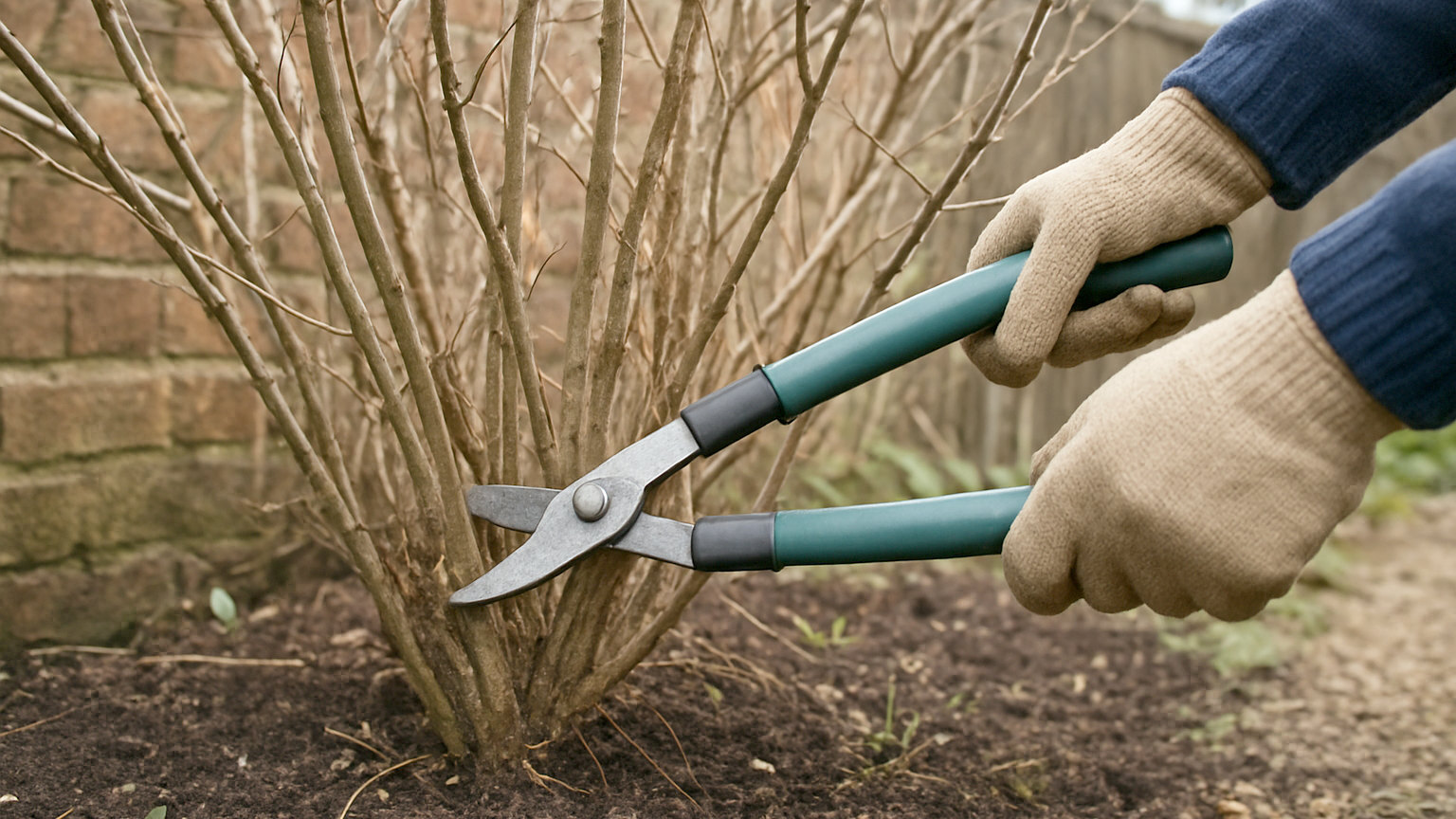
An overgrown shrub with bare woody stems, a congested centre and flowers only at the top can usually be brought back. The critical question is whether the species regenerates from old wood, because attempting it on one that does not is fatal.
Check the species first
These regenerate readily: most deciduous shrubs including forsythia, philadelphus, weigela, deutzia, ribes, kerria, buddleja, dogwood, hazel, elder, lilac, viburnum, spiraea. Among evergreens: yew, box, holly, cherry laurel, Portuguese laurel, privet, escallonia, viburnum tinus, euonymus, choisya, aucuba.
These do not: Leyland cypress and most conifers other than yew, lavender, rosemary, sage, santolina, cistus, broom, evergreen ceanothus, and many hebes.
On the second list, every cut must leave green growth below it. There is no renovation option, and replacement is the answer.
Is it worth saving
Look for signs of life low down: plump buds on the lower stems, or new shoots coming from the base. Both indicate the plant has the capacity to regenerate.
Check for extensive dieback, canker or honey fungus, which suggest the plant is failing rather than merely overgrown.
Consider what it is. A good variety, a large established specimen or something with sentimental value is worth the effort. A common shrub in poor health usually is not.
A five-year-old replacement bought and planted well may overtake a badly renovated old plant within a few seasons.
Work over three years
Cutting everything at once is possible on many shrubs and produces a mass of vigorous unproductive growth and no flowers for a season or two.
The staged approach is more reliable. Each year, remove about a third of the oldest stems entirely, cutting them right down to the base, while shortening the remainder moderately.
Over three years the whole plant is renewed and some flowering continues throughout.
The first year
Work in late winter, February or early March, for most deciduous shrubs. Prunus in summer. Evergreens in mid to late spring.
Start by removing everything dead, damaged and diseased, cutting into clean wood.
Take out crossing and rubbing stems, and anything thinner than a pencil.
Then remove a third of the oldest, thickest stems at the base with loppers or a saw. Old wood is thick, dark and often flaking; young wood is smooth and greener.
Shorten what remains by about a third, cutting to outward-facing buds or to a strong side shoot.
Feed and mulch afterwards
The plant is being asked to produce a great deal of new growth from its reserves.
Apply a general fertiliser in early spring and mulch generously with compost or well-rotted manure, keeping it clear of the stems.
Water thoroughly through the first summer. This is the step most often skipped and it makes the difference between vigorous regrowth and a struggle.
Clear around the base
Neglected shrubs are usually smothered by whatever has grown up around them.
Clear grass, weeds and encroaching plants from a circle at least a metre across, then mulch it. Competition at the base is frequently why the shrub is weak.
Check for suckers from a rootstock, identifiable by different foliage, and pull them off rather than cutting.
What to expect
Reduced flowering in the first year and a good recovery by the second or third.
Vigorous shoots from the base are a good sign. Thin them the following winter, keeping the strongest and best placed.
If after two years there is still no strong basal growth, the plant is at the end of its life and replacement is the sensible decision.
Preventing the need
Renewal pruning annually, removing a quarter of the oldest stems each year, keeps a shrub permanently young and means renovation is never needed at all.
It takes a few minutes per plant each winter and is considerably less work than a three-year rescue operation later on.
Make it a habit to look at every established shrub once a year and remove the two or three oldest stems.
Timing summary
Late winter for most deciduous shrubs. Immediately after flowering for spring flowerers, so the display is not lost twice over. Mid to late spring for evergreens. Summer for anything in the Prunus family, because of silver leaf.
Late summer for birch, maple and walnut, which bleed heavily if cut in spring.


