
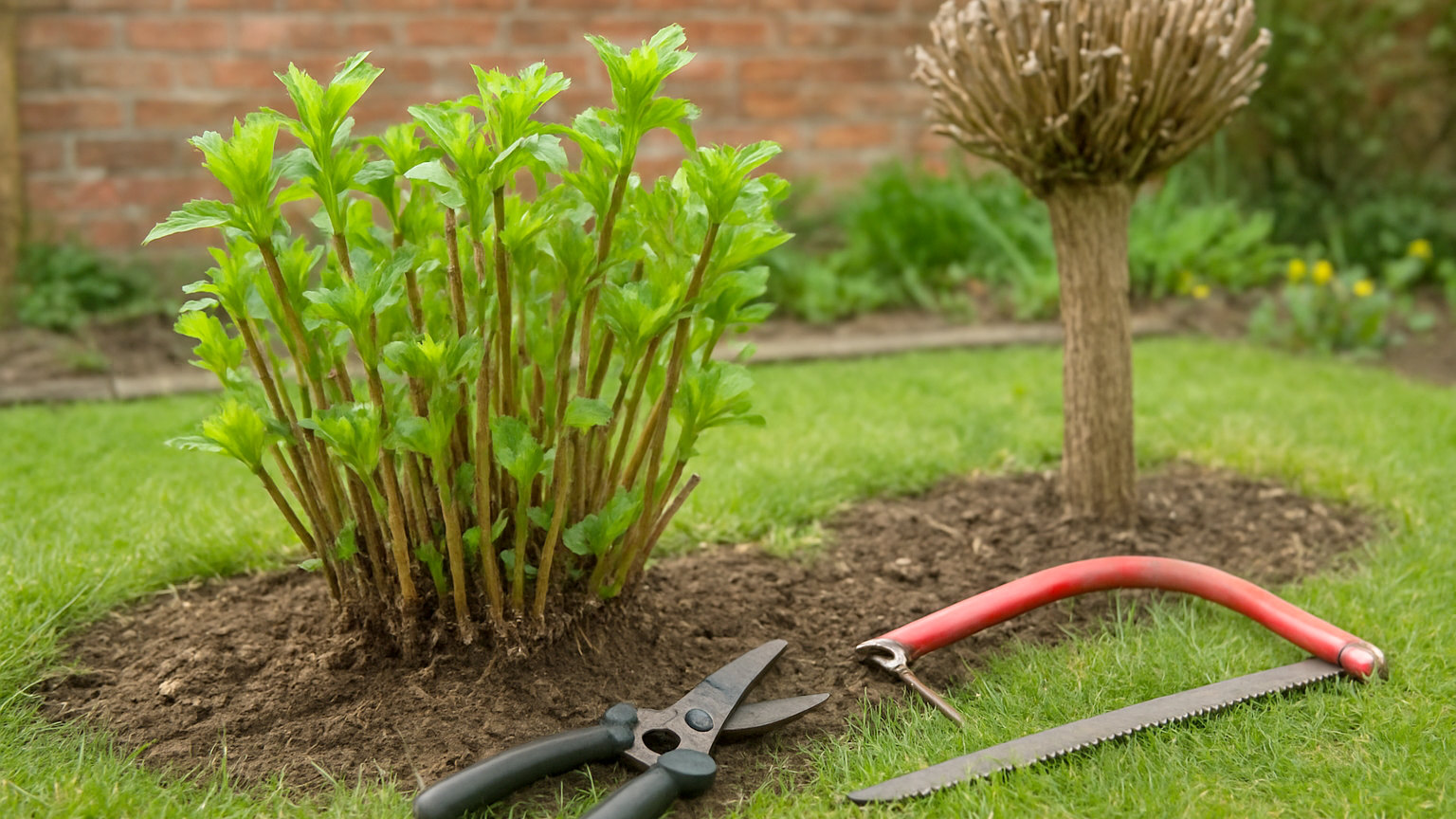
Coppicing and pollarding are ancient management techniques that cut a tree back repeatedly to a permanent base, producing vigorous new growth on a cycle. Both extend a tree's life considerably and both have garden uses.
The difference
Coppicing cuts the stems down to near ground level, producing a low stool from which multiple new stems grow.
Pollarding does the same thing at height, typically two to three metres, producing a permanent trunk topped by a knuckle from which new growth emerges.
Pollarding developed where livestock would have grazed off coppice regrowth, and it is used in gardens and streets to keep a large tree at a manageable size.
Which species tolerate it
Not all. The species that respond well are those that naturally regenerate from the base.
Reliable: hazel, willow, ash, sweet chestnut, lime, hornbeam, oak, sycamore, plane, poplar, alder, eucalyptus, dogwood, elder.
Do not attempt: most conifers other than yew, beech, cherry and most stone fruit, birch, and anything that does not shoot from old wood.
Getting this wrong kills the tree, so check before cutting.
Coppicing in a garden
The garden version is usually called stooling, and it is applied to shrubs grown for their stems or foliage.
Dogwoods and willows grown for winter stem colour are cut to a low framework of about thirty centimetres each March. Only young stems colour brightly, so this is essential rather than optional.
Eucalyptus is coppiced annually to keep it small and to produce the rounded juvenile foliage, which differs completely from the adult leaves.
Ornamental elder, cotinus and paulownia produce much larger and better-coloured leaves on hard-pruned growth.
Hazel is coppiced on a rotation of about seven years for pea sticks, bean poles and plant supports, which is genuinely useful in a productive garden.
Timing
Late winter, between February and March, before growth begins and after the worst frosts.
For plants grown for winter stems, wait until you have finished enjoying the display, usually late March.
Never coppice or pollard in autumn, which leaves the plant with no protection through winter.
Avoid the bird nesting season from March to August.
How to do it
Cut to a low permanent framework rather than to bare ground, leaving a stubby structure of stems that thickens into a knuckled stool over the years.
Make clean cuts sloping slightly outwards so water runs off, using loppers or a saw rather than forcing secateurs.
For pollarding, cut back to the same point each time so the characteristic knuckle develops. Once a tree has been pollarded it must be maintained on a cycle, since the regrowth attaches only to the outer wood and becomes unstable if left for decades.
The half-and-half option
Cutting only a third or half of the stems each year gives a larger plant with slightly less intense stem colour but more presence in a border.
Annual hard cutting gives maximum colour on a smaller plant. Both are legitimate.
Feed and mulch afterwards
You are asking for a great deal of new growth in a single season.
Apply a general fertiliser and mulch generously with compost or well-rotted manure after cutting, keeping it clear of the stems, and water through dry spells.
An unfed stool produces progressively weaker growth each year.
Wait before starting
Let a newly planted shrub or tree establish for two or three years before beginning an annual hard cut, so the root system can support the regrowth.
Wildlife value
Coppicing is one of the oldest woodland management systems and creates the varied structure and light levels that support a wide range of species.
A rotation of hazel or willow in a large garden, cut in sections in different years, provides habitat as well as material.
Before pollarding a tree
Check for a Tree Preservation Order or conservation area status, since both require consent, and take professional advice on anything large.
Pollarding a mature tree that has never been pollarded is a serious intervention and frequently a poor decision. It is far better to start the cycle on a young tree, or to choose a species appropriate to the space in the first place.
Once started, a pollard must be maintained, so it is a commitment rather than a one-off job.


