
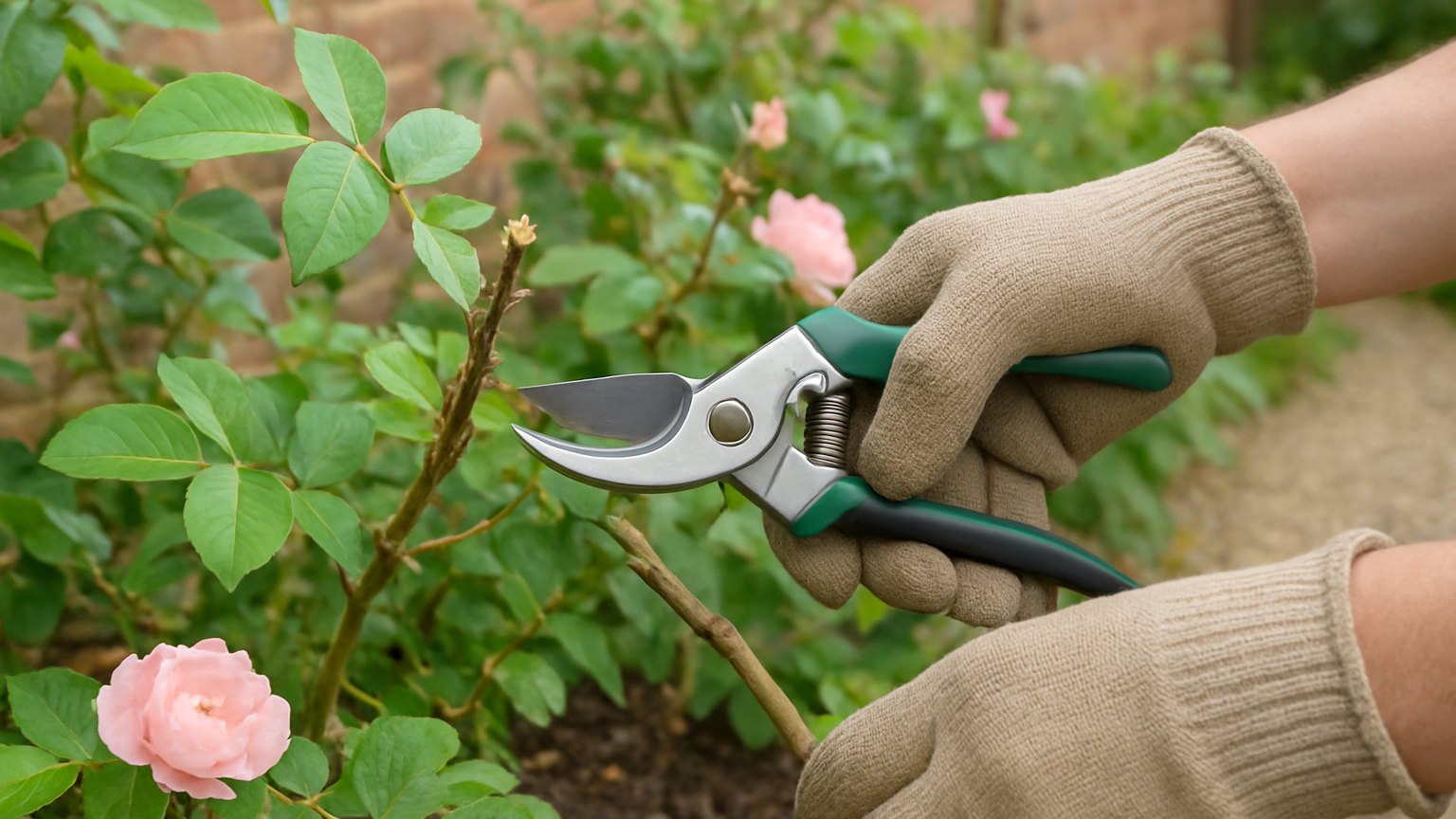
Most pruning advice is a calendar, and the calendar exists for a good reason. But a handful of jobs carry no seasonal risk whatever, and knowing which they are means you can act when you notice a problem instead of writing it on a list for February.
The three Ds
Dead, damaged and diseased wood can come out whenever you see it, on almost any plant.
Dead wood is doing nothing except providing an entry point for decay. Damaged wood, whether snapped by wind or torn by a passing mower, will not heal as it is and should be cut back to clean tissue below the damage. Diseased wood should go as soon as it is identified, because leaving it lets the problem spread.
To tell live from dead, scratch the bark with a thumbnail. Green or white beneath means living; brown and dry means dead. Cut back into healthy tissue rather than stopping at the visible boundary.
Clean your blades between cuts when removing diseased material. Secateurs transfer canker, blackspot and coral spot very efficiently from one plant to the next. A wipe with household disinfectant or a spray sanitiser takes two seconds.
Crossing and rubbing branches
Where two branches cross and rub, the constant abrasion wears through the bark and creates an open wound that disease enters through. Remove the weaker or worse-placed of the two whenever you spot it.
The same applies to branches growing directly into the centre of a plant, which congest the middle and reduce airflow.
Suckers and water shoots
Suckers are shoots from the rootstock of a grafted plant, appearing below the graft union or from the ground nearby. On roses they usually have paler leaves with seven leaflets rather than five. Left alone they take over, since the rootstock is more vigorous than the variety grafted onto it.
Pull suckers off sharply rather than cutting them, tracing them back to where they emerge from the root. Cutting leaves dormant buds that produce several more.
Water shoots are the vertical whips that erupt around a pruning wound on fruit trees and ornamentals. Rub them off with a thumb while they are soft, at any point in the growing season.
Reverted growth
Variegated plants sometimes produce a shoot of plain green leaves. Because green foliage photosynthesises more efficiently, that shoot grows faster and will eventually take over the whole plant.
Cut reverted shoots back to their point of origin as soon as you see them, whatever the month. Waiting until the correct pruning season may mean waiting until the plant has changed permanently.
Deadheading
Removing spent flowers can be done continuously through the flowering season, and on repeat-flowering plants it is what keeps them producing. Roses, dahlias, sweet peas, cosmos and bedding all flower for far longer when deadheaded regularly.
Leave the last flowers of the season on anything you want seedheads from, whether for winter structure, for birds or to self-seed.
What must wait
Everything else, essentially, and three cases are worth stating plainly.
Spring-flowering shrubs, including forsythia, philadelphus and weigela, flower on last year's wood, so a winter prune removes the display. Cut them straight after flowering.
Plums, cherries and other stone fruit must be pruned in summer when the tree is in active growth. Winter pruning leaves them open to silver leaf disease, which can kill the tree.
Hedges should not be cut between March and August. It is an offence in the UK to damage or destroy an active bird's nest, and hedges are full of them through those months. Check carefully before any trim in that window, and if you find a nest, leave that section alone entirely until the birds have finished.
And what to think twice about
Hard pruning in autumn stimulates soft new growth just as the first frosts arrive, and that growth is damaged or killed. Leave substantial cutting until late winter.
Pruning during a drought, or in hard frost, stresses a plant that is already under pressure. Neither is urgent enough to justify the risk unless the branch is dangerous.
Tender and borderline plants such as penstemon, salvia and fuchsia should keep their old top growth over winter, since it protects the crown. Cut them back in spring once new growth appears.


