
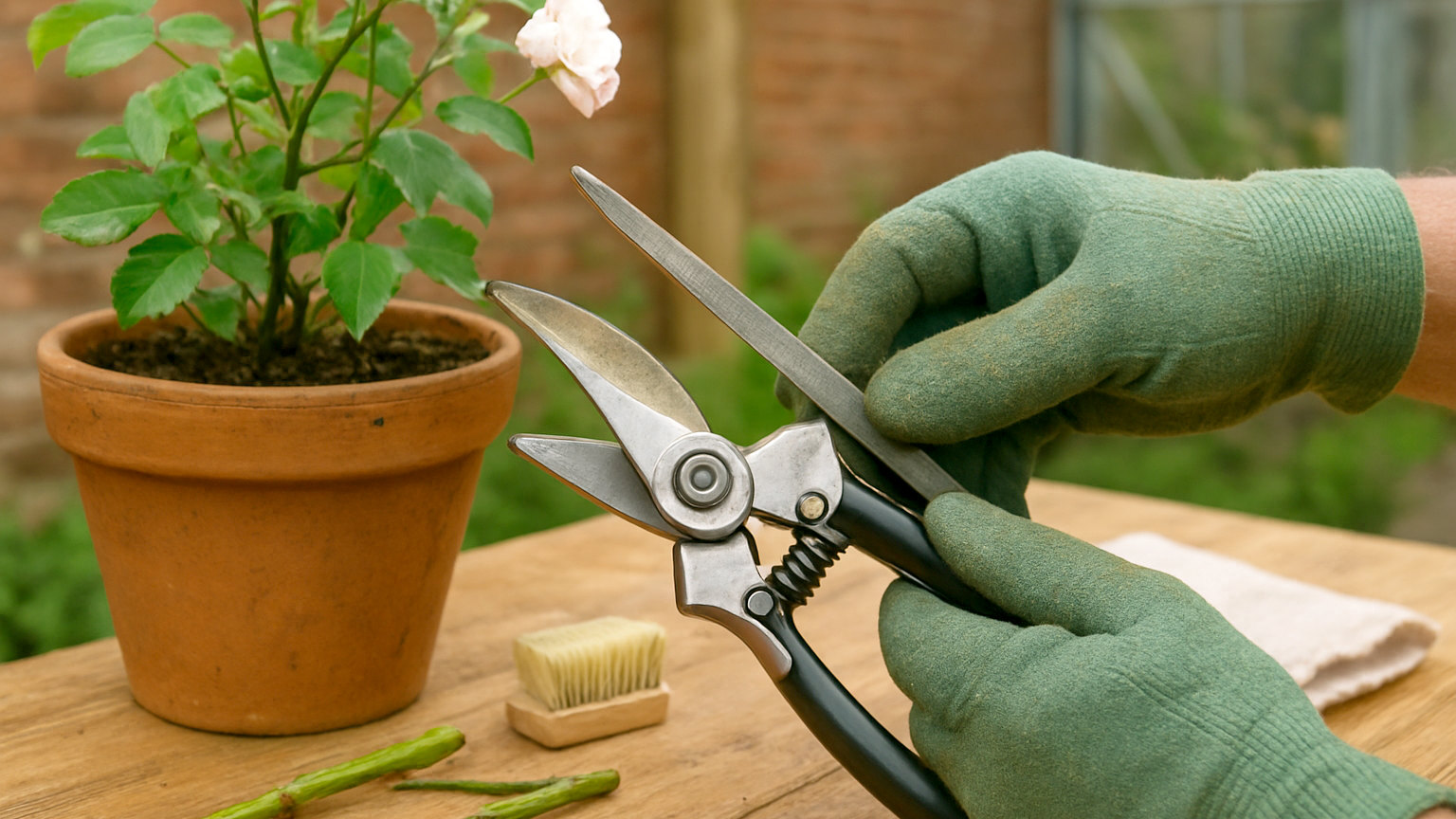
Sharp secateurs make pruning quick and pleasant, and produce clean cuts that heal fast. Blunt ones tear the tissue, leaving ragged wounds that heal slowly and admit disease, and they are exhausting to use.
Most people have never sharpened theirs, which is why most people dislike pruning.
How often
A few strokes with a file before each pruning session takes under a minute and keeps the blade permanently keen.
A full clean and sharpen at the start and end of the season, and after any heavy job.
Sharpen before the blade is obviously blunt. Restoring a badly dulled edge takes far longer than maintaining a good one.
What to use
A diamond file or a fine sharpening stone. A small pocket diamond file costs very little and is the most practical option.
Avoid coarse files and bench grinders, which remove too much metal and destroy the bevel.
Sharpening bypass secateurs
Only the cutting blade is sharpened, not the hooked counter-blade.
Clean the blade first, since sharpening over dried sap achieves nothing.
Open the secateurs and hold them firmly, keeping fingers well clear of the edge.
Follow the existing bevel angle, which is usually around twenty to twenty-five degrees. Do not create a new angle.
Work from the inside of the curve outwards, in smooth strokes always in the same direction, following the curve of the blade from base to tip.
A few passes is usually enough. Check by looking along the edge: a sharp blade shows no reflective flat line.
Turn the blade over and remove the burr from the flat back with one or two very light passes flat against the file.
Test on a stem rather than on paper. A sharp blade slices cleanly without crushing.
Stripping down and cleaning
Most quality secateurs can be dismantled, and doing so once a season transforms them.
Note how they come apart, or photograph it. Remove the nut or bolt, separate the blades, and take out the spring.
Scrub dried sap off with wire wool, a scouring pad or a soft brass brush. Sap sets hard and is what makes secateurs stiff.
Stubborn deposits respond to soaking in warm soapy water, or to a proprietary sap remover or white spirit.
Treat any rust with wire wool and oil.
Reassemble, adjusting the tension so the blades pass cleanly with no side-to-side play but without binding.
Oil the pivot, the spring and the blade with a light machine oil.
Disinfecting between plants
Pruning tools transfer disease from plant to plant, which matters more than most gardeners realise.
Disinfect between plants when pruning anything diseased, and between individual cuts when removing canker, dieback or fireblight.
Use a household disinfectant, surgical spirit, or a proprietary garden disinfectant, wiping the blades and allowing them to dry.
Avoid bleach, which corrodes the metal and the springs.
Keep a rag and a small bottle in your pocket while pruning, which makes it practical rather than a separate job.
Oil the blades afterwards, since disinfectants strip the protective film.
Everyday care
Wipe the blades after every use, before the sap dries.
Wipe with an oily rag before putting them away.
Store dry, indoors, closed and with the safety catch on.
Do not leave them outside. A single night in the rain starts the rust that eventually ruins them.
When to replace parts
Good secateurs have replaceable blades, springs and catches, and replacing a worn blade is far cheaper than a new pair.
Replace rather than sharpen a blade that is chipped, bent or worn thin, since it will never cut cleanly again however carefully it is sharpened.
Springs and safety catches are the other parts that wear, and both are cheap and quick to replace.
Anvil secateurs and shears
Anvil secateurs are sharpened the same way on the single blade, and the flat anvil surface should be kept clean and flat.
Shears are sharpened along both blades, following the existing bevel, and the pivot tension adjusted so they cut cleanly along the full length rather than only near the pivot.
Pruning saws
Most modern pruning saws have hardened impulse-treated teeth that cannot be sharpened and are replaced as a blade when worn.
Clean sap off after use with wire wool and oil the blade lightly. A folding saw left damp in a pocket rusts at the pivot within weeks.


