
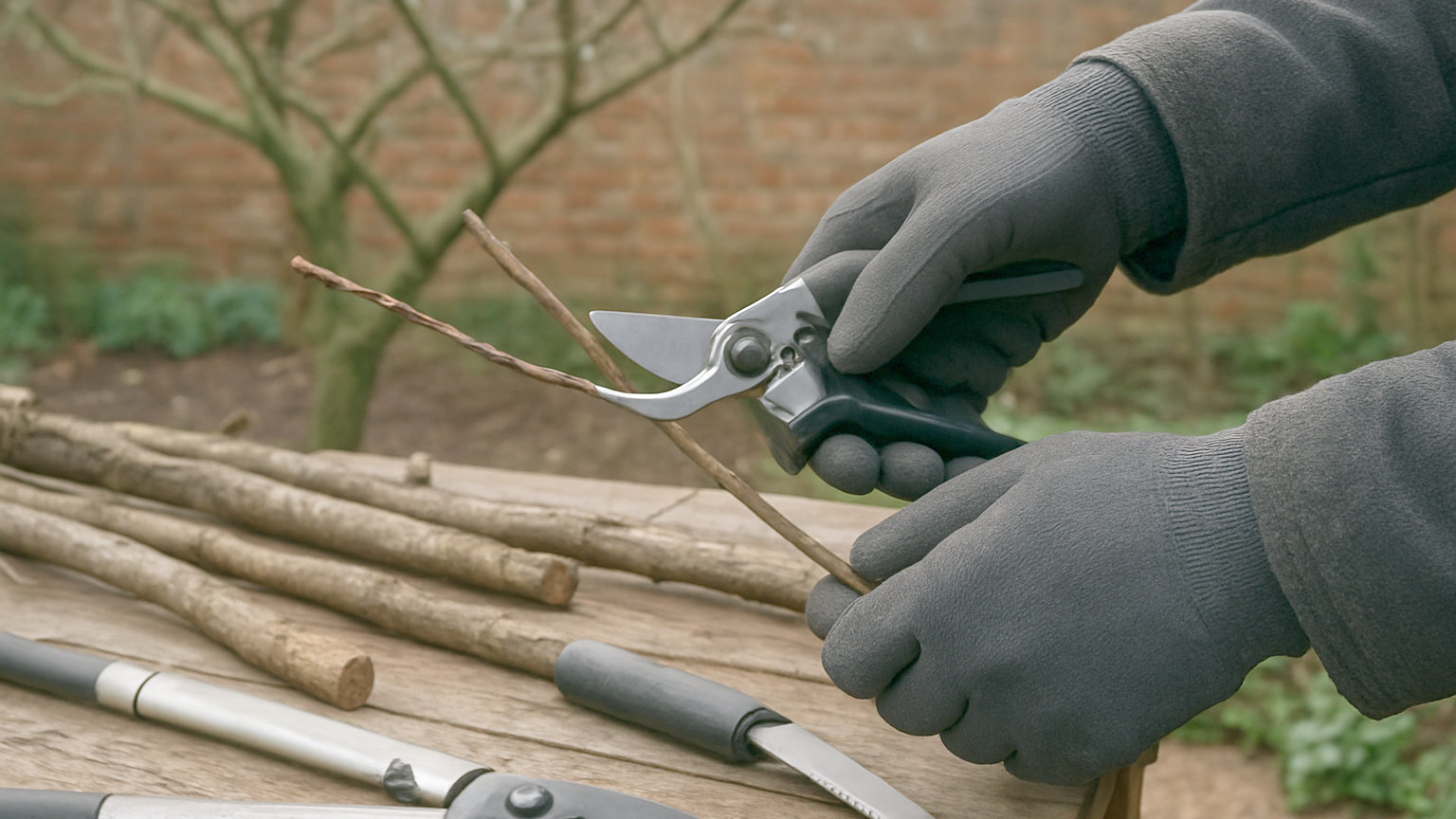
Pruning tools are graded by the thickness of wood they cut, and most damage to plants and tools comes from using one beyond its capacity. Four tools cover almost everything a garden needs.
Secateurs
For stems up to about a centimetre and a half. The tool you will use most.
Bypass secateurs have two curved blades that pass each other like scissors, producing a clean cut that heals well. These are what you want for living wood.
Anvil secateurs have a single blade closing onto a flat surface, which crushes the stem against it. They suit dead wood and are unsuitable for green growth, since the crushing damages the tissue and admits disease.
Buy bypass secateurs and buy good ones. A quality pair with replaceable blades and springs lasts decades and is worth several cheap pairs.
Check the size fits your hand, and look for a model with a comfortable safety catch you can operate one-handed.
Left-handed models exist and make a real difference.
Loppers
Long-handled, for wood up to about four centimetres. The leverage does the work.
Bypass loppers again for living wood. Ratchet and geared mechanisms increase the cutting power for the same effort and are worth having if hand strength is limited.
Telescopic handles extend reach and add weight.
Do not force loppers through wood too thick for them. Twisting the handles to complete a cut bends the blade permanently.
Pruning saw
For anything above about four centimetres, and the tool most people are missing.
A folding pruning saw with a curved blade and hardened teeth cuts on the pull stroke, which gives control and requires little force. It handles surprisingly large branches.
Do not use a carpentry saw, which is designed for dry seasoned timber and clogs immediately in green wood.
A bow saw suits larger work and logging.
Shears
For hedges, topiary and clipping, not for pruning individual stems.
Hand shears give control on small hedges and topiary. Long-handled edging shears do lawn edges.
Powered hedge trimmers cover larger hedges quickly and should not be used on large-leaved evergreens such as cherry laurel, where they slice the leaves and leave brown edges.
Other useful tools
A pole pruner or long-reach lopper deals with branches above head height without a ladder, which is much safer.
A pruning knife suits fine work and taking cuttings.
A half-moon edging iron is for lawn edges rather than pruning, and is worth having.
What not to use
Kitchen scissors, which crush.
Blunt tools of any kind. A blunt blade tears rather than cuts, leaving ragged wounds that heal slowly and admit disease.
Chainsaws are not a garden tool for the untrained. They cause severe injuries, require specific protective equipment and training, and any job needing one is usually a job for a qualified arborist.
Matching tool to wood
Use the largest tool that will fit, rather than forcing the smallest.
Straining secateurs through a stem too thick for them produces a crushed cut, springs the blades apart and ruins the tool.
If the tool is struggling, move up to the next size.
Looking after them
Clean sap and soil off after every use, dry them, and wipe the blades with an oily rag.
Sharpen regularly, since sharpness matters more than any other factor in the quality of a cut.
Disinfect blades between plants when pruning anything diseased, and between cuts when removing canker or dieback.
Store dry. Rusted, stiff, blunt tools are the reason most people find pruning unpleasant.
What to buy first
A good pair of bypass secateurs, a folding pruning saw and a pair of loppers cover the great majority of garden pruning.
Buy the secateurs first and buy the best you can afford, since it is the tool you will pick up hundreds of times a year and a cheap pair makes every job harder.
Add shears if you have a hedge, and a pole pruner if you have anything above head height, which is far safer than working from a ladder.
Comfort matters
Pruning involves repetitive hand movements over hours, and badly fitting tools cause blisters and strain.
Try secateurs in your hand before buying, check the grip span suits you, and consider a rotating-handle model if you have hand problems.


