
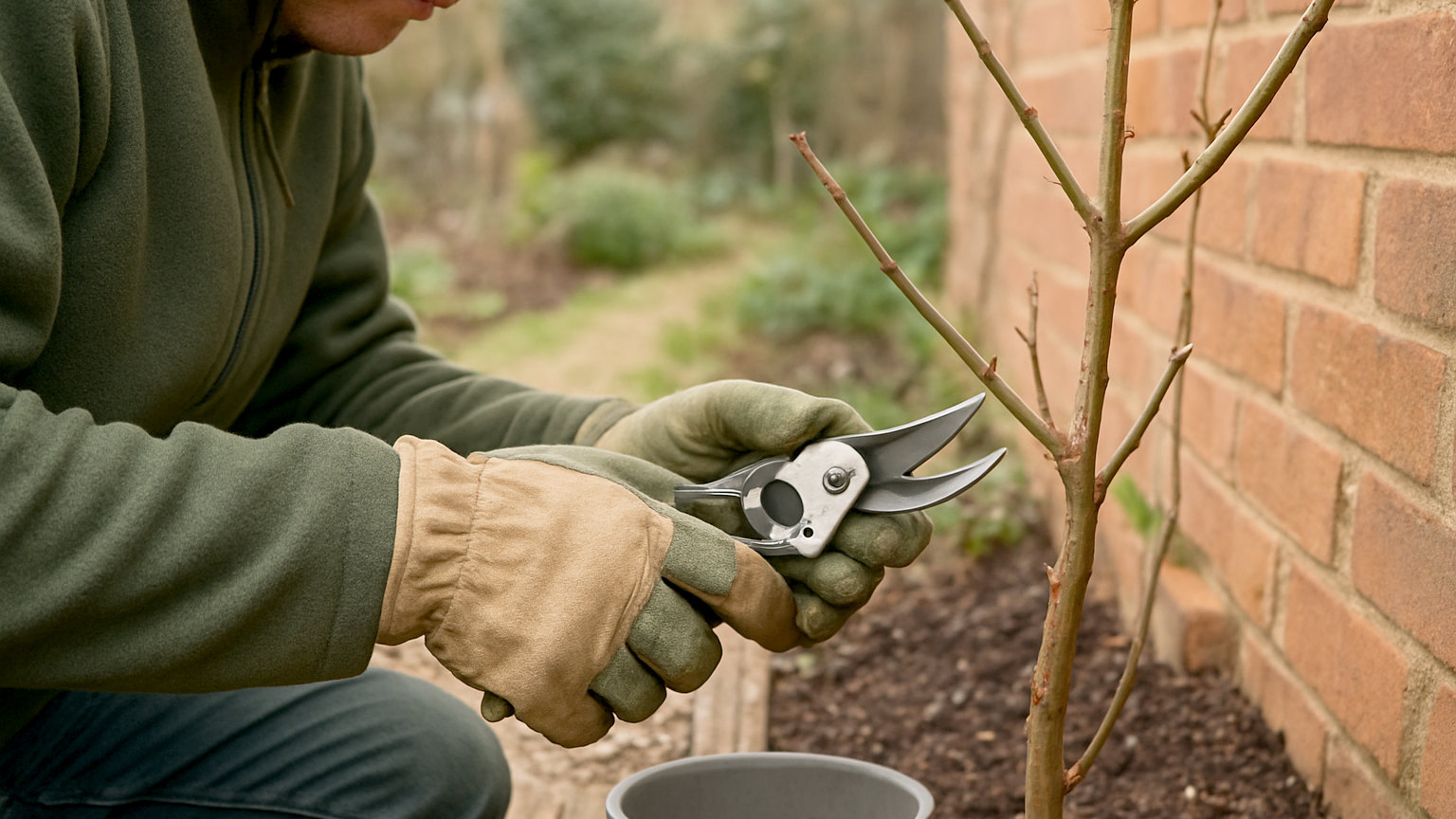
Pruning involves sharp tools, springy branches at eye level, work above the ground, and a surprising number of plants that cause chemical burns. A few consistent habits prevent nearly all of it.
Protective equipment
Eye protection is the one to take seriously. Branches spring back at head height, twigs whip when cut, and debris flies. Eye injuries from pruning are common and permanent.
Gloves, and gauntlets for roses, brambles and anything thorny.
Long sleeves and trousers. Stout boots.
Hearing protection with any powered tool.
Make sure your tetanus vaccination is current, since garden wounds contaminated with soil are the classic route.
Working at height
Falls cause the most serious garden injuries.
Use a proper tripod garden ladder, which is stable on soft uneven ground in a way a domestic stepladder is not.
Never lean a ladder against the branch you are cutting. Never overreach; move the ladder instead.
Have someone with you if working above head height.
A long-reach pole pruner is far safer than a ladder and handles most domestic overhead work from the ground. Wear eye protection, since everything falls towards you.
Anything requiring you to work above shoulder height with a saw is worth reconsidering.
Chainsaws
Not a tool for the untrained. They cause severe and frequently life-changing injuries, require specific protective clothing including cut-resistant trousers, and demand proper training.
Any job that genuinely needs a chainsaw is a job for a qualified, insured arborist.
Overhead lines
Never work on a branch near an overhead power line, and never assume a line is insulated. Electricity arcs across a gap.
Contact the network operator, who will usually advise or make the area safe without charge.
Plants that burn or irritate
Euphorbia exudes a milky white sap that causes severe skin irritation and serious eye damage. Wear gloves and eye protection, and never rub your eyes while handling it.
Rue, giant hogweed, parsnip and some other plants cause phytophotodermatitis: the sap reacts with sunlight to produce painful blistering burns that can recur for months.
Giant hogweed is the extreme case and should not be tackled without proper protection and advice. It is also an offence to plant it or cause it to grow in the wild.
Fremontodendron is covered in fine irritant hairs that cause intense itching and irritate the airways.
Laurel clippings release cyanide compounds as they break down. Never transport or store them in an enclosed space such as a car boot or a sealed sack.
Wash exposed skin promptly after handling any of these, and keep sap away from eyes and mouth.
Thorns and spines
Rose, blackthorn, berberis, pyracantha and hawthorn all cause puncture wounds that can become infected.
Blackthorn in particular is notorious for causing painful infections. Clean any puncture thoroughly and seek medical advice if it becomes swollen or painful.
Wildlife and the law
It is an offence to intentionally damage or destroy an active bird's nest.
Avoid cutting hedges and dense shrubs between March and August, and check thoroughly before any work in that period. If you find a nest, leave that section alone entirely.
Bats roost in trees and are protected. Any work on a tree with cavities may need advice.
Trees and consent
Check whether a tree is covered by a Tree Preservation Order or sits within a conservation area before any work. Both require consent, and unauthorised work carries substantial penalties.
The local authority will confirm.
Sensible habits
Close and lock secateurs when not cutting. Never carry open blades in a pocket. Keep tools sharp, since blunt ones need force and slip.
Clear cut material as you go rather than working among a pile of it, which is where trips and punctures happen.
Work when you are fresh rather than at the end of a long day, since most accidents happen when concentration lapses.
Tell someone what you are doing if working alone at height, and keep a phone in your pocket rather than indoors on a windowsill.
Bonfires and disposal
Check with the council before burning garden waste, since local restrictions apply and causing a nuisance with smoke is an offence.
Never burn laurel or treated timber, and never use petrol or other accelerants to start a fire.
Composting or a council green waste collection is simpler and better for the garden in almost every case.


