
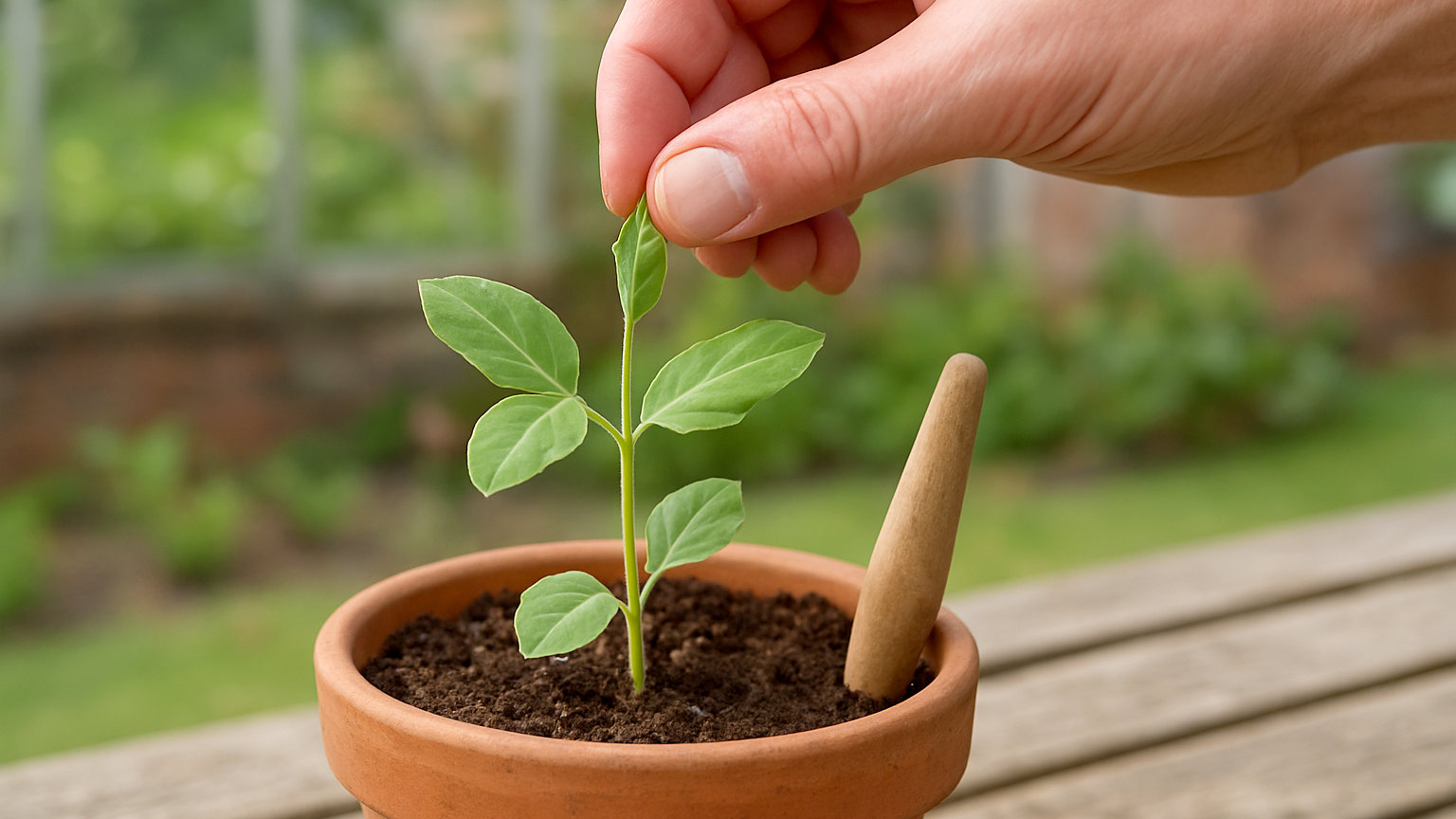
Pinching out is removing the soft growing tip of a young plant between finger and thumb. It takes a second, costs nothing, and roughly doubles the number of flowering stems.
Why it works
The bud at the tip of a shoot suppresses the buds below it. Remove it and that suppression lifts, and the plant branches from lower down.
Instead of one tall stem with a flower at the top, you get a bushy plant with many stems and many flowers, and a sturdier plant that is less likely to need staking.
The cost
It delays the first flower by a week or two, which is the whole of the trade and almost always worth making.
The exception is where you specifically want a single large bloom or a single tall stem, as with exhibition flowers or a leek allowed to run.
When to do it
When the plant is young and growing actively, typically at twenty to thirty centimetres tall, or once it has three or four pairs of leaves.
Pinch above a leaf joint, taking the soft tip and no more. On soft growth, finger and thumb are ideal; on anything firmer, use clean snips.
Doing it too late achieves little, since the plant has already committed to its structure.
What to pinch
Sweet peas — pinch above the second or third pair of leaves. This is the single most worthwhile pinch there is, transforming a spindly plant into a productive one.
Cosmos, antirrhinum, zinnia, nicotiana and most half-hardy annuals — roughly doubles the flowering stems.
Dahlias — pinch when about thirty centimetres tall for a bushier plant with more, slightly smaller flowers.
Chrysanthemums — pinched, and often pinched again, for bushiness.
Fuchsias and pelargoniums — pinched repeatedly when young to build a well-shaped plant.
Basil — pinch out the tips regularly and remove flower buds, which keeps it producing leaves rather than running to seed.
Coleus — pinch tips and remove flower spikes, since it is grown for foliage.
Petunias and bedding generally — a pinch when planting out produces a fuller plant.
Stopping fruiting plants
The same technique under a different name.
Cordon tomatoes are stopped by removing the growing tip two leaves above the fourth or fifth truss outdoors, so the plant ripens what it has rather than making more.
This is separate from removing side shoots, which is done throughout the season on cordon varieties and not at all on bush ones.
Broad beans are stopped by pinching out the top once the lower pods have set, which brings the crop on and removes the soft tips that blackfly prefer.
Runner beans are stopped when they reach the top of their supports.
Melons, cucumbers and squash are stopped and side shoots pinched to control growth and encourage fruiting, following the guidance for the variety.
What not to pinch
Single-stem plants where the stem is the point: giant sunflowers grown for height, and anything intended to produce one specimen bloom.
Plants that naturally branch freely and do not need it.
Anything already flowering, where pinching removes the display without producing the branching benefit.
A young tree's leading shoot, where the leader is what you are trying to establish.
Plants that will not regrow from where you cut, though pinching soft tips rarely goes far enough down to matter.
Doing it more than once
Some plants respond to being pinched twice, taking the tips of the resulting side shoots as well.
Chrysanthemums, fuchsias and pelargoniums grown as specimens are treated this way. Each pinch delays flowering further, so stop pinching in good time before the season you want.
Use the tips
Pinched-out tips of many plants root readily as softwood cuttings, particularly fuchsias, pelargoniums, coleus and penstemon.
Basil tips can be used in the kitchen, which makes pinching it a pleasure rather than a chore.
Aftercare
A pinched plant is being asked to produce several stems where it would have made one, so keep it watered and fed accordingly.
Expect the plant to look briefly worse before it looks better. Within a fortnight the side shoots are away and the difference is obvious.
Water in dry weather while the new shoots establish, since a plant checked by drought at this stage branches poorly and may not recover the lost time.


