
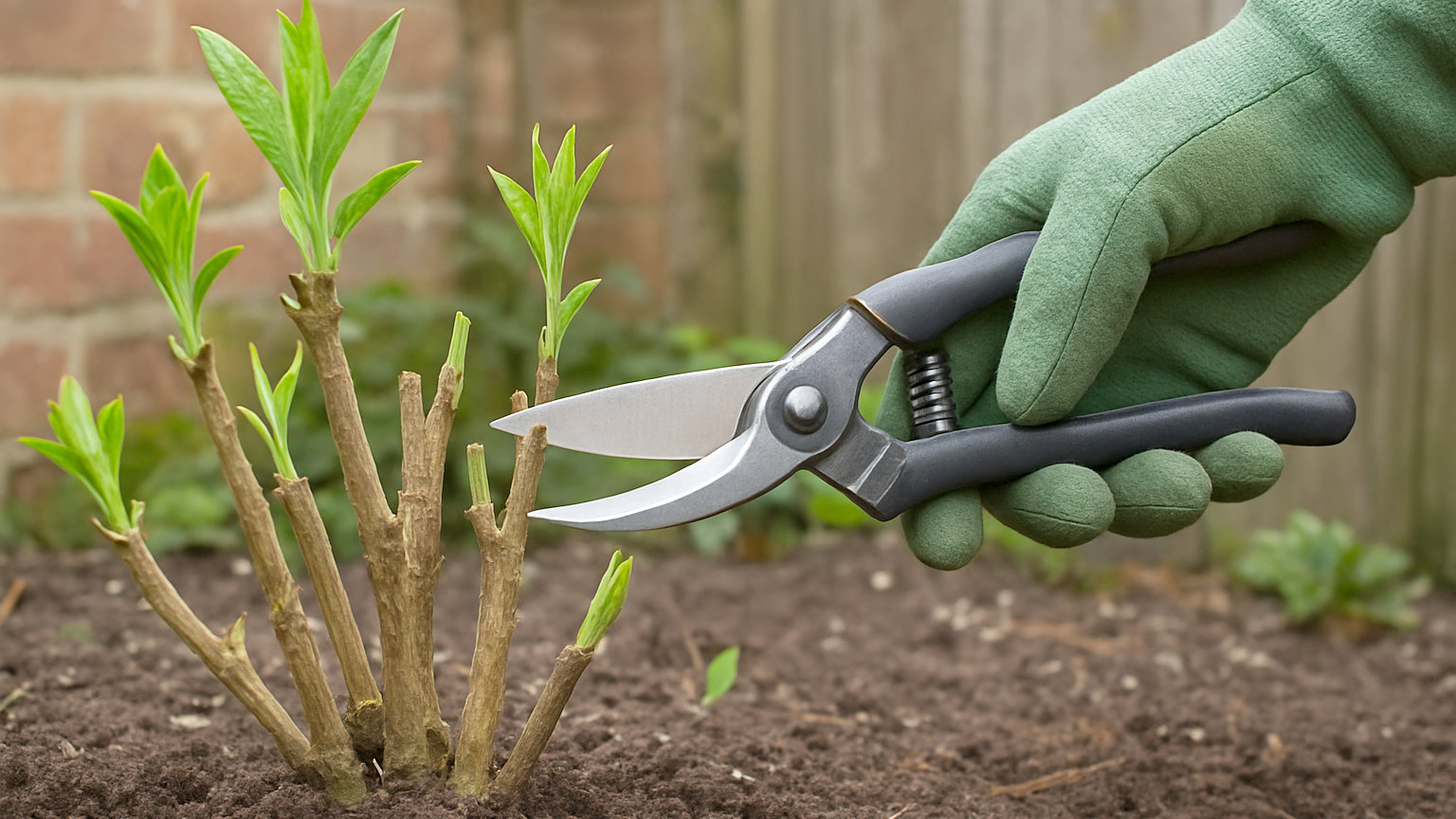
Pruning is not simply removal. It is a signal that changes how the plant grows afterwards, and the response is frequently the opposite of what people intend.
Hard pruning produces vigorous growth
The harder you cut, the more vigorously a plant regrows. This surprises people who cut a shrub back hard specifically to make it smaller.
The reason is the balance between roots and shoots. A plant maintains a rough equilibrium between the two, and the root system is untouched by pruning.
Cut half the top off and the roots, unchanged, are supporting a much smaller plant. The stored reserves and the water and nutrients they supply are directed into fewer buds, and those buds grow far more strongly than they otherwise would.
The result is a mass of long vigorous shoots, often taller than what was removed, within a single season.
What follows from that
To reduce a plant's size, prune lightly and repeatedly rather than hard and once.
To rejuvenate a tired plant and produce strong new growth, prune hard.
To produce flowers rather than growth, prune lightly, since vigorous vegetative growth comes at the expense of flowering.
This is why cutting an overgrown shrub back hard to fit a space usually fails: the following year it is bigger.
Growth against flowering
A plant putting energy into growing is not putting it into flowering, and the two exist in tension.
Vigorous upright growth is vegetative. Horizontal and older growth tends to flower.
This is why bending a climber's stems towards the horizontal produces flowers along their length, why tying espalier branches down encourages fruiting, and why a fruit tree pruned hard every year produces plenty of wood and little fruit.
It is also why high-nitrogen feeding, which drives growth, reduces flowering.
Timing changes the response
Pruning in late winter, while the plant is dormant, produces the strongest regrowth. The stored reserves are all present and are directed into fewer buds when growth begins.
Pruning in summer, after growth has been made, is much less stimulating. The plant has already spent its reserves, and the removed leaves are not replaced with the same vigour.
This is the basis of summer pruning of trained fruit: it restricts vegetative growth and encourages fruit buds, which winter pruning would not.
Autumn pruning is generally avoided, since it prompts soft growth just as frosts arrive.
Where the growth appears
Buds nearest the cut grow most strongly, because the suppression from the removed tip is lifted.
This means the direction of the bud you cut to determines the direction of the new shoot. Cut to an outward-facing bud and the growth heads outwards, opening the plant up. Cut to an inward-facing one and the growth heads into the centre.
Wound response
Plants do not heal wounds in the way animals do. They compartmentalise them, walling off the damaged tissue and growing over it.
Clean cuts of small diameter are compartmentalised quickly. Large wounds, ragged tears and torn bark take far longer and may never close, which is why cut size and cut quality matter.
This is also why wound paints are no longer recommended. They seal moisture in, interfere with the plant's own compartmentalisation, and do not prevent decay.
The exception sometimes made is on plums and cherries pruned in summer, where some gardeners still paint cuts against silver leaf, though pruning at the right time of year is the far more effective measure.
Not every plant responds
Most deciduous shrubs and trees produce new growth from dormant buds in old wood.
Conifers, lavender, rosemary and santolina do not. Cut into bare old wood on these and nothing regrows, leaving a permanent gap.
Always leave green growth below the cut on those plants.
The practical summary
Prune hard for vigour and renewal, lightly for flowers and restraint, in winter for growth, in summer for control.
And before cutting anything back to reduce its size, consider whether the plant simply belongs somewhere else. Pruning fights vigour; it does not remove it.
Root pruning
Because the balance between roots and shoots governs the response, reducing the roots reduces the vigour of the top.
This is the principle behind root pruning an over-vigorous fruit tree that grows strongly and crops poorly, and behind restricting a plant in a container to keep it small. It is also why bonsai works.


