
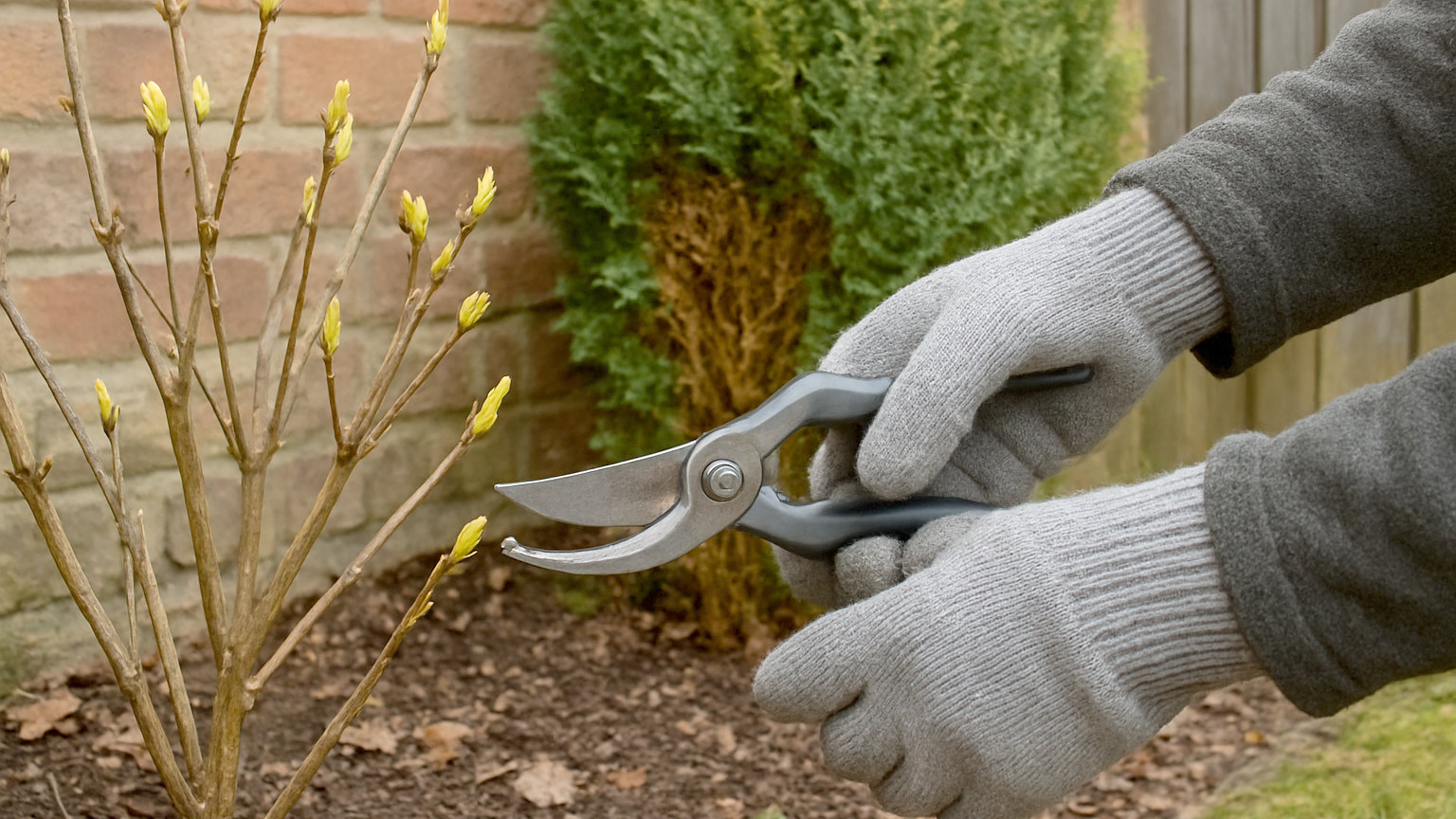
Most pruning errors cost a season's flowers and are forgotten. A few are permanent. It is worth knowing which are which.
Pruning at the wrong time
The commonest mistake and usually recoverable.
Shrubs flowering before midsummer bloom on wood made the previous year. Cut them in winter and you remove every flower for that season.
Forsythia, philadelphus, weigela, ribes, kerria and spring-flowering clematis all suffer this. Prune them immediately after flowering instead.
The same applies to rambling roses, which flower once on last year's wood and are pruned in late summer.
The plant is unharmed and flowers normally the following year.
Cutting into wood that will not reshoot
This one is permanent.
Conifers, including Leyland cypress, thuja and juniper, will not produce new growth from bare brown wood. Cut into it and it stays brown forever.
Lavender, rosemary, sage and santolina behave the same way. A leggy lavender cut back hard usually dies or is left permanently disfigured.
Yew is the exception among conifers and regenerates completely, which is why it makes such good hedging.
Always leave green growth below the cut on these plants, and trim little and often from the moment a plant is young.
Shearing everything into domes
Going over a flowering shrub with shears produces a dense shell of twiggy growth over a congested dead centre, and destroys the natural habit.
Shears belong on hedges, topiary and low mound-forming plants. Flowering shrubs want thinning: whole stems removed at the base, preserving the shape.
Leaving stubs
Cutting into a blank length of stem rather than to a bud or a junction.
The stub has no growing tip, dies back, and the dieback travels into the healthy wood behind it.
Always cut to a bud, a side shoot, or the branch collar.
Flush cutting
Removing a branch flush with the trunk takes the branch collar with it, along with the tissue the tree uses to wall off the wound.
Cut just outside the collar instead, leaving the slight swelling intact.
Cutting a heavy branch in one go
The weight tears bark down the trunk as the branch falls, leaving a wound far larger than intended.
Use the three-cut method: undercut, top cut further out, then remove the stub cleanly.
Over-pruning
Hard pruning stimulates vigorous regrowth, so cutting a shrub back hard to reduce its size frequently produces a larger plant the following year.
Take no more than about a quarter of a shrub's growth in a year, or a fifth of a mature tree's crown.
Renovate over three years rather than in one session.
Pruning in autumn
Cutting in autumn prompts soft new growth just as the first frosts arrive, and that growth is damaged and admits dieback.
Late winter is the time for most hard pruning. The exception is shortening long stems in November to reduce wind rock, which is a different job.
Using blunt or wrong tools
A blunt blade tears rather than cuts, leaving ragged wounds that heal slowly and admit disease.
Anvil secateurs crush green stems. Forcing secateurs through wood too thick for them crushes the stem and ruins the tool.
Applying wound paint
No longer recommended. Sealants trap moisture and fungal spores against the wound and interfere with the tree's own compartmentalisation.
Pruning for no reason
Many shrubs need nothing beyond the removal of dead wood, and some are spoiled by cutting. Magnolias, witch hazel and daphne are all better left alone.
If you cannot say what a cut is for, do not make it.
The mistakes that do not matter much
Cutting slightly too far above a bud, taking a little more than intended, or an untidy first attempt. Plants are resilient and most of this grows out within a season.
How to avoid most of them
Ask three questions before cutting: what am I trying to achieve, does this plant flower on old or new wood, and will it regrow from where I am cutting?
Those three prevent the errors that matter. Everything else is largely a matter of tidiness and grows out within a season or two.
And when genuinely unsure, restrict yourself to removing dead, damaged and diseased wood, which is never wrong on any plant at any time of year.


