
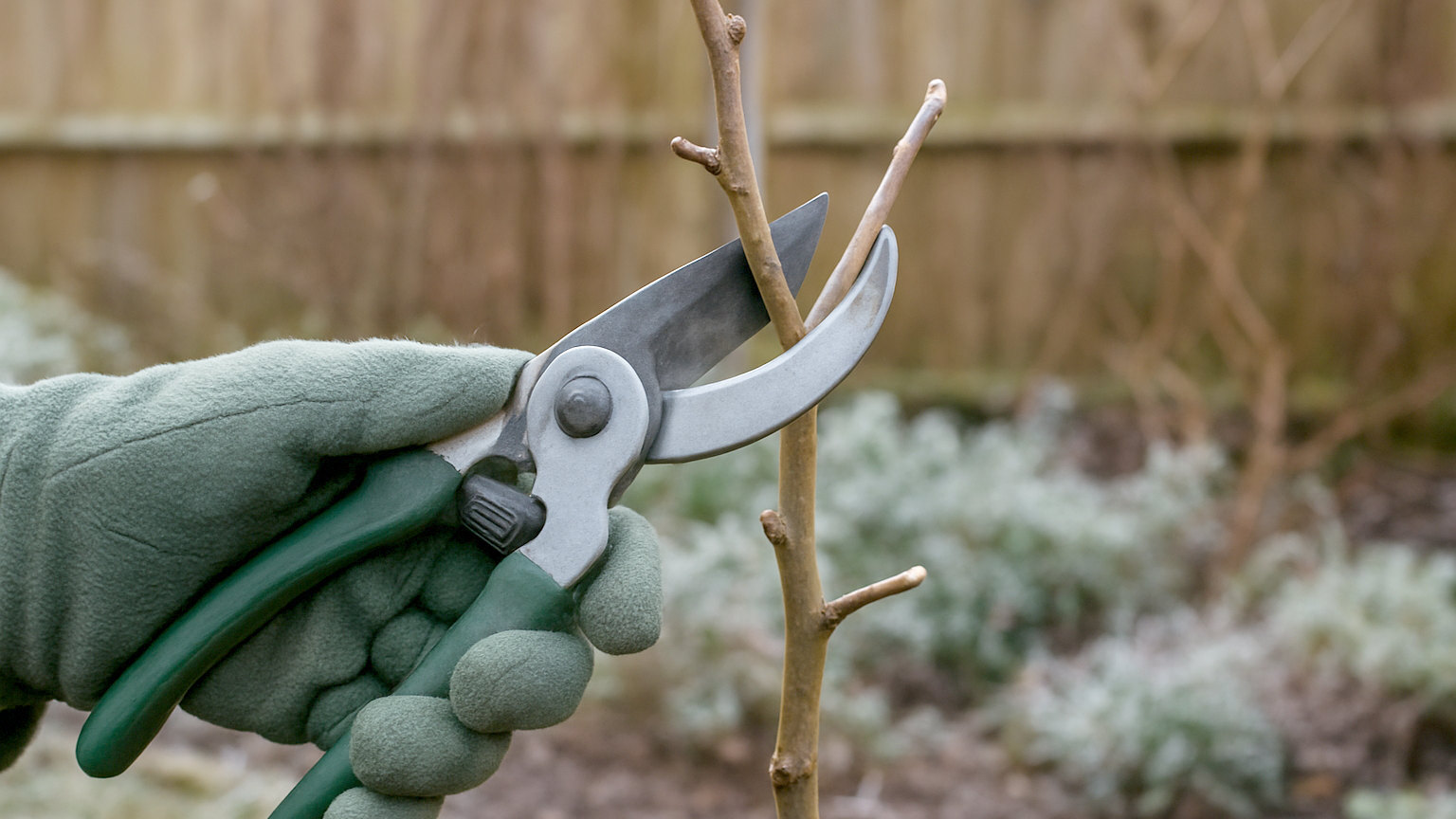
Apical dominance is the single most useful idea in pruning. Once you understand it, a great many separate techniques turn out to be the same technique applied in different situations.
What it is
The bud at the tip of a shoot produces hormones that travel downwards and suppress the buds below it.
Those lower buds remain dormant, or grow only weakly, as long as the tip is present and growing upright.
The purpose is straightforward: a plant competing for light benefits from putting its resources into growing upwards rather than sideways.
Removing the tip
Cut off the growing tip and the suppression is lifted. The buds below break into growth, and the plant branches.
This is what pinching out does. Removing the tip of a young cosmos, sweet pea or antirrhinum produces a bushy plant with many stems instead of one tall one, and roughly doubles the flowers.
It is also why cutting a hedge makes it denser: every cut removes a tip and prompts several shoots to break below it.
The buds nearest the cut respond most strongly, since they were most suppressed.
Bending stems horizontal
Dominance depends on the shoot being upright, not simply on the tip existing.
Bend a stem towards the horizontal and the hormonal suppression breaks down along its length. Buds all the way along it break into growth and flower.
This is why a climbing rose trained horizontally flowers along its whole length, while the same stem left vertical flowers only at the top.
It is the same principle behind spiralling a climber around an obelisk, tying espalier arms down horizontally, and festooning or weighting the branches of a young fruit tree to bring it into cropping.
Nothing is cut. The stem is simply repositioned.
Why climbers go bare at the base
A climber allowed to run straight up puts everything into the tip. The lower buds stay dormant, the base goes woody and bare, and all the flowers appear where you cannot see them.
The correction is to untie the main stems, lower them and retie them horizontally or arching downwards. Flowering shoots break along the length within a season.
Where the growth goes
Because the buds nearest a cut respond most strongly, the bud you cut to determines the direction of the new shoot.
Cut to an outward-facing bud and the shoot heads outwards, opening the plant up and keeping the centre clear.
Cut to an inward-facing bud and the shoot grows into the middle, producing the congestion and crossing branches you were trying to avoid.
On plants with buds in opposite pairs, cut straight across just above a pair, accepting that two shoots will result.
Leaders and competing shoots
A young tree should have one leading shoot. Where two compete, dominance is divided between them and the tree develops a narrow forked union, which is structurally weak and prone to splitting in later life.
Remove one of the competing leaders while the tree is young and the cut is small. This is the most valuable few minutes of formative pruning there is.
Water shoots and vigorous regrowth
Hard pruning removes many tips at once, releasing a great deal of suppressed growth. The result is a mass of vigorous vertical shoots, which is why cutting a plant back hard often makes it larger.
Those upright shoots are strongly dominant themselves and produce few flowers, which is why they need either removing or bending down.
Using it deliberately
Want a bushier plant, pinch the tip. Want flowers on a climber, train it horizontally. Want growth in a particular direction, cut to a bud facing that way. Want a strong tree, keep one leader.
All four are the same principle applied to different situations.
The exception worth knowing
Some plants have weak apical dominance naturally and branch freely without any help, which is why shrubs such as spiraea and potentilla form dense mounds unaided.
Others have very strong dominance and resist branching, which is why a young tree makes a single stem and why pinching is needed on plants such as cosmos and sweet peas to get them to bush out at all.
Chemical basis
The suppression is caused by auxin, a plant hormone produced at the growing tip and transported downwards. Removing the tip removes the source; laying the stem horizontal disrupts its downward transport.
Knowing the mechanism is not necessary to use it, and it does explain why bending a stem works as well as cutting it.


