
Mowers cause a significant number of garden injuries every year, most involving hands and feet contacting the blade, cut cables, or objects thrown from beneath the deck. Nearly all are preventable with a few consistent habits.
Before you start
Walk the lawn and pick up debris. Stones, sticks, wire, dog toys and bones can be thrown from beneath a rotary deck at considerable speed, and they also damage the blade.
This takes two minutes and prevents both the commonest injury to bystanders and the commonest cause of blade damage.
Check the machine: blade secure, guards in place, grass box fitted or the discharge chute properly closed, cable undamaged.
Never operate a mower with a guard removed or a safety cut-out defeated.
Electrical safety
Always use a residual current device with any mains-powered garden tool. An RCD cuts the power in milliseconds if the cable is damaged, and cutting through a mower cable is a common accident.
Use a plug-in RCD adaptor if the socket is not already protected.
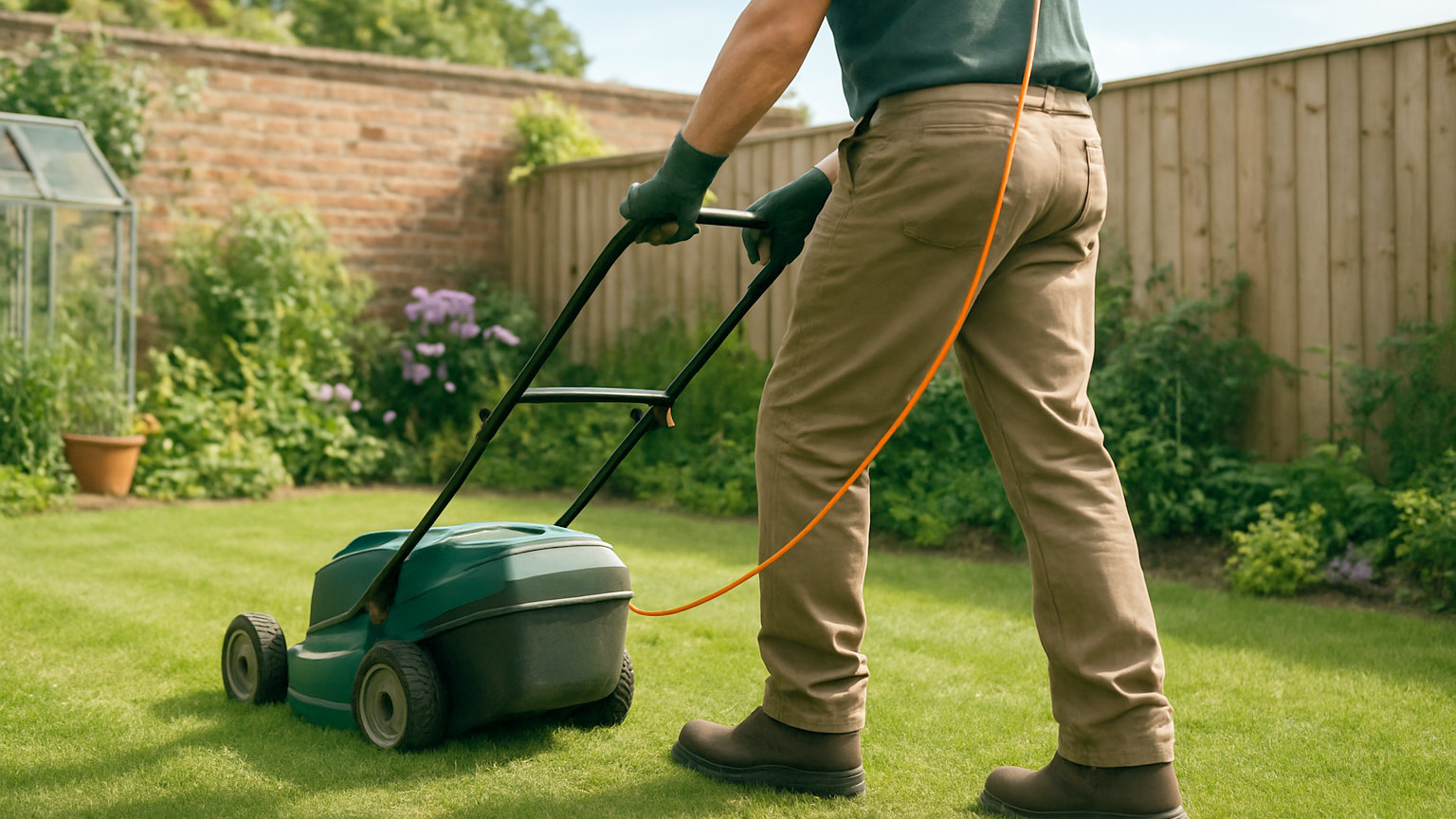
Keep the cable over your shoulder and behind you, and work away from the socket so the cable trails behind rather than in front.
Never use a corded electric mower on wet grass or in the rain. Never use one where the cable would cross water.
Inspect the cable each time for nicks and cuts, and replace rather than tape a damaged one.
Clothing
Stout closed shoes or boots, never sandals or bare feet. Foot injuries are among the most severe mowing accidents.
Long trousers protect against thrown debris.
Eye protection is sensible with a rotary mower and essential with a strimmer.
Hearing protection with a petrol machine, which is loud enough to damage hearing over years of use.
Slopes
Slopes are where most serious mowing accidents happen.
With a walk-behind mower, mow across the slope rather than up and down. If you slip while mowing downhill, the machine continues towards you.
With a ride-on machine the advice is the opposite: mow up and down, since a ride-on can tip sideways on a slope.
Do not mow a slope that is wet, and do not mow any slope steeper than you can walk on comfortably. Use a hover mower swung from above, or a strimmer, on a steep bank.
Never pull a mower backwards towards you up a slope.
Petrol machines
Refuel only when the engine is cold. Petrol spilled on a hot exhaust ignites readily.
Refuel outdoors, never in a shed or garage.
Never run a petrol engine in an enclosed space, because of carbon monoxide, which is odourless and can be fatal. This includes starting a mower in a garage to check it.
Store fuel in an approved container in a cool ventilated place away from the house and any ignition source.
During mowing
Keep children and pets indoors or well away. Never carry a child on a ride-on mower.
Never put hands or feet near the deck while the blade could turn.
Stop the engine and disconnect the power or spark plug lead before clearing a blockage, adjusting the height, emptying the box or inspecting the underside. Blades coast after the motor stops.
Release the handle to stop the blade before crossing paths, gravel and drives, since a rotary mower throws gravel with considerable force.
Wildlife
Check long grass before cutting it, since hedgehogs, frogs and nesting birds shelter there and hedgehogs curl rather than run.
Strim or mow long grass in stages from the centre outwards, giving animals a route out.
Avoid cutting hedges and rough areas between March and August because of nesting birds, which is a legal matter as well as good practice.
Afterwards
Clean the deck with the power disconnected, using a scraper rather than your hands. Store the machine where children cannot reach it.
Wash your hands, since petrol, oil and grass sap are all irritants, and check yourself for ticks after cutting long grass in rural areas.
The habits that matter most
Clear the lawn of debris first, wear proper footwear, use an RCD on anything mains powered, disconnect the power before touching the blade, and mow across slopes rather than up and down.
Those five between them prevent the great majority of mowing injuries.


