
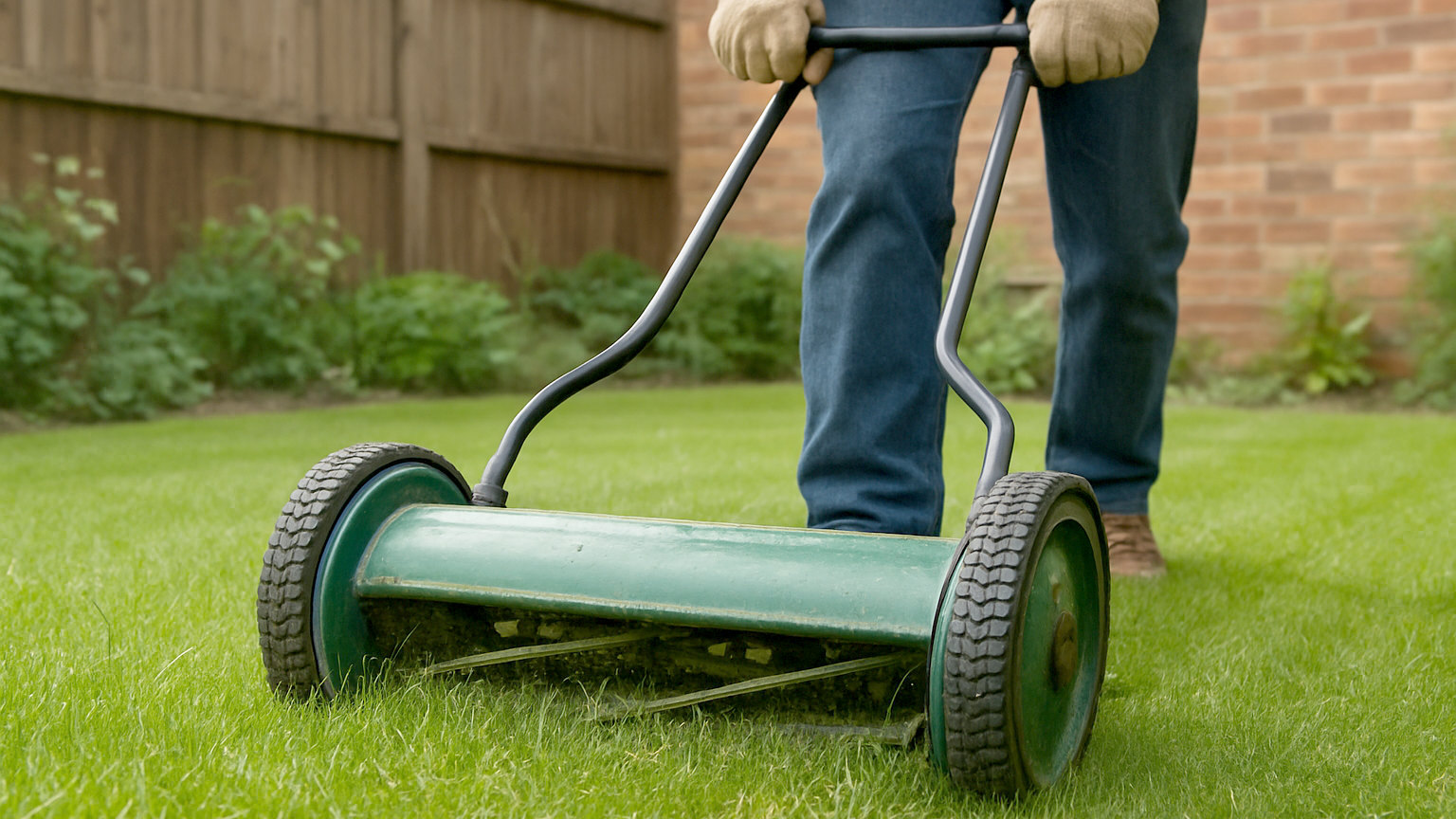
Cutting too short is the most damaging thing most people do to their lawn, and it causes a large share of the problems they then buy products to fix. Moss, weeds, drought damage and thin patchy grass all follow from scalping, and the remedy costs nothing.
The right height
For an ordinary family lawn, twenty-five to forty millimetres is the target. That is considerably higher than most people set a mower.
Ornamental lawns of fine grasses can go lower, to around fifteen or twenty millimetres, but they need far more attention to survive it. Shaded areas and hard-wearing family lawns want the top of the range or above.
Raise the height in summer, particularly in dry spells, to fifty millimetres or more. Longer grass shades the soil, retains moisture, and stays green through weather that would brown a closely cut lawn.
Why height matters so much
Grass feeds itself through its leaves. Remove most of the leaf and the plant has to draw on reserves to regrow, which weakens it.
Root depth also follows leaf height fairly directly. Longer grass grows deeper roots, reaching moisture further down and surviving drought far better. Short grass has shallow roots and browns off within days of dry weather.
Longer grass also shades the soil surface, which suppresses weed seed germination and discourages moss. A lawn cut at forty millimetres has fewer weeds than the same lawn cut at twenty, without anything being applied to it.
The one-third rule
Never remove more than a third of the leaf height in a single cut. If the grass is ninety millimetres tall, take it to sixty rather than straight down to thirty.
Removing more than a third at once shocks the plant, causes it to shed roots, and turns the lawn yellow. If a lawn has got away from you, cut it in stages over a fortnight, lowering the height a little each time.
This is why mowing frequency and height are connected: cutting more often lets you keep the height right without ever taking too much.
How often
Frequency follows growth rather than the calendar. In the main growing season, from May to July, once a week is usually right and twice a week suits a fine lawn in a wet spell.
Growth slows in high summer if it is dry, and in a drought you should stop cutting altogether rather than stressing grass that has stopped growing. It picks up again in early autumn, when weekly cutting resumes until growth stops.
The first cut of the year is usually in March or early April, taken high, with the height lowered gradually over subsequent cuts. The last is around October or November, again on a high setting, leaving the grass slightly longer through winter to protect the crowns.
Occasional cuts through a mild winter do no harm if the ground is not frozen or sodden, and are better than letting grass grow long and matted.
Clippings: collect or leave
Leaving clippings returns nitrogen and moisture to the lawn and can supply a meaningful proportion of its annual feed requirement. Mulching mowers chop them finely so they disappear.
The conditions are that the grass must be dry, the clippings short, and the mowing regular. Long wet clumps left on the surface smother the grass beneath and encourage disease.
Collect clippings when the grass is wet, when it has grown long, and if you have a lawn disease or a lot of weed seed. Otherwise leaving them is both easier and better for the lawn.
Practical points
Keep the blade sharp. A blunt blade tears rather than cuts, leaving ragged white-brown tips across the lawn and opening the grass to disease. Sharpen or replace at least once a season.
Mow when the grass is dry if you can, since wet grass clogs the mower, tears more easily and compacts under the wheels.
Vary the direction each time you mow. Cutting the same way every week makes the grass lean permanently and creates ruts from the wheels.
Leaving some longer
Setting aside an area to grow long, cut once or twice a year, supports far more insect life than a close-mown sward and reduces the work. A mown path through longer grass looks deliberate rather than neglected.


