
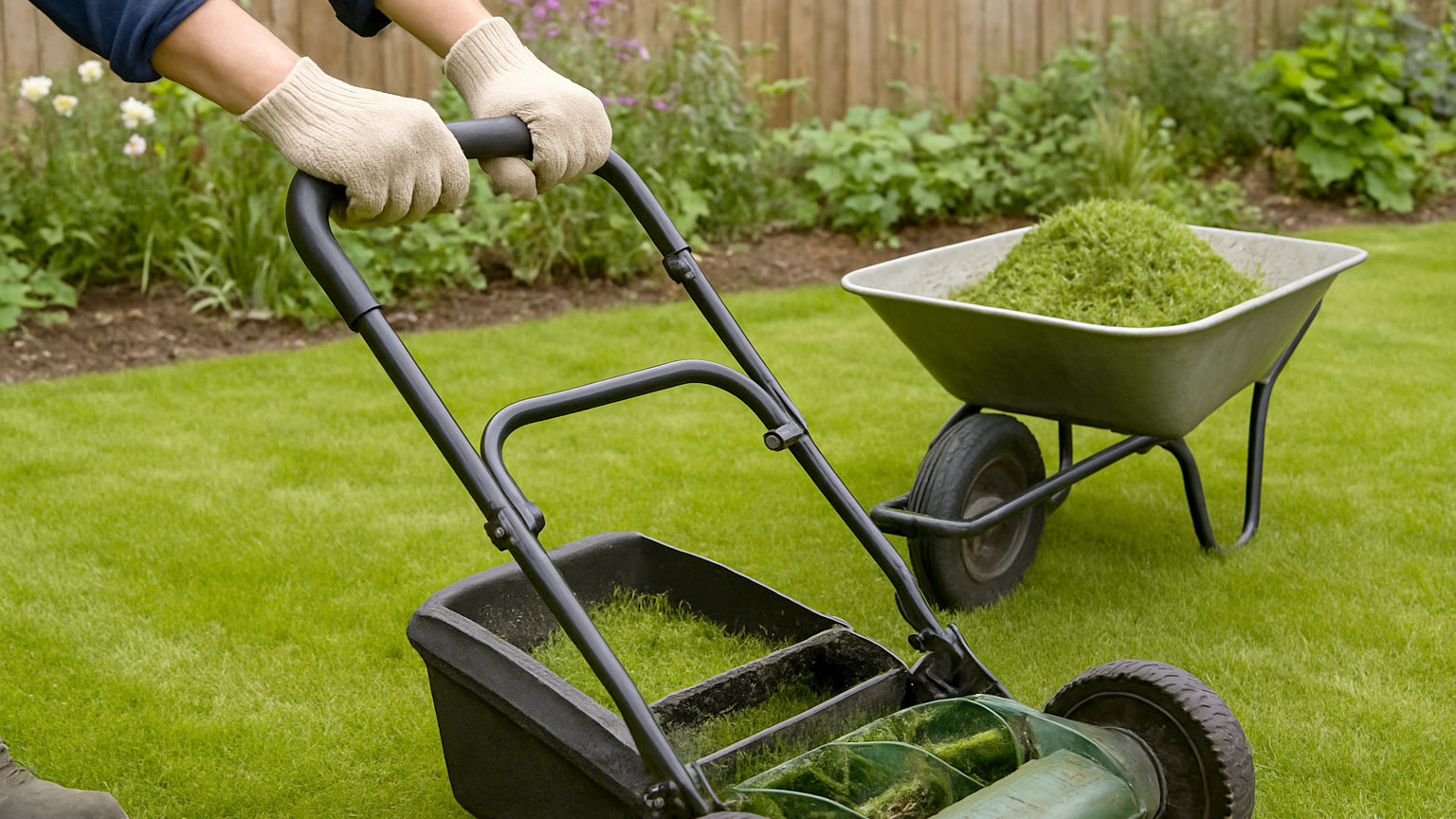
Whether to collect clippings or leave them is one of the more contested lawn questions, and the usual objection to leaving them is based on a misunderstanding.
Clippings do not cause thatch
Thatch is composed of stems, roots and runners, not leaf clippings. Grass clippings are mostly water and break down within days.
Thatch builds up from the fibrous parts of the plant, and it accumulates because of overfeeding, compaction and acid conditions rather than because of clippings left on the surface.
This matters because the fear of thatch is the main reason people collect clippings when they need not.
The case for leaving them
Clippings are roughly eighty per cent water and contain a useful quantity of nitrogen, phosphorus and potassium.
Returning them recycles those nutrients, and over a season it supplies a meaningful proportion of a lawn's nitrogen requirement, reducing the need to feed.
They also shade the soil surface and return moisture, which matters considerably in dry weather.
And there is nothing to empty, which on a large lawn is most of the labour.
When leaving them works
When you mow regularly, so the clippings are short.
When the grass is dry, since wet clippings clump and smother.
When you are removing no more than a third of the leaf length, which is the general rule anyway.
A mulching mower or a mulching plug chops the clippings finely and forces them down into the sward, which works considerably better than simply running without the box.
When to collect
After a long gap, when the clippings are long enough to lie on the surface in rows and smother the grass beneath.
When the grass is wet, since the clippings clump.
When disease is present, particularly red thread, rust or fusarium, since collecting removes spores from the lawn.
When the lawn is full of weeds in seed, since leaving clippings spreads the seed around.
The first few cuts of spring, when growth is slow and the clippings sit on the surface rather than breaking down.
And the last cuts of autumn, for the same reason and because damp clippings left through winter encourage disease.
On a fine ornamental lawn, where appearance is the point.
What to do with collected clippings
Compost them, in thin layers mixed with plenty of brown material such as cardboard, dry leaves or shredded prunings.
A heap of grass clippings alone turns into a slimy anaerobic mass that smells strongly and does not compost properly. The nitrogen-rich clippings need carbon-rich material to balance them.
Aim for roughly equal volumes of clippings and brown material, and turn the heap to introduce air.
Clippings also make an excellent mulch around vegetables and soft fruit, spread thinly at two or three centimetres. Any thicker and they mat together, go slimy and exclude air.
Let them wilt for a day before spreading, which reduces the heat they generate as they start to break down.
They can be added to a wormery in small quantities, and they are a useful activator for a heap that has stalled, since the nitrogen restarts the process.
What not to do with them
Do not mulch with clippings from a lawn recently treated with weedkiller, since residues persist and can damage vegetables and other plants. Check the product for the interval required.
Do not pile them in a thick layer anywhere, on the lawn or in a border.
Do not tip them over a hedge or into a wild area, which creates a nutrient-rich patch that encourages nettles and docks and smothers whatever was growing there.
Do not put them in a pond, where they decompose and remove oxygen from the water.
The practical answer
For most lawns, mulch mow through the main season when the grass is dry and being cut regularly, and collect in spring, in wet conditions, and when disease or weed seed is present.
That combination gets the benefit of the returned nutrients without running into the situations where clippings cause problems.
Robot mowers
These mulch by design, cutting a few millimetres very frequently so the clippings are tiny and disappear immediately. There is no collection option and none is needed.
The constant light mulching returns a steady supply of nitrogen, which is one reason a robot-mown lawn often needs less feeding than a conventionally mown one.


