
An uneven lawn scalps on the bumps and stays long in the hollows, which makes mowing frustrating and the result patchy. Correcting it depends entirely on how deep the unevenness is.
Why lawns become uneven
Poor preparation before turfing or seeding, where the ground was not firmed properly and settled unevenly afterwards.
Soil settling over buried material, old foundations, tree roots or backfilled trenches.
Worm casts and molehills trodden flat, animal damage, and heavy use in wet weather.
Frost heave and general subsidence over years.
Rolling is not the answer
A roller does not level a lawn. It compacts the soil, which is the opposite of what a lawn needs, and it flattens the high points only briefly while the hollows remain hollow.
Rolling was standard practice a generation ago and is now generally discouraged, since compaction causes poor drainage, moss, thin grass and weak rooting.
The only legitimate use is a very light roll after frost heave has lifted new turf, or after seeding, to firm the surface gently.
Shallow hollows: top dressing
For anything up to about a centimetre deep, top dressing is the answer and it is the easiest method.
Apply a sandy loam mixture to the low areas in early autumn, brushing it in with a stiff brush until the grass tips show through.
Never apply more than about a centimetre in one go. A thicker layer smothers the grass and kills it, leaving a bare patch where the hollow was.
Repeat annually. Levelling this way is gradual, taking two or three seasons for a noticeable hollow, and it improves the soil at the same time.
Deeper hollows: lifting the turf
For anything more than about two or three centimetres, top dressing would take too long and the turf has to come up.
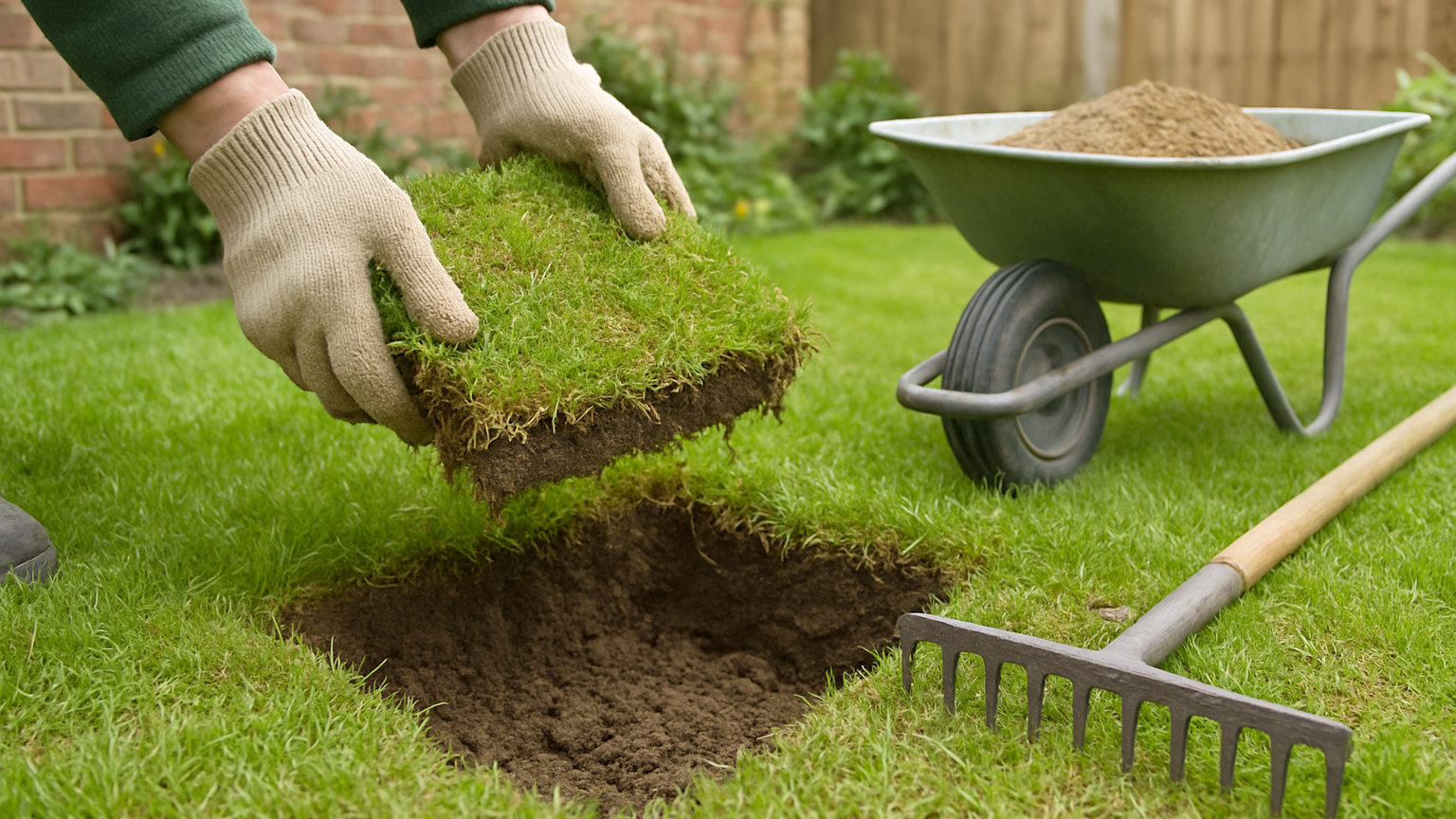
Cut an H-shape through the turf across the hollow with a half-moon iron, and undercut with a spade to about four centimetres deep.
Fold the two flaps back like opening a book, exposing the soil beneath.
Add topsoil to bring the level up, firming it as you go, and slightly proud since it will settle.
Fold the turf back, check the level with a straight edge or a plank, adjust if necessary, and firm gently. Brush top dressing into the cut lines and water thoroughly.
Bumps
Treated the same way in reverse. Cut and fold back the turf, remove soil from beneath until the level is right, replace and firm.
Do not simply cut the bump off, which leaves a bare patch and does not address the cause.
Check what is causing it. A bump over a tree root cannot be levelled by removing soil, since the root will still be there and cutting it damages the tree.
Widespread unevenness
Where a whole lawn undulates rather than having a few specific problems, the choice is between gradual improvement and starting again.
Annual top dressing over five years makes a substantial difference and improves the soil at the same time.
Complete renovation means killing or lifting the existing turf, cultivating, levelling and firming the whole area properly, and returfing or reseeding. It is a large job and it produces a genuinely level result.
For a lawn that is merely undulating rather than difficult to mow, the gradual approach is usually the better use of effort.
Timing
Early autumn is best for all of this, since the grass is growing actively enough to recover and there is no summer stress to come.
Spring is acceptable for smaller repairs. Avoid midsummer entirely, and do nothing at all during a drought.
Getting it right first time
Most bumpy lawns were bumpy from the start. When laying turf or sowing seed, firm the prepared ground thoroughly by treading on your heels in overlapping passes, rake, and repeat.
That settling stage is tedious and it prevents years of correction afterwards.
Molehills
Do not tread molehills flat, which compacts the soil and leaves a bump. Scrape the loose soil off with a spade and use it as top dressing elsewhere, then firm the hole and reseed if necessary.
The tunnels beneath may collapse over the following months, producing further hollows to correct, so leave a period before doing any final levelling.


