
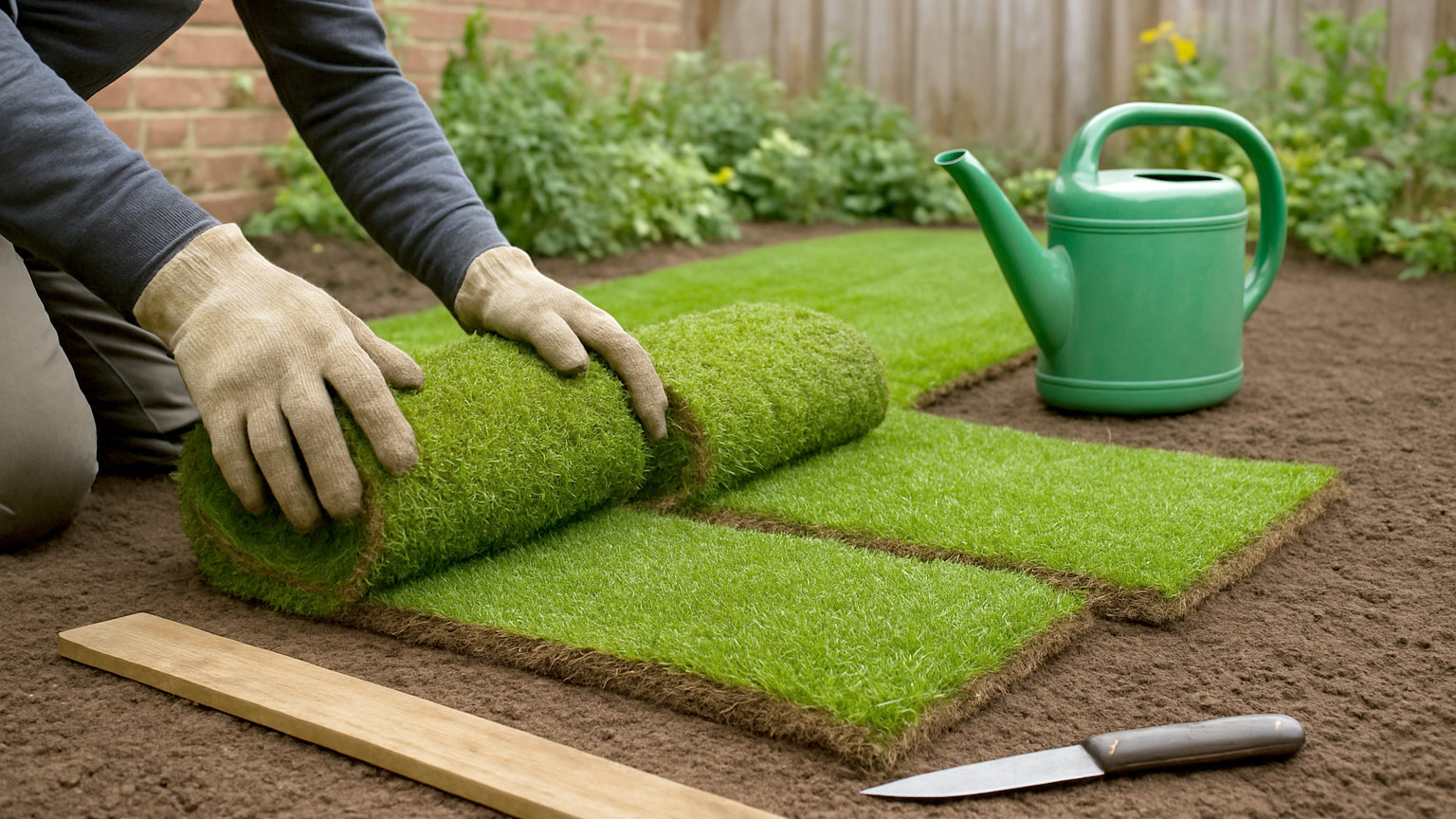
Turf produces a usable lawn within weeks rather than months, which is its whole advantage over seed. It costs several times as much, and it has to be laid promptly and watered properly or the money is wasted.
When to lay it
Autumn, from September to November, is best. The soil is still warm so roots establish quickly, autumn rain does most of the watering, and the lawn is settled before it faces its first summer.
Spring, in March and April, is the second choice and commits you to watering through the first dry spell.
Turf can be laid at any time the ground is not frozen or waterlogged, though summer laying needs daily watering and frequently fails when someone goes on holiday.
Preparing the ground
This is where the work is, and it cannot be done afterwards.
Clear all existing vegetation and every perennial weed root. Bindweed and couch grass will grow straight through new turf.
Dig or rotavate to about twenty centimetres, removing stones and debris. Incorporate compost if the soil is poor, and improve drainage on heavy clay with grit.
Rake level, then firm the whole area by treading with your weight on your heels, shuffling across in overlapping passes. Rake again and repeat. This settling stage prevents the hollows that otherwise appear over the following year.
Finish with a fine, firm, level surface, and apply a pre-turfing fertiliser a few days before laying.
Order and lay promptly
Turf is a living thing rolled up in the dark and it deteriorates fast. Lay it within twenty-four hours of delivery, and no more than forty-eight in cool weather.
Turf left rolled for three days in warm weather yellows, heats up in the middle of the stack and may be dead when unrolled.
If you genuinely cannot lay it at once, unroll it flat in a shaded place and keep it watered.
Laying
Start along a straight edge, a path or a wall, and work forwards across the prepared ground.
Stagger the joints like brickwork rather than lining them up, which produces continuous seams that show and dry out.
Butt the edges tightly against each other without overlapping and without leaving gaps. Turf shrinks slightly as it settles, so any gap widens.
Do not stretch the turf to make it fit. Stretched turf contracts as it dries and leaves gaps at every joint.
Work from a plank or a board laid on the turf you have already placed, never from the prepared soil, which would leave footprints and compaction.
Cut edges and curves with a sharp knife or an old edging iron once everything is down.
Firming
Tamp the turf down lightly with the back of a rake or a light roller to bring the roots into contact with the soil beneath. Do not compact it heavily.
Brush a sandy loam top dressing into the joints, which fills any small gaps and helps the edges knit together.
Watering, which decides everything
Water thoroughly immediately after laying, and keep watering for the first three or four weeks.
The water needs to reach through the turf into the soil beneath, not just wet the grass. Lift a corner and check: the underside of the turf and the soil below should both be moist.
In dry weather this may mean watering daily. New turf that dries out shrinks, gaps open at the joints, and the edges brown and die.
Keep off it
Stay off the new lawn for at least three weeks, and longer in cool conditions when rooting is slower.
Test whether it has rooted by lifting a corner gently. If it resists, the roots have taken hold.
The first cut
Usually two to three weeks after laying, once the grass reaches about five to seven centimetres.
Set the mower high and take only the tips off, with a sharp blade. Cutting low or with a blunt blade tears the unrooted turf out.
Lower the height gradually over subsequent cuts. Do not feed for the first six to eight weeks if a pre-turfing fertiliser was used.
Common problems
Gaps opening at the joints mean the turf has dried out and shrunk. Brush sandy loam into them and water more.
Yellow or brown edges are the first sign of drought, since the cut edges dry first. Increase watering immediately.
Turf that lifts easily after a month has not rooted, usually because the soil beneath was dry, compacted or not firmed properly.


