
Grass is a sun-loving plant and there is a point beyond which no amount of seed, feed or effort will produce a lawn. Recognising where that point is saves years of frustration.
What shade does to grass
Grass in low light produces thin, drawn growth with a weak root system. It cannot photosynthesise enough to recover from mowing or from wear.
The thin sward then admits moss and weeds, which tolerate shade far better, and the usual response of feeding and treating the moss addresses the symptom rather than the cause.
Under trees a second problem compounds it: the roots take moisture and nutrients before the grass sees any, and the canopy sheds rain away from the area.
What helps in moderate shade
Raise the mowing height. This is the single most effective measure. Cutting at fifty millimetres or more rather than twenty-five gives the grass far more leaf area to work with.
Use a shade-tolerant seed mixture based on fine fescues and wood meadow grass when overseeding. It performs noticeably better than a standard ryegrass mix.
Reduce wear. Shaded grass recovers slowly, so route foot traffic elsewhere or add stepping stones.
Feed lightly rather than heavily. Excess nitrogen produces soft growth that cannot support itself in low light.
Clear fallen leaves promptly, since a shaded lawn is usually under something that drops them and even a few days of cover does damage.
Aerate annually, since shaded areas are frequently damp and compacted, and both make the grass thinner still.
Overseed each autumn, accepting that a shaded lawn needs topping up more often than one in sun.
Letting in more light
Where the shade is cast by a tree you own, raising the canopy by removing the lowest branches lets in considerably more light and rain at the edges, and often transforms what will grow beneath.
Thinning a dense crown helps too, and is a job for a qualified arborist on anything substantial.
Check first whether the tree is covered by a Tree Preservation Order or sits in a conservation area, since work on either needs consent.
Cutting back overhanging shrubs and hedges at the edge of a lawn achieves the same thing at no cost.
When to stop trying
In deep shade, under dense evergreen canopy, in a narrow passage between buildings, or where tree roots are at the surface, grass will not succeed however it is managed.
Repeatedly reseeding an area that cannot support grass is a common and expensive habit.
What to do instead
A bed of shade-tolerant planting is usually a better answer, and it looks deliberate rather than defeated.
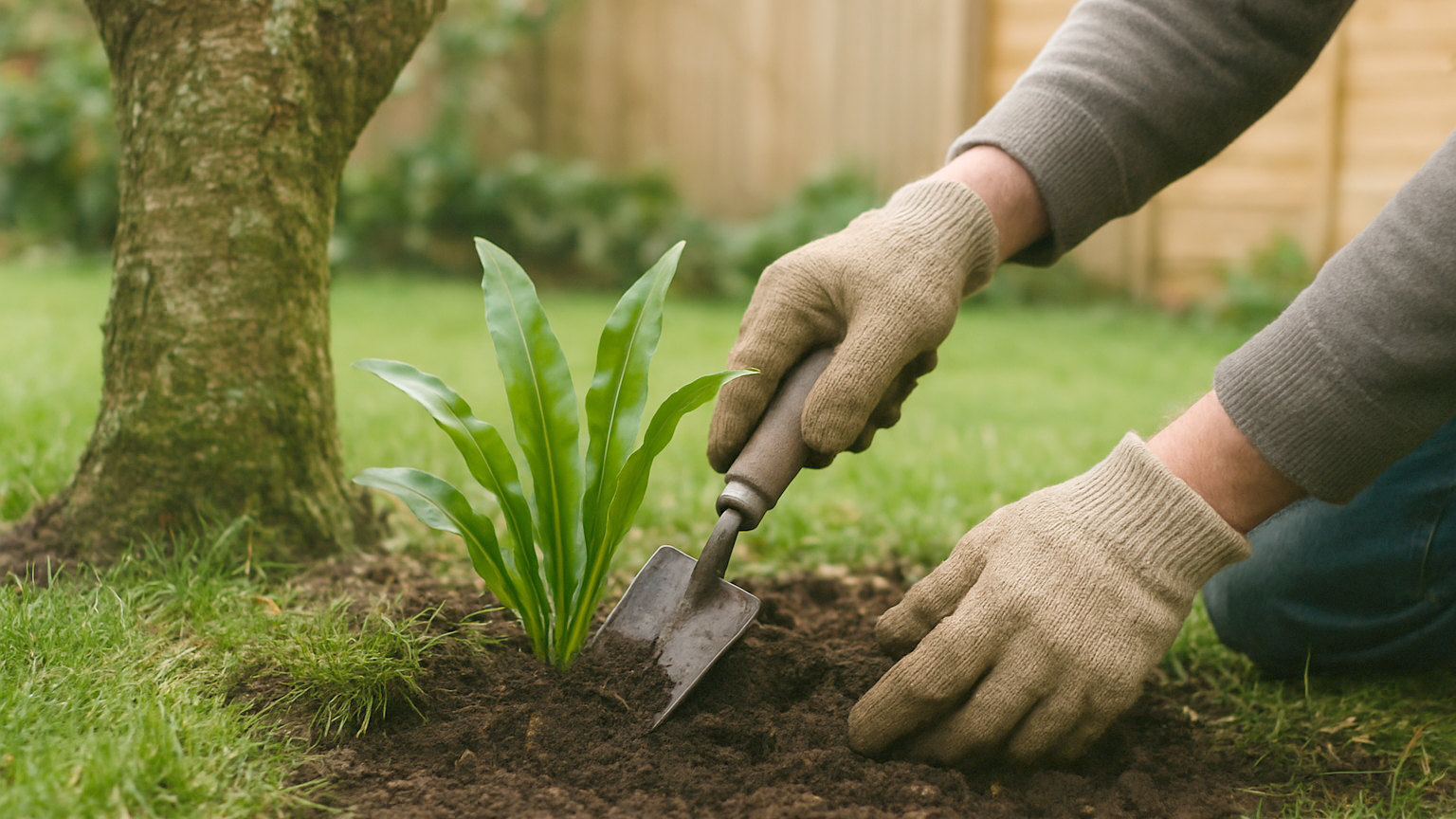
Epimedium, hardy geraniums, bergenia, pulmonaria, ferns, hostas and ivy all thrive where grass fails. Under a tree, plant into pockets between the roots rather than digging the whole area.
Mulching with bark or leaf mould and adding a few shade-tolerant plants transforms a bare area under a tree at very little cost.
Paving, gravel or a seating area is another legitimate answer, particularly under a tree where shade in summer is exactly what you want.
A moss lawn is a genuine option in damp shade. Moss is soft, green all year, needs no mowing and thrives in exactly the conditions grass hates.
Other problem areas
Narrow strips between paths are difficult to mow and rarely worth keeping as grass. Pave or plant them.
The grass immediately around a tree trunk is damaged by mowers and competes with the roots. Leave a mulched circle instead.
Heavily worn routes across a lawn should be accepted rather than fought. Put a path where people already walk.
Waterlogged corners need drainage work or a change of planting, since grass will not tolerate standing water for long.
Moss in shade
Moss in a shaded lawn is a symptom rather than the problem. Killing it leaves bare ground that the moss recolonises within a season, because the conditions that favoured it have not changed.
Either address the light, the drainage and the compaction, or accept the moss and stop treating it. Repeated moss killer on a permanently shaded lawn is money spent annually for no lasting result at all.
In genuinely deep shade, accepting a moss lawn is the sensible outcome rather than a defeat.


