
Lawn care concentrates into two short windows: spring, when growth restarts, and early autumn, when the real renovation happens. Very little needs doing at any other time, and several jobs actively harm a lawn if done in the wrong month.
January and February
Keep off the lawn when it is frozen or waterlogged, since walking on frosted grass damages the blades and leaves black footprints for weeks.
Brush off worm casts on a dry day rather than treading them in, which creates a seedbed for weeds.
Service the mower: sharpen or replace the blade, change the oil, clean the deck. Doing it now avoids the queue at the repair shop in April.
March
The first cut of the year, usually when growth restarts and the ground is dry enough. Set the blade high and take only the tips off.
Rake off debris and any accumulated leaves.
Cut a fresh edge with a half-moon iron where edges have crumbled over winter.
April
Apply the main spring feed, high in nitrogen, once the grass is growing actively. Do not apply it earlier simply because the calendar says spring.
Increase mowing to weekly, lowering the height gradually over several cuts rather than all at once.
Repair any bare patches by overseeding, and treat moss if necessary.
A light scarify is possible now, though autumn is better.
May and June
The peak growing period. Mow weekly, or twice weekly on a fine lawn.
Spot-treat perennial weeds while they are growing strongly, or hand weed.
Water only newly sown or newly turfed areas. An established lawn needs nothing.
July and August
Raise the mowing height in dry weather, which shades the soil and keeps the lawn greener for longer.
Stop mowing altogether during a drought. Cutting grass that has stopped growing stresses it further.
Do not feed in dry conditions, since fertiliser on a lawn that cannot take up water scorches it.
Accept browning as dormancy rather than death. It greens up within a fortnight of rain returning.
September
The most important month of the lawn year. Everything substantial happens now.
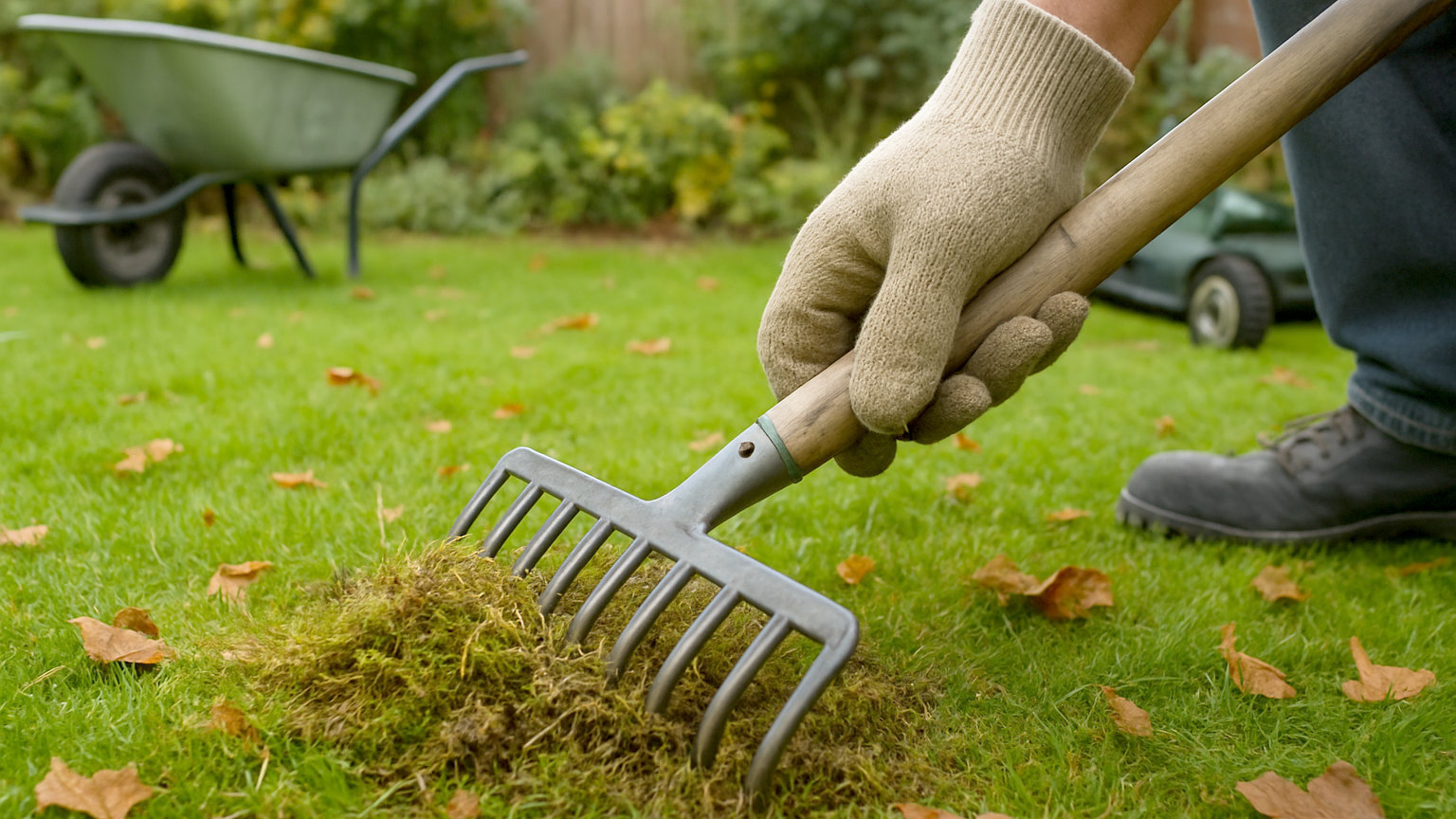
Scarify to remove thatch and moss. Aerate to relieve compaction, ideally with hollow tines. Top dress with a sandy loam mixture brushed into the surface.
Overseed thin areas and bare patches, since conditions for germination are ideal.
Apply an autumn feed, which is high in potassium and low in nitrogen. Never use a spring feed at this time of year.
Apply nematodes for chafer grubs or leatherjackets if either has been a problem.
October and November
Continue mowing occasionally as growth slows, on a high setting.
Clear fallen leaves regularly. Leaves left lying block light and encourage disease, and a week of neglect in a windy autumn does real damage.
Make the last cut of the year around November, leaving the grass slightly longer than usual over winter to protect the crowns.
December
Very little. Keep off frozen or saturated turf and clear any remaining leaves.
An occasional cut in a mild winter does no harm if the ground is firm and dry.
The two things that matter most
If you do nothing else, do the September renovation and mow at the right height through the season.
Those two between them address thatch, compaction, thin sward, moss and most weed problems, which is more than feeding alone will ever achieve.
Jobs people do at the wrong time
Applying a high-nitrogen spring feed in autumn, which produces soft growth just as frost and disease arrive.
Scarifying in midsummer, when the lawn has no chance to recover.
Mowing in a drought, feeding in a drought, and watering an established lawn at all.
Cutting the first spring cut too low, which shocks grass that has not been mown for months.
A minimal regime
For anyone who wants a reasonable lawn without a routine, three jobs cover most of it: mow at forty millimetres through the season, feed once in April and once in September, and rake out moss and overseed in early autumn.
That takes a few hours a year and produces a lawn that is perfectly respectable, even if it is not a bowling green.
Everything beyond that is a matter of how fine you want it to look and how much time you are prepared to spend.


