
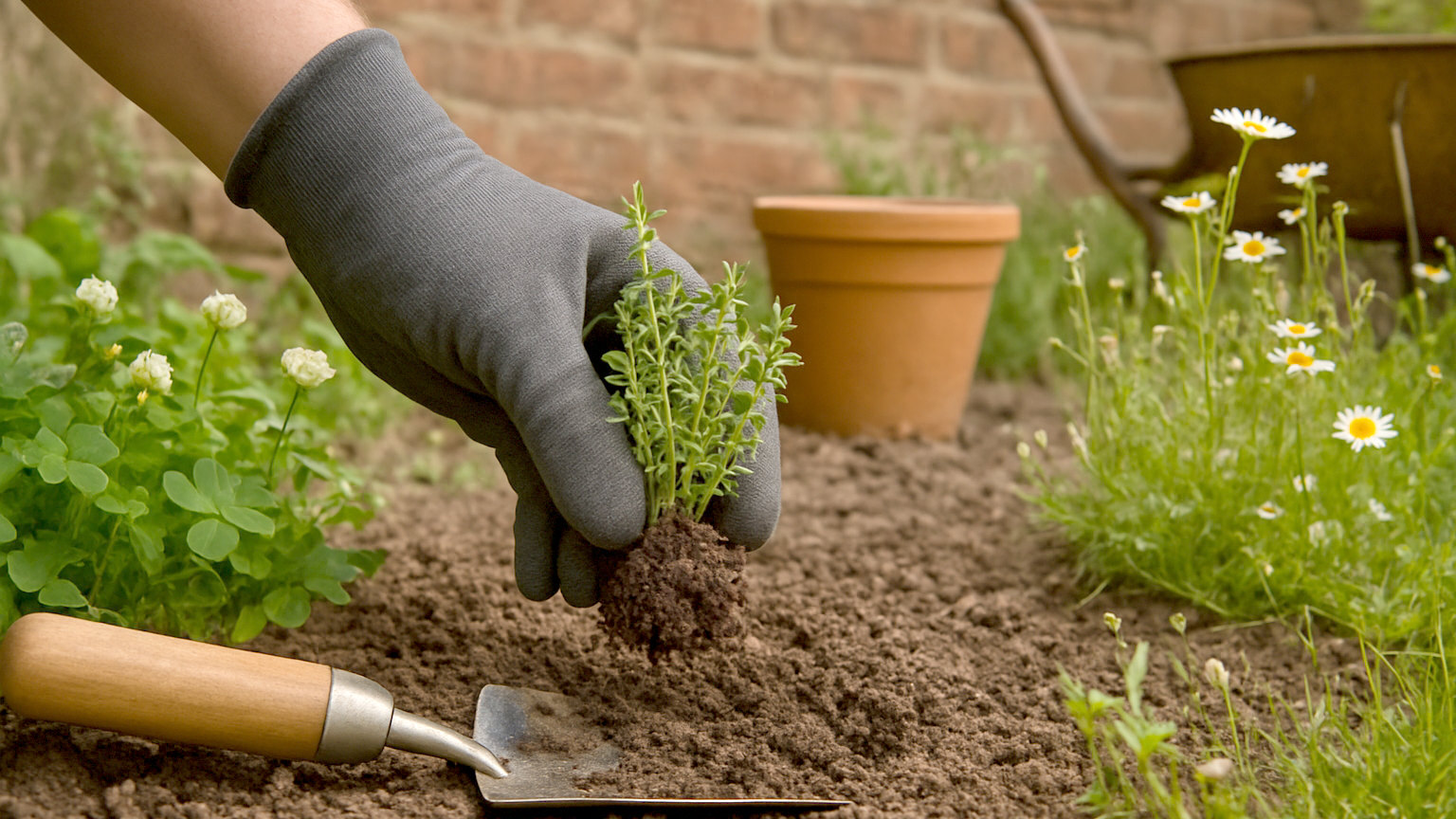
A conventional lawn takes more water, feed and time than anything else in a garden for a purely functional result. Several alternatives do the job in particular situations, and each has a genuine drawback worth knowing before starting.
Clover
The most practical alternative and the easiest to adopt, since it can simply be oversown into an existing lawn.
Microclover mixtures are widely available. Clover fixes its own nitrogen so the lawn needs little or no feeding, stays green through drought when grass browns, tolerates reasonable wear, and flowers for bees if allowed to.
The catch is that selective lawn weedkillers kill clover, so the two approaches are incompatible. It also flowers, which attracts bees, and that is a consideration where children play barefoot.
It is the alternative most likely to suit an ordinary family garden.
Chamomile
The romantic choice, aromatic when walked on and evergreen. Use the non-flowering variety Treneague, which is planted rather than sown.
It needs full sun, free-draining soil and takes very little wear, so it suits a small area or a seat rather than a family lawn.
It also needs weeding by hand, since nothing can be applied to it, and it takes two seasons to knit together. Expect to plant at about ten centimetres apart, which for any size of area is a considerable number of plants.
Thyme
Creeping thymes make an aromatic, drought-tolerant, flowering carpet that bees work heavily.
They need full sun and sharp drainage, and they will not tolerate wet ground or regular foot traffic. They suit a hot dry bank, a gravel area or between paving far better than an open area of ground.
Hand weeding is the only option, and thyme is short-lived, needing replacement every few years.
Moss
In deep damp shade where grass will never succeed, a deliberate moss lawn is a genuine and much easier option.
It is soft, green all year, needs no mowing, no feeding and no water. It takes almost no wear and it is not to everyone's taste, which are the only real objections.
Encouraging it means doing nothing at all except keeping fallen leaves cleared off, since moss is smothered by them.
Meadow
Converting all or part of a lawn to meadow is the change with the largest wildlife benefit.
The essential requirement is low fertility. On rich soil, vigorous grasses outgrow the flowers and smother them.
Stop feeding, cut once or twice a year in late summer, and always remove the cuttings, which gradually reduces fertility. Introduce yellow rattle, which is semi-parasitic on grass and weakens it, giving flowers room.
Expect three years before it looks like anything. Mowing a neat path through it makes the area read as deliberate rather than neglected.
Ground cover planting
For areas that are looked at rather than walked on, low ground cover is often the better answer.
Ajuga, vinca, lamium, hardy geraniums, epimedium and heuchera all cover ground densely and take no mowing.
None of them takes foot traffic, so combine them with stepping stones or a path where access is needed.
Gravel and hard surfaces
Legitimate in a small or shaded area, and permeable gravel is far better environmentally than sealed paving.
Consider drainage before covering any significant area, and check the local rules on paving front gardens, where planning restrictions apply to impermeable surfaces above a certain size.
The middle route
Most gardens do best with a compromise rather than a wholesale change: a hard-wearing grass lawn where it is used, longer flowering grass where it is not, and planting where grass struggles.
Leaving part of an existing lawn unmown from April to August costs nothing, supports far more wildlife than any alternative planting, and can be reversed at any time.
What to consider before changing
Ask what the area is actually for. A lawn that children play on has a job no alternative does as well, and grass remains the best surface for it.
An area that is only looked at, or only crossed occasionally, has far more options and is where an alternative earns its place.
Most alternatives take considerably longer to establish than grass and cost more per square metre to plant, so start with a small area rather than the whole garden.


