
Lawn feeds come in two broad types doing opposite jobs, and the single most common mistake is applying the spring one in September. The difference matters, and understanding what the numbers on the bag mean makes the choice obvious.
What the numbers mean
Fertiliser bags carry three figures, the NPK ratio, giving the proportion of nitrogen, phosphorus and potassium.
- Nitrogen drives leafy green growth
- Phosphorus supports root development
- Potassium toughens the plant, improving hardiness and disease resistance
A spring and summer lawn feed is high in nitrogen, producing the green flush and vigorous growth you want in the growing season. An autumn feed is low in nitrogen and high in potassium, hardening the grass for winter without pushing out soft growth.
Why the timing matters
A high-nitrogen feed applied in autumn causes real harm. It stimulates lush soft growth just as the weather turns, and that growth is vulnerable to frost damage and to fungal disease, particularly snow mould. The lawn goes into winter weakened rather than toughened.
Conversely an autumn feed applied in spring does very little, since the grass wants nitrogen at that point and the product has almost none.
The feeding year
Spring, from April into May, once the grass is actively growing and the soil has warmed. This is the main feed of the year and the one that does most. Do not apply it in March simply because the calendar says spring; wait for growth.
Summer, around June or July, an optional second application on a lawn under heavy use. Skip it in dry weather, since feeding grass that cannot take up water scorches it.
Autumn, in September or October, using an autumn formulation. This is the second most valuable feed and the one most often missed. It strengthens roots and improves winter survival.
Nothing at all through winter.
Types of feed
Granular feeds are the usual choice, applied dry and watered in. Slow-release granular products spread the effect over two or three months and reduce the risk of scorch, which makes them worth the extra cost.
Liquid feeds act quickly and are useful for a fast green-up, but the effect is short-lived. They suit small lawns where a watering can is practical.
Combined weed and feed products treat both at once and are convenient, though they mean applying herbicide across the whole lawn including areas with no weeds. Treating weeds separately and spot-treating is more precise.
Applying it without stripes
Uneven application shows up for weeks as dark green bands beside pale ones, and it is very obvious.
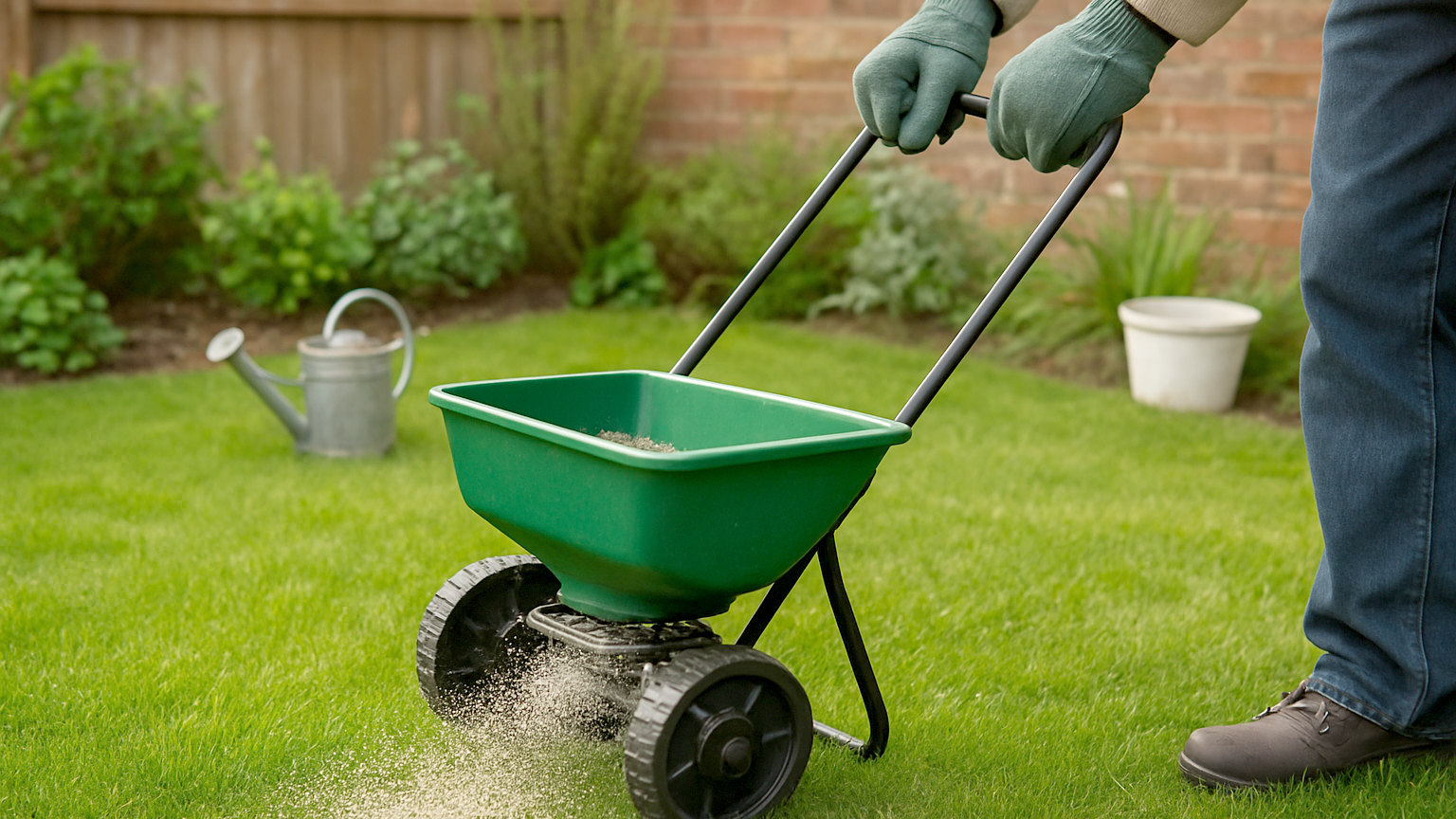
Use a wheeled spreader if you can, set to the rate on the bag, and apply half the quantity walking in one direction and the other half at right angles. That crosswise pattern evens out any inconsistency.
By hand, divide the lawn into measured sections and weigh out the correct amount for each rather than judging by eye. Wear gloves.
Apply when the grass is dry and rain is expected within a day or two, or water it in yourself. Granules left sitting on dry grass in sun will scorch it.
Avoiding scorch
Scorch appears as yellow or brown patches where too much fertiliser landed, and it is not reversible in the short term. It happens from overlapping passes, from spillages, and from applying in hot dry weather without watering in.
If you spill, sweep it up immediately and water the area thoroughly. Never apply during a drought or a heatwave.
Feeding a new lawn
Do not feed a newly sown or newly turfed lawn with a standard product for the first couple of months. Young grass has fine roots that scorch easily. A dedicated pre-seed or new-lawn fertiliser, which is higher in phosphorus for root development and lower in nitrogen, is what to use at that stage.
Do you need to feed at all
Not necessarily. Leaving clippings on the lawn returns a substantial proportion of the nitrogen the grass used, and a lawn that is mown regularly with clippings left, at a sensible height, on decent soil, can do perfectly well without any bought fertiliser.
Feeding matters most on poor or sandy soil, on lawns under heavy use, and where you want a dense fine sward. A relaxed family lawn with some clover in it, which fixes its own nitrogen, needs very little.


