
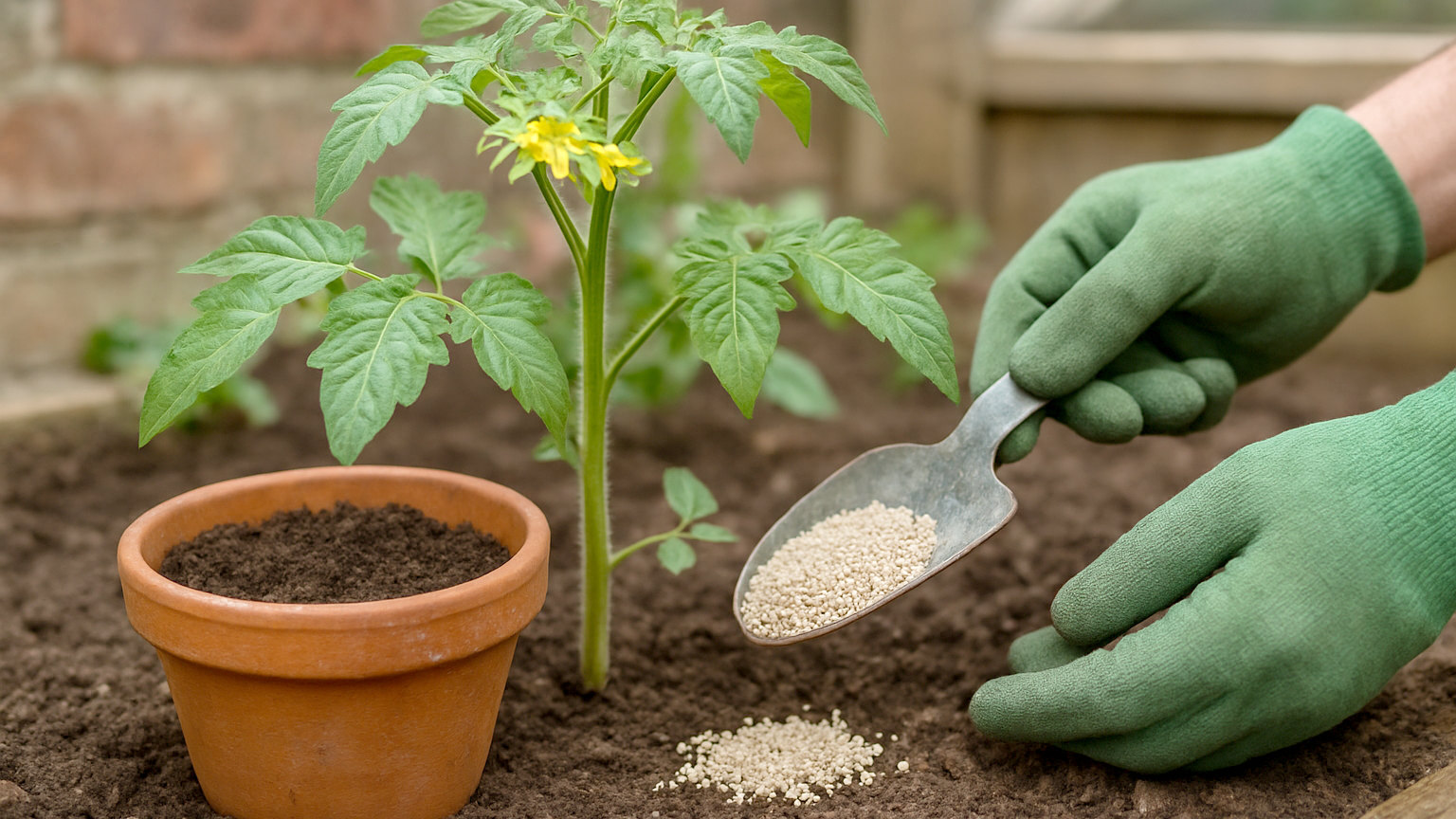
The distinction is about where the nutrients come from and how they become available to the plant, and it has practical consequences for timing, soil health and cost.
What the terms mean
Organic fertilisers derive from plant or animal material: blood, fish and bone, hoof and horn, seaweed, chicken manure pellets, bone meal, comfrey.
Inorganic or mineral fertilisers are manufactured or mined: ammonium sulphate, sulphate of potash, superphosphate, and compound products such as Growmore.
Some products combine both.
How they behave differently
Organic fertilisers must be broken down by soil organisms before the plant can use them. That makes them slow, typically releasing over weeks or months, and dependent on soil temperature.
They do very little in cold soil, since the organisms are inactive, which is why an organic feed applied in February achieves nothing until April.
Inorganic fertilisers are already in a soluble form the plant can take up directly. They act within days, work in cold soil, and are exhausted quickly.
The soil argument
Organic materials feed soil organisms as well as plants, and over time they build soil structure, water retention and biological activity.
Inorganic fertilisers feed the plant only. They do no direct harm to soil life in normal garden use, and they contribute nothing to structure either.
Relying entirely on inorganic feeds while never adding organic matter produces soil that becomes progressively harder to work, whatever the nutrient levels.
Where organic feeds suit
Long-term feeding of borders, fruit and vegetables, applied in spring as growth begins.
Blood, fish and bone is the general-purpose choice, roughly balanced and widely available.
Chicken manure pellets are higher in nitrogen and useful for leafy crops and spring growth.
Seaweed meal supplies trace elements and improves soil condition.
Comfrey, made into a liquid feed, is high in potassium and excellent for tomatoes and flowering plants.
A mulch of garden compost or well-rotted manure is the most useful organic input of all, supplying a broad range of nutrients slowly while improving the soil.
Where inorganic feeds suit
Correcting a specific deficiency quickly, where waiting weeks is not acceptable.
Sulphate of potash for a potassium shortage, Epsom salts for magnesium, sequestered iron on alkaline soil.
Container growing, where the compost has no biological system to break organic material down and precision matters.
Early spring, when the soil is too cold for organic feeds to release.
Cost and convenience
Inorganic fertilisers are generally cheaper per unit of nutrient and easier to apply precisely.
Organic products cost more, smell in some cases, and attract foxes and dogs, which dig up newly treated ground to get at bone meal and fish-based feeds in particular.
Things to be aware of
Wear gloves with all fertilisers, and particularly with bone meal, where there is a small risk from dust.
Store everything dry, sealed and out of reach of children and animals.
Manure must be genuinely well rotted before use, meaning at least a year old. Fresh manure scorches roots and can carry weed seed.
Be cautious about the source of manure. Certain herbicide residues survive composting and the animal's digestive system, and manure contaminated with them causes distorted growth in beans, tomatoes and potatoes for years. Ask the supplier what the animals were fed and where the hay came from.
The sensible approach
Build the soil with organic matter as the foundation: compost, manure and leaf mould applied annually as a mulch.
Use targeted feeds, organic or inorganic, where a specific plant needs something specific.
The mulch does most of the work, and the bagged products are for particular jobs rather than for routine feeding.
Environmental considerations
Fertiliser applied at more than the recommended rate, or onto frozen or waterlogged ground, washes off into drains and watercourses, where it causes algal growth and harms aquatic life.
Apply the correct rate onto moist unfrozen soil, keep granules off paving and away from drains, and sweep up any spills rather than hosing them away.
Feeding less
Many gardens are overfed rather than underfed. Established shrubs and trees in reasonable soil need nothing beyond an annual mulch, and feeding them produces soft growth, more pruning and more disease.
Reserve fertiliser for containers, heavy croppers, roses, fruit and lawns, and let the rest of the garden live on compost.


