
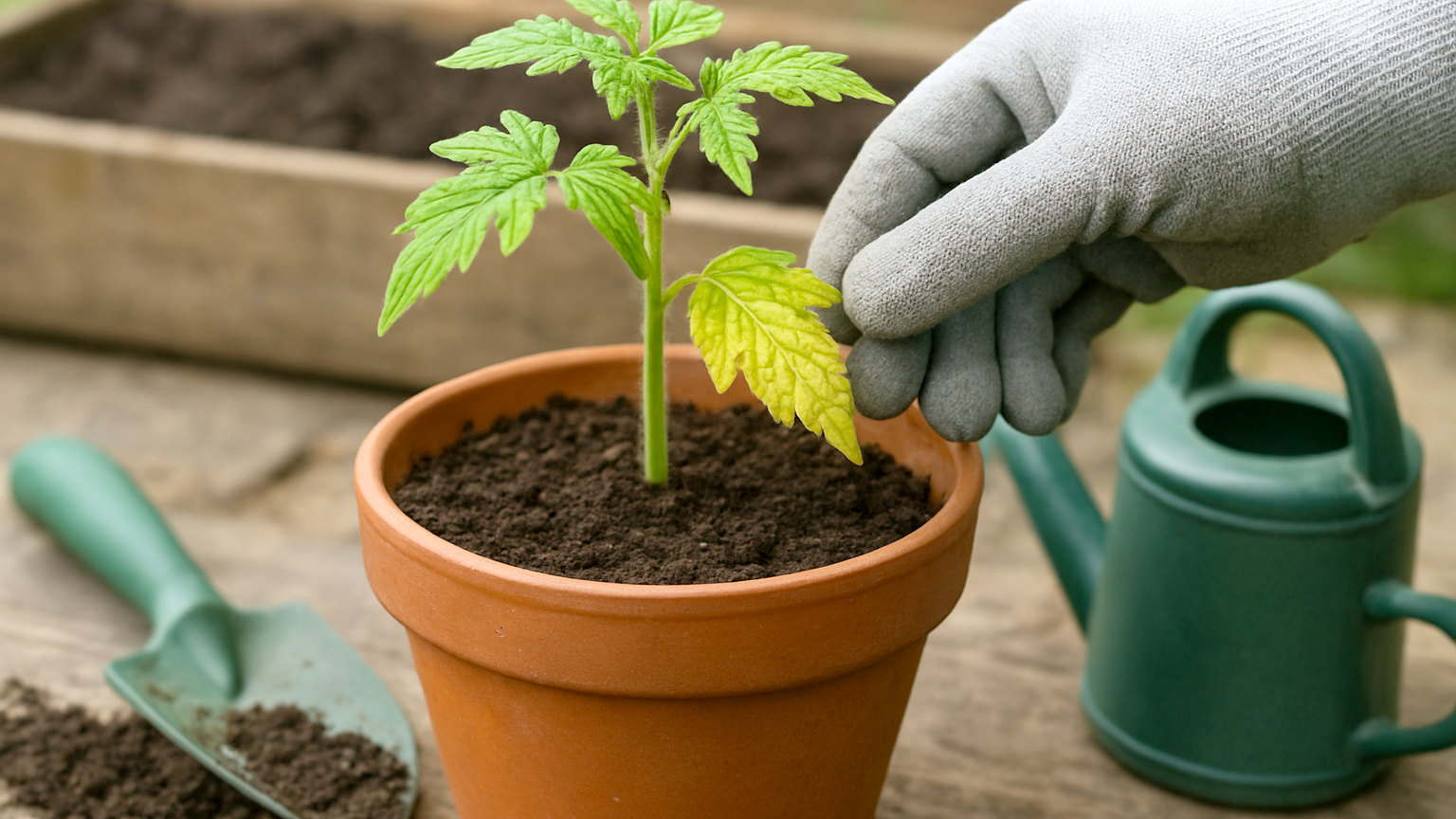
Yellowing leaves have several possible causes and only some of them are nutritional. One question narrows the field considerably: are the old leaves affected or the new ones?
Old leaves or new
Some nutrients move around inside the plant and some do not.
Nitrogen, potassium and magnesium are mobile. When short, the plant moves them from old leaves to new growth, so symptoms appear on the oldest lower leaves first.
Iron, calcium and manganese are not mobile. Shortages therefore show on the youngest leaves at the tips, while older leaves stay green.
That single distinction separates most deficiencies immediately.
Nitrogen
Uniform pale yellowing of the whole leaf, starting with the oldest lower leaves, combined with weak, thin, stunted growth.
Common on sandy soil, after heavy winter rain has leached it out, and where woody material has been dug into the soil.
Correct with a nitrogen-rich feed, chicken manure pellets, or a mulch of well-rotted manure. It responds within a fortnight in warm conditions.
Magnesium
Yellowing between the veins of older leaves, with the veins themselves staying distinctly green, sometimes with reddish or purple tints.
Very common in tomatoes, roses and container plants, and on light sandy soil after heavy rain. High-potassium feeding can also induce it, since potassium competes with magnesium for uptake.
Correct with Epsom salts, magnesium sulphate, either as a foliar spray at about twenty grams per litre or watered onto the soil. Improvement is visible within a fortnight.
Iron
Yellowing between the veins of the youngest leaves, veins staying green, progressing to almost white foliage in bad cases.
The pattern is similar to magnesium, and the position is the difference: iron affects new growth, magnesium affects old.
Almost always caused by soil pH rather than a genuine absence of iron. On alkaline soil the iron is present and locked up chemically.
Common in camellias, rhododendrons, blueberries and other acid-lovers on chalky soil, and in containers watered with hard tap water.
Correct short-term with sequestered iron. The real answer is to grow such plants in containers of ericaceous compost, watered with rainwater.
Potassium
Brown scorching around the margins of older leaves, with poor flowering and fruiting, and weak growth generally.
Common on light sandy and chalky soils.
Correct with sulphate of potash or a high-potassium tomato feed, and mulch to improve the soil's ability to hold it.
Phosphorus
Stunted growth with dull dark green or purple-tinged foliage, most visible in young plants.
Genuinely uncommon in British gardens, since most soils contain adequate phosphorus. It is more likely on acid or peaty soils.
Manganese
Yellowing between the veins of young leaves, similar to iron but with the veins less sharply defined. Common on alkaline soil and often occurring alongside an iron shortage, since both are locked up by high pH.
Check the obvious causes first
Most yellowing leaves are not deficiencies. Before feeding anything, check the alternatives.
Waterlogging is the commonest cause of yellowing in a garden, since roots in saturated soil cannot function. The plant looks starved because it cannot take up what is there.
Drought produces yellowing and wilting.
Planting too deep, root damage, vine weevil grubs and container plants that are pot bound all produce the same appearance.
Natural leaf fall on evergreens, where old inner leaves yellow and drop each year, is entirely normal and not a sign of anything.
Never feed a plant that is struggling from drought, waterlogging or root damage. Fertiliser makes all three worse.
Feel the soil, check the drainage, and look at the roots before reaching for anything in a bottle.
Preventing most of it
An annual mulch of garden compost supplies a broad range of nutrients slowly and improves the soil's ability to hold them, which prevents most deficiencies without any testing or measuring.
Container plants are the main exception, since compost is exhausted within about six weeks and there is no soil reserve to draw on. Those genuinely need regular feeding through the season.
Soil testing
A cheap pH kit is worth having, since pH governs whether nutrients are available at all and explains most iron and manganese problems.
Nutrient test kits are less useful for gardens, being approximate. Reading the plants is usually more informative than testing the soil.


