
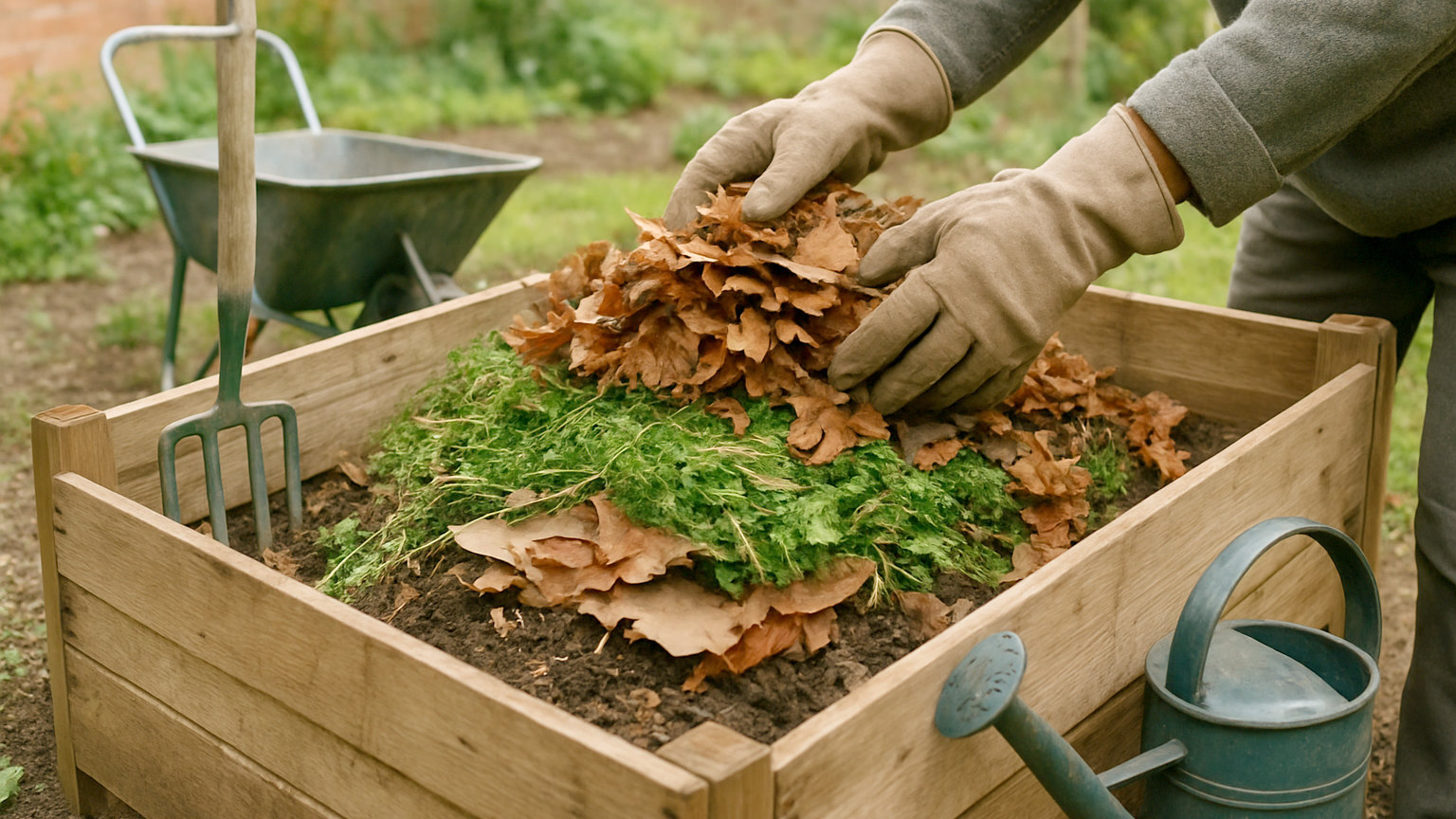
Compost is the most valuable thing a garden produces and it costs nothing. The whole technique reduces to getting four things right: the mix of materials, air, moisture and volume.
Greens and browns
This is the part that determines success.
Greens are nitrogen-rich and wet: grass clippings, vegetable peelings, soft prunings, annual weeds, coffee grounds, manure.
Browns are carbon-rich and dry: cardboard, paper, dry leaves, straw, woody prunings, sawdust from untreated timber, egg boxes.
Aim for roughly equal volumes of each, layered or mixed as you add them.
Too many greens produces a slimy, smelly, anaerobic mass. Too many browns produces a dry heap that sits doing nothing for years.
Most people have too many greens, particularly in summer when grass clippings arrive weekly. Keeping a bag of cardboard or shredded paper beside the bin solves it.
Air
Composting organisms need oxygen, and a compacted heap goes anaerobic, which is what produces the smell.
Add bulky material such as scrunched cardboard, egg boxes and twiggy prunings to create air spaces.
Turn the heap occasionally, which is the single most effective way to speed it up. A heap turned monthly composts in a few months; one never turned takes a year or more.
Moisture
The heap should feel like a wrung-out sponge: damp but not wet.
Too dry and nothing happens. Water it, or add more greens.
Too wet and it goes slimy and smelly. Add browns, turn it, and cover the top to keep rain out.
Volume and position
Bigger heaps work better, since they retain the heat generated. A cubic metre is the point at which a heap really gets going.
Site it on bare soil rather than paving so worms and organisms can enter from below, in a spot that is accessible year round and not in deep shade if you can avoid it.
Two bins are considerably better than one: fill the first while the second matures.
What to include
Vegetable and fruit peelings, tea leaves, coffee grounds, crushed eggshells, grass clippings, soft prunings, annual weeds, cardboard, paper, dry leaves in moderation, straw, and used compost from containers.
What to leave out
Cooked food, meat, fish and dairy, which attract rats and do not break down well in a garden heap.
Perennial weed roots such as bindweed, ground elder and couch grass, which survive and spread.
Weeds in seed, since a home heap rarely reaches a temperature that kills seed.
Diseased material, particularly blight-affected potatoes and tomatoes, and rose leaves with blackspot.
Cat and dog faeces, coal ash, glossy printed paper, and anything treated with weedkiller.
Large woody prunings, unless shredded first.
How long it takes
Six months to two years depending on the mix, the turning and the season.
A well-managed heap turned regularly with a good balance produces usable compost in about six months. A heap simply added to and left takes a year or more, which is perfectly acceptable if you have space for two bins.
Knowing when it is ready
Dark, crumbly, sweet-smelling and with the original materials no longer recognisable.
It does not need to be perfectly fine. Partly decomposed compost is excellent as a mulch, and larger pieces can be sieved out and returned to the heap.
Using it
As a mulch, five to seven centimetres deep on moist soil, kept clear of stems.
Worked into the top spit when preparing ground.
As an ingredient in potting mixes, though home compost is variable and is better combined with bought compost than used alone for seed sowing.
Choosing a bin
Plastic dalek-style bins are cheap, often subsidised by councils, and retain moisture and heat well. They are awkward to turn.
Wooden bays are easier to turn and access, hold larger volumes and cost more to build. Two or three bays side by side is the arrangement most serious gardeners end up with.
Tumblers compost quickly and hold small volumes, which suits a small garden producing limited waste, and they are easy to turn.
An open heap works perfectly well too, and costs nothing beyond four stakes and some wire.
Hot composters handle cooked food and produce compost in weeks, at considerable cost.
Whatever the type, two containers are far better than one, since it lets one mature undisturbed while the other is being filled.


