
Leaf mould is the easiest useful thing a garden produces. It needs no turning, no balancing of materials and no attention at all, only a container and patience.
Why it is different from compost
Compost is made by bacteria working fast and generating heat. Leaves break down mainly through fungal action, which is slow, cool and needs no management.
That is why leaves added to a compost heap in quantity slow it down, and why they are better dealt with separately.
The result is also different. Leaf mould is low in nutrients and outstanding as a soil conditioner, whereas compost supplies both.
Collecting the leaves
Gather them in autumn as they fall, from lawns, paths and borders.
Leaves left lying on a lawn block light and encourage disease, so clearing them serves two purposes.
Running a rotary mower over them collects and shreds them at the same time, which is by far the quickest method and roughly halves the time they take to break down.
Leave fallen leaves in borders and under hedges, where they rot down naturally and shelter overwintering insects. Only clear what is on grass and paths.
Which leaves
Most deciduous leaves work. Oak, beech and hornbeam produce particularly good leaf mould and take longer.
Thin soft leaves such as ash, birch and cherry break down fastest, often within a year.
Thick leathery evergreen leaves such as holly and laurel are slow and better shredded or left out.
Conifer needles are very slow and slightly acidic, and are best kept separate for mulching ericaceous plants.
Sycamore and horse chestnut leaves are large and thick, and benefit considerably from being shredded first.
Making it
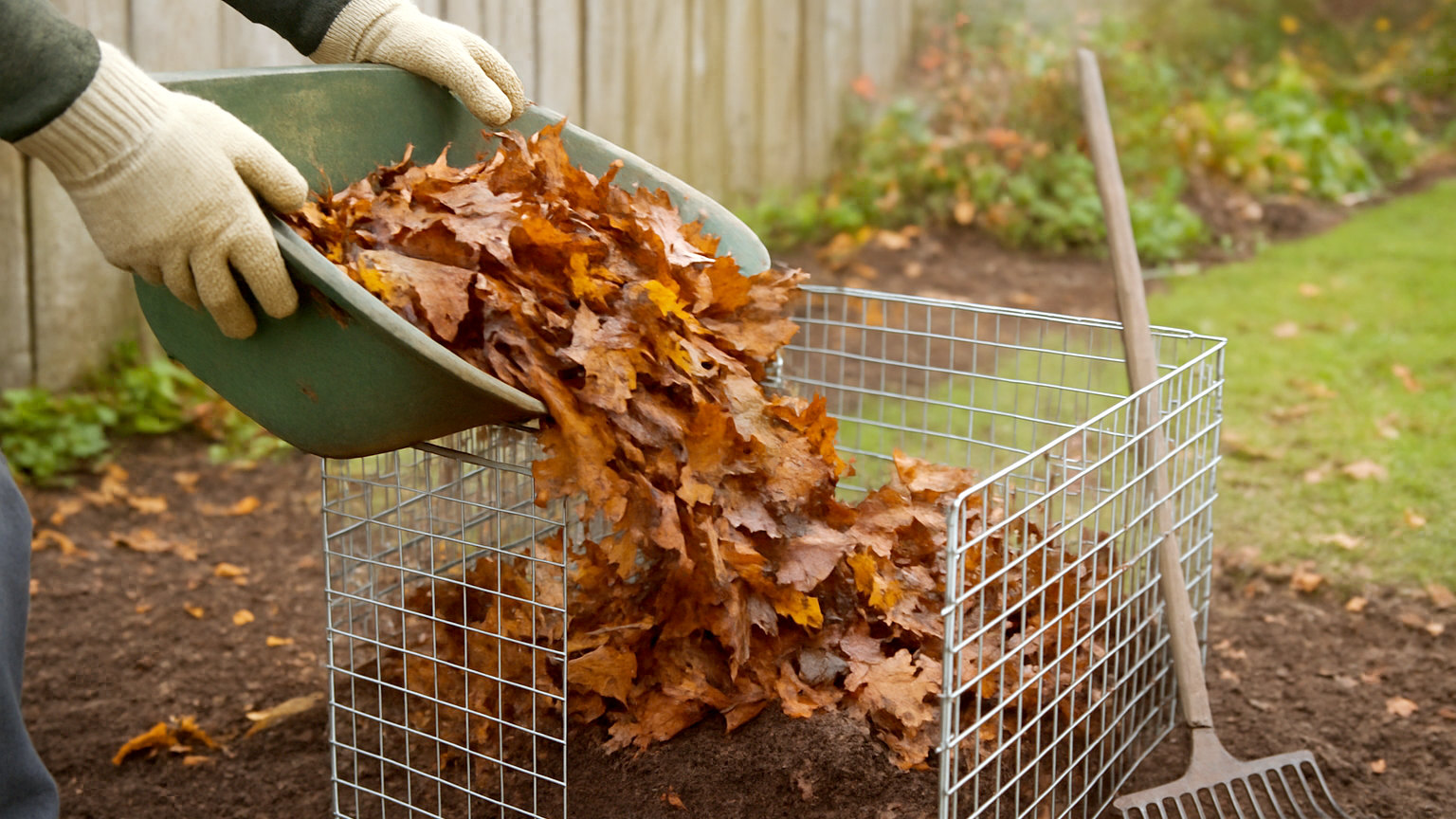
The simplest container is a cage of chicken wire on four stakes, which costs very little and holds a large volume.
For smaller quantities, fill black bin bags, pierce them several times for air, tie the tops loosely and stack them somewhere out of the way.
In either case, wet the leaves as you fill if they are dry, since they need moisture to break down.
Then leave them alone. There is nothing further to do.
How long
One year produces rough leaf mould, still recognisably leaves and perfectly good as a mulch.
Two years produces fine crumbly dark material suitable for potting mixes and seed sowing.
Shredding first, and keeping the heap moist, both speed this up.
Two or three containers used in rotation means you always have some ready.
What to use it for
As a mulch, particularly for woodland plants, shade borders, ferns, hellebores and bulbs, which is close to what happens naturally.
As a soil conditioner worked into the ground, where it improves structure and water retention on both clay and sand.
As an ingredient in potting mixes. Well-rotted leaf mould combined with garden compost and sharp sand makes a good general mix, and fine leaf mould alone is excellent for seed sowing since it is low in nutrients.
As a mulch around newly planted trees and shrubs.
What not to expect from it
Leaf mould contains very little nitrogen, phosphorus or potassium. It conditions soil rather than feeding plants.
Where plants need feeding, use compost, manure or a fertiliser as well.
Practical points
Do not collect leaves from roadsides, which carry pollutants and litter.
Avoid leaves showing obvious disease, and do not use horse chestnut leaves affected by leaf miner for potting mixes, though they are fine as a mulch.
Wear gloves when handling large quantities of rotting leaves, and avoid breathing the dust from very dry decayed material, which can irritate the airways.
A dust mask is worth wearing when emptying bags of two-year-old leaf mould.
Keep the heap moist through summer, since leaf mould that dries out entirely stops breaking down until it is rewetted.
Leaving leaves where they fall
Not every leaf needs collecting. Leaves left in borders, under hedges and in quiet corners rot down naturally, feed the soil and shelter overwintering insects, hedgehogs and amphibians.
Clear them from lawns, paths, gutters and ponds, where they genuinely cause problems, and leave the rest where they fall.
Leaves in a pond decompose and remove oxygen from the water, so netting a pond in autumn is worth doing.


