
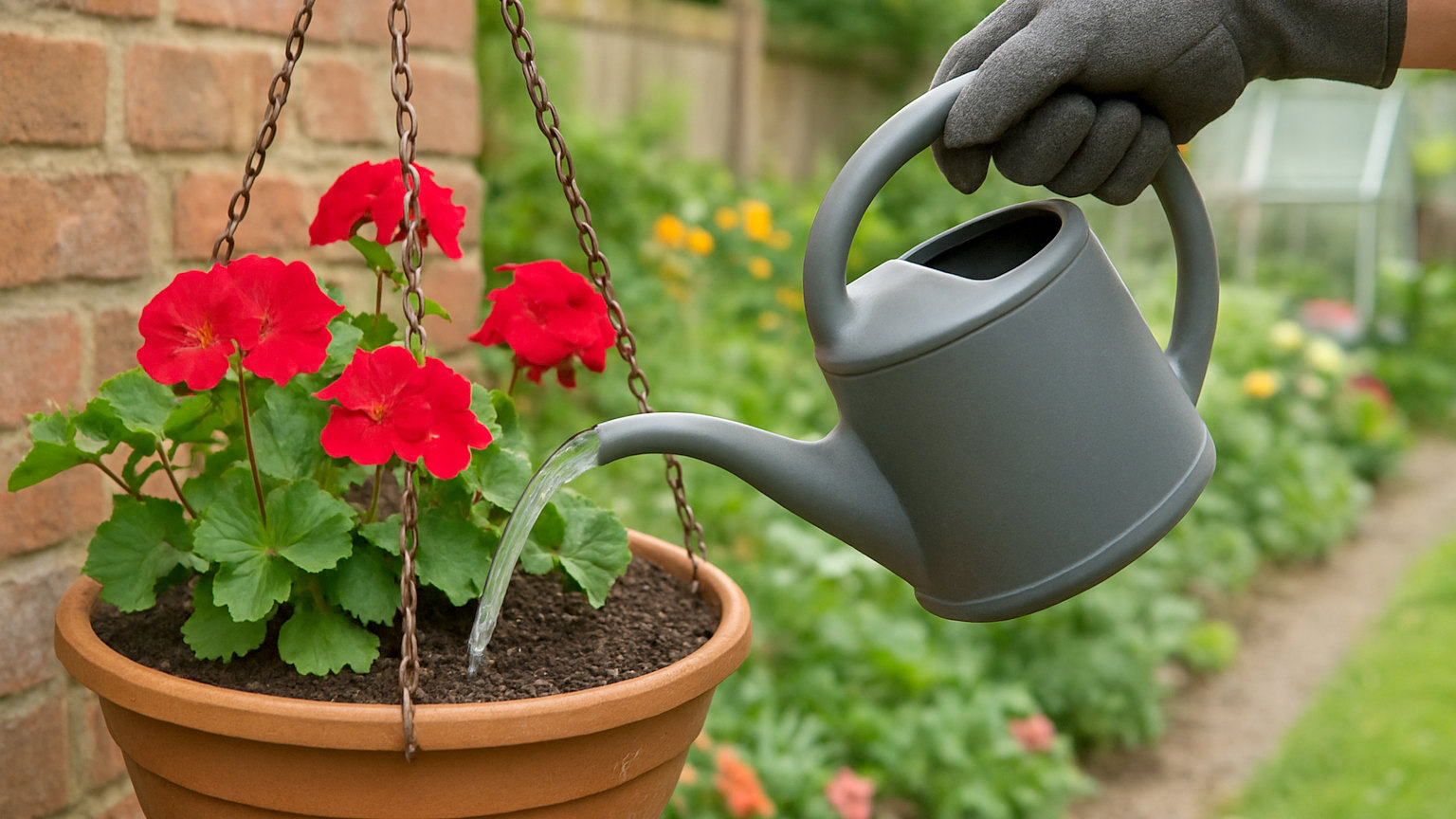
A plant in the ground can send roots out to find what it needs. A plant in a pot cannot, and once the compost is exhausted it depends entirely on what you give it. This is the single biggest difference between container growing and everything else.
Six weeks
Most multipurpose compost contains enough nutrients for about six weeks. After that the plant is living on whatever you supply.
This is why a hanging basket planted in May looks spectacular in June and tired by early August. The usual assumption is that it has finished flowering; in fact it has run out of food.
Start feeding about six weeks after planting, and continue weekly through the growing season.
What to use
A high-potassium liquid feed, meaning a tomato feed or anything with the third NPK number highest, for anything flowering or fruiting. This covers most containers.
A balanced feed for foliage plants and young growth.
An ericaceous feed for camellias, rhododendrons, blueberries and pieris, watered with rainwater where possible.
Avoid high-nitrogen feeds on flowering containers, which produce leaves at the expense of flowers.
Slow-release granules
Controlled-release fertiliser mixed into the compost at planting meters nutrients out over several months in response to temperature and moisture.
It is convenient and reliable, and it is worth using in every container. It does not entirely remove the need for liquid feeding on hungry plants in a long season, but it carries the pot through the first months without any attention.
Use the rate on the pack, and mix it through the compost rather than concentrating it in one place.
How to feed properly
Always feed onto damp compost, never dry. Fertiliser applied to a dry pot scorches the roots.
Water first if necessary, then feed.
Follow the dilution rate exactly. Feeding at double strength does not double the growth; it burns roots and can kill a plant outright.
Feed in the evening or early morning rather than in hot midday sun.
Little and often is better than occasional heavy doses.
When to stop
Stop feeding woody plants and anything permanent by about mid-August, so late soft growth is not caught by the first frosts.
Summer bedding can be fed until the frosts finish it, since the plant is being discarded anyway.
Do not feed through winter, when plants are not growing and the fertiliser simply washes through.
Top dressing permanent containers
For shrubs, trees and perennials in pots, top dress each spring: scrape off the top five centimetres of compost and replace with fresh, mixed with slow-release fertiliser.
This refreshes the nutrient supply without disturbing the roots and takes minutes.
Repot every two or three years, either moving up a size or root pruning and returning to the same pot with fresh compost. A plant left in exhausted compost for five years declines whatever you feed it.
Rescuing a tired container
A basket or pot looking exhausted in midsummer has usually run out of food rather than finished.
Cut everything back by about a third, water thoroughly, and feed weekly. Within two or three weeks it produces fresh growth and a new flush of flowers.
This works particularly well on trailing petunias, lobelia, bidens and verbena.
Watering and feeding together
The two are connected. A container that dries out repeatedly cannot take up nutrients even when they are present, and the plant shows the same symptoms as one that is starved.
Consistent watering is a precondition for feeding to work at all.
Signs of overfeeding
A white crust on the compost surface or the outside of a terracotta pot is salt build-up from fertiliser and hard water.
Scorched leaf margins, wilting despite moist compost, and lush foliage with no flowers all suggest too much feed rather than too little.
Flush the pot through with plenty of plain water and reduce the feeding rate.
Which compost to start with
Peat-free multipurpose is fine for annuals and bedding replaced each year.
For anything permanent, use a soil-based compost such as John Innes No. 3, which holds nutrients and structure far longer and does not collapse over a season.
Ericaceous compost for acid-loving plants, watered with rainwater, since hard tap water gradually raises the pH and locks up iron.


