
Weeds in a paved or gravelled surface arrive in a way that surprises people, and understanding it changes the response entirely.
Where they come from
They germinate in the layer of windblown soil, dust and organic debris that accumulates on top of the surface, not from the ground beneath.
Sound paving on a proper sub-base with well-filled joints offers nothing to root into.
Over a year or two, debris collects in joints and among gravel, forms a thin growing medium, catches seed and produces weeds.
This is why a new drive is clean and a five-year-old one is not, regardless of what is underneath.
The most effective measure
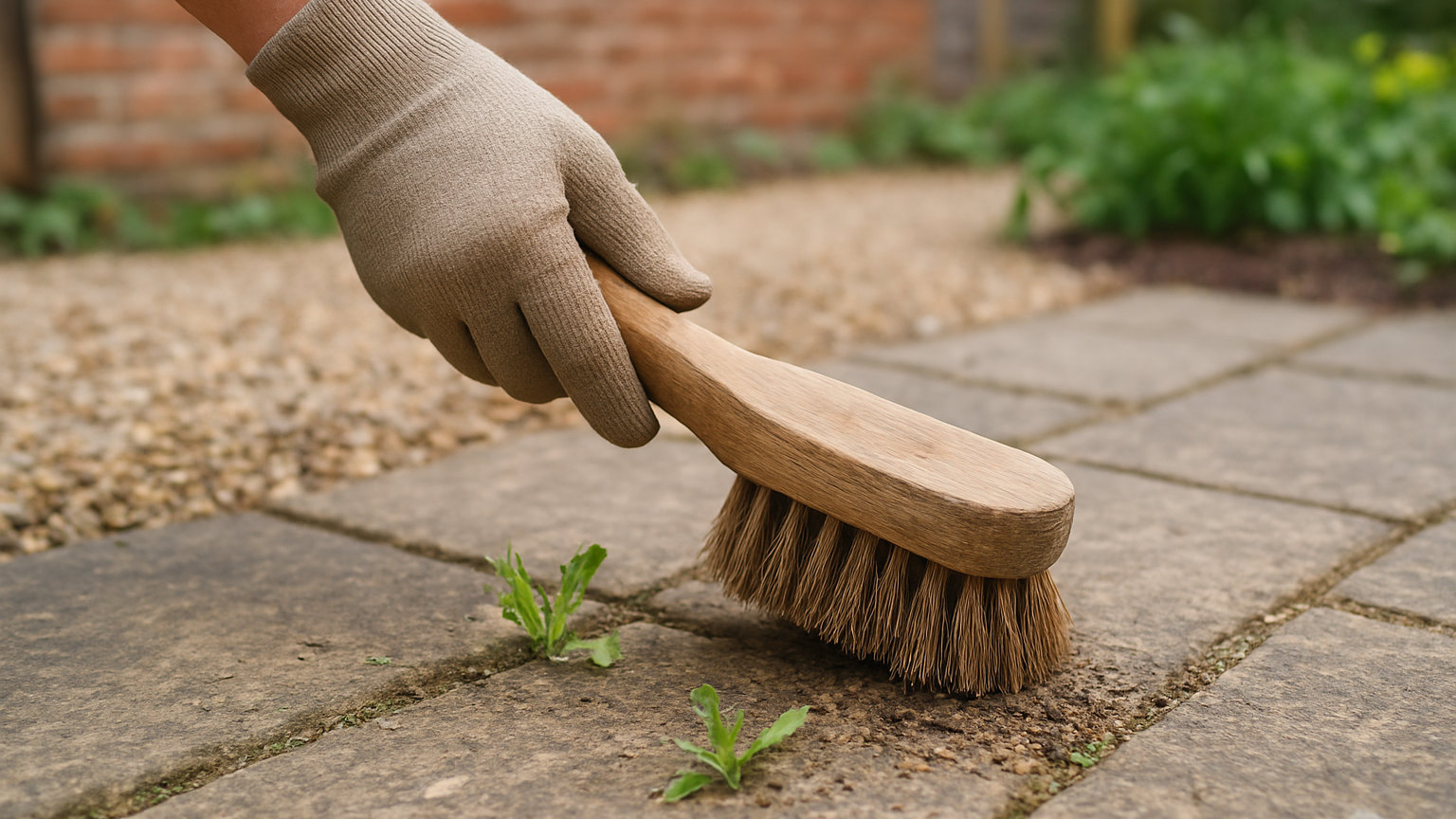
Brush the surface regularly. A stiff brush removes the debris before it accumulates enough to support germination.
Doing this a few times a year prevents most of the problem.
Clear leaves promptly in autumn, since a layer of rotting leaves is exactly the growing medium weeds need.
Keep gutters and downpipes clear, since overflow deposits silt onto paving.
Sweep debris off gravel rather than raking it in.
Keeping joints filled
Well-filled joints leave nowhere for seed to lodge.
Top up kiln-dried sand in block paving as it settles and washes out, brushing it in and compacting.
Proprietary jointing compounds set firm, resist weeds and washing out, and are worth considering when a surface is being relaid or repointed.
Repoint failed mortar joints properly, raking out the old material rather than filling over it.
Removing them
Hand weeding and joint scrapers work well and are entirely reliable. A long-handled joint knife saves the knees.
Remove weeds when small and before they seed, since a plant allowed to flower reseeds the whole surface.
Boiling water kills seedlings in joints effectively and costs nothing. Take care carrying it, and avoid pouring it over plant roots at the edges.
Flame weeders rupture the cells of small weeds with a brief pass of heat rather than burning them. Effective on seedlings and useless on established perennials.
They present a genuine fire risk near fences, buildings, dry vegetation and decking, and should never be used in dry conditions near anything combustible or on or near a timber structure.
Both heat methods need repeating as new flushes germinate, since neither affects the seed still to come.
Pressure washing
Removes weeds, moss and debris, and has costs.
High pressure blasts jointing material out, which leaves the joints empty and the surface more prone to weeds afterwards, and can loosen block paving.
It also erodes soft stone and strips the surface of concrete slabs.
Use the lowest effective pressure with a fan nozzle, and expect to re-sand or repoint afterwards.
Gravel
Gravel over a membrane on a compacted base stays cleaner for longer, since nothing roots through from beneath.
Debris still accumulates on top, so the same brushing and clearing applies.
Keep the gravel depth modest, around fifty millimetres, and top it up so it does not thin.
Rake occasionally, and remove weeds while small, which is easy from loose gravel.
Avoid siting gravel directly beneath deciduous trees where practical.
Chemical control
Path weedkillers are available and their use is subject to the label, which is a legal document.
Run-off from a hard surface reaches drains readily, and from there watercourses.
Do not apply before rain, do not apply near a drain, gully or watercourse, and never use anything near water without the specific approval required.
Residual products that persist in the surface are heavily restricted and generally unsuitable for domestic use.
Given the effectiveness of brushing, hand removal and boiling water, chemicals are rarely necessary on a domestic path or drive.
Design
A crisp edge restraint prevents soil washing onto the surface from a border.
A mowing strip or a hard edge between lawn and paving stops grass creeping in, which is the commonest colonist of all.
Falls and drainage that clear water quickly leave less silt behind, and a surface that dries fast supports fewer weeds and less moss.
Moss and algae
Common on shaded damp paving and mainly a slip hazard rather than damage.
Brush regularly, improve light and drainage where possible, and treat with an appropriate cleaner in autumn before the wet months set in.
Avoid high pressure on soft stone and on pointing, which does more harm than the moss did.


