A container plant that looked perfectly healthy on Monday and has collapsed by Friday has usually lost its roots to vine weevil grubs. It is the commonest cause of sudden death in pots, and the damage is done well before anything shows above ground.
Two pests in one
The adult is a matt black beetle about a centimetre long with a distinct snout and faint yellow flecks. All adults are female and reproduce without mating, which is part of why numbers build so fast.
Adults feed at night on leaf margins, leaving distinctive irregular notches around the edges as though someone has taken small bites with a hole punch. This damage is unsightly and rarely serious.
The grubs are the problem. They are creamy white, C-shaped, about a centimetre long with a light brown head and no legs, and they live in the compost eating roots. By the time the plant wilts, most of the root system has gone.
What they attack
Container plants above all, because a pot is an ideal nursery. Heuchera, primula, fuchsia, begonia, cyclamen, sedum and strawberries are particular favourites.
In open ground they are less devastating because the plant can outgrow the damage, though they will still attack rhododendrons, camellias, yew and young shrubs.
How to check
If a potted plant wilts despite adequate watering, or comes away in your hand when you tug the stem gently, tip it out and examine the rootball.
You will find the grubs in the compost, usually several of them, and the roots reduced to stubs. Adults hide during the day under pot rims, in leaf litter and beneath debris, so checking with a torch after dark in spring and summer will find them on the plants.
Nematodes, which is the effective treatment
Nematodes are the control that genuinely works, and timing decides whether they do. These microscopic parasites are watered into the compost and kill the grubs.
Apply in late summer or early autumn, typically August to September, when the grubs are small and the soil is still warm. The compost must be above about five degrees and kept moist for a fortnight afterwards, and the nematodes must be used before the date on the pack since they are living organisms.
A second application in spring catches any that overwintered. Nematodes are harmless to plants, pets, people and wildlife, which is why they are the sensible first choice.
Physical measures
Repot affected plants entirely. Wash all old compost from the roots, dispose of it rather than composting it, and replant into fresh compost in a cleaned pot. Squash any grubs you find.
Check the rootball of every new plant you buy before it joins the collection, since infestations frequently arrive that way.
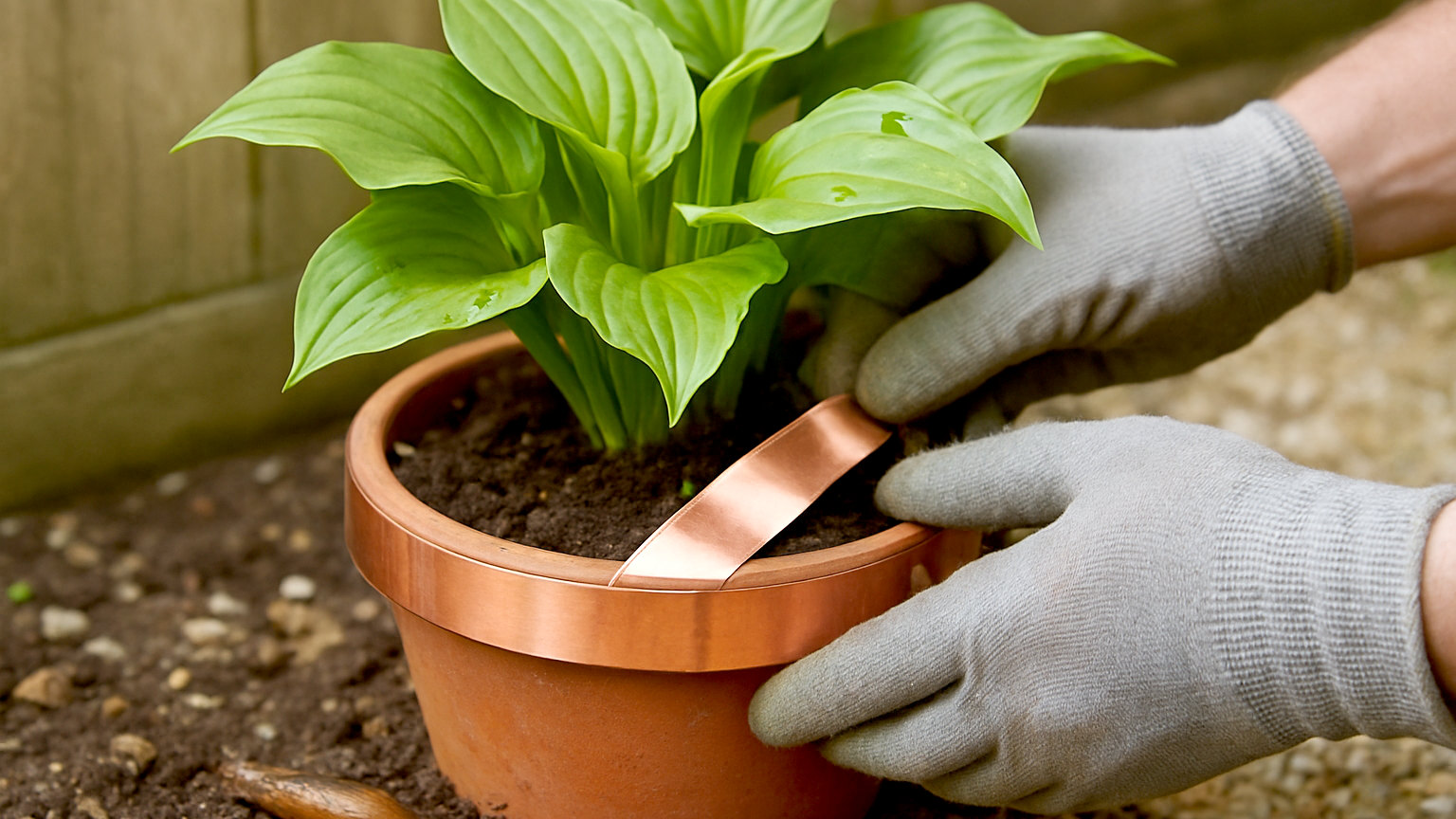
Adults cannot fly and climb to reach plants, so a barrier glue band around a pot or a bench leg stops them. Standing pots on gravel rather than soil makes life harder for them.
Collecting adults by torchlight is effective on a small scale, since removing egg-laying females in spring prevents the autumn generation.
Encouraging predators
Birds, frogs, toads, ground beetles and hedgehogs all eat vine weevils. A garden with log piles, a pond and less rigorous tidying supports enough of them to keep numbers down in open ground, though containers remain vulnerable because they are isolated from all that.
What not to bother with
There is little point spraying foliage for the adults, since they feed at night and hide by day, and the leaf damage is cosmetic anyway. Treating the grubs in the compost is what protects the plant.
Composts containing an insecticide are available and give season-long protection for containers, though they are worth using selectively rather than as standard.
Plants that shrug it off
If a spot has repeatedly lost plants to vine weevil, changing what grows there is a reasonable response. Grasses, ferns, hardy geraniums and most Mediterranean shrubs are rarely troubled, whereas replacing heuchera after heuchera in the same container invites the same outcome.
Prevention in the long run
Refresh container compost regularly, keep pot rims and the area beneath benches clear of debris, and apply nematodes annually in late summer to a collection that has had a problem before. Once vine weevil is established in a group of pots, an annual preventive application is considerably easier than repeatedly replacing plants.